


Sexual behaviours and risk of SARS-CoV-2 infection among MSM during the first COVID-19 lockdown
- PMID: 39488716
- PMCID: PMC11531119
- DOI: 10.1186/s12889-024-20514-9
Sexual behaviours and risk of SARS-CoV-2 infection among MSM during the first COVID-19 lockdown
Abstract
Background: The social distancing measures associated with the COVID-19 pandemic had far reaching effects on sexual behavior worldwide. However, it remains unclear whether sexual contact with non-steady partners was a contributor to the spread of SARS-CoV-2. The aim of this study was to (i) describe risk factors for SARS-CoV-2 seropositivity after the first pandemic wave among people using HIV Pre-Exposure Prophylaxis (PrEP) in Zurich, Switzerland, including sexual contact with non-steady partners, and (ii) assess whether the SARS-CoV-2 seropositivity among PrEP users in this time period differed from that of a demographic matched population level comparison group.
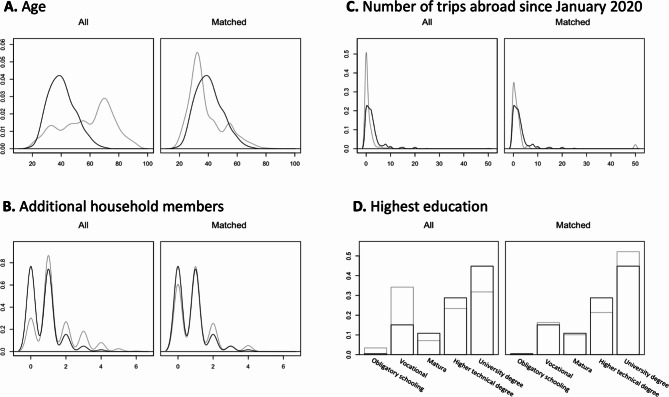
Methods: The study was conducted between July 2020 and October 2020 as a nested cross-sectional study within two ongoing cohort studies, SwissPrEPared (all eligible PrEP users in Switzerland ≥ 18 years old) and Corona Immunitas (a series of cross-sectional and longitudinal studies measuring the SARS-CoV-2 seroprevalence across Switzerland, beginning in April 2020). All SwissPrEPared participants were recruited from Checkpoint Zurich (the main PrEP clinic in Zurich) and were men having sex with men or transgender women. Data were collected on participants' SARS-CoV-2 antibody status, social characteristics and behavioral data after the first wave of the pandemic in Switzerland, and seroprevalence was compared with a propensity score-matched sample from the general Zurich population.
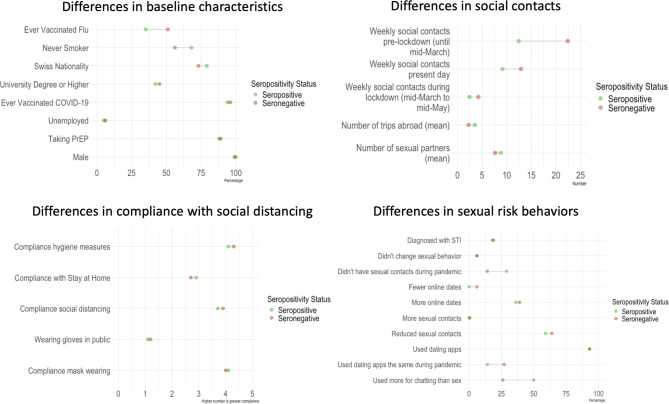
Results: Of the 218 participants enrolled, 8.7% (n = 19, 95% CI: 5.5-13.5%) were seropositive for SARS-CoV-2 during the first pandemic wave, higher than that of the general male population in Zurich aged 20-65 (5.5%, 95% CI: 3.8-8.2%). Participants on average reduced their social outings, but the seronegative were more socially active before, during, and after the first lockdown period. In a logistic model, increasing mean sexual partner count was not associated with seropositivity (OR: 1.02, 95% CI: 0.95, 1.07). The estimated risk ratio for seropositivity for the participants compared to the general Zurich population after propensity score matching was 1.46 (95% CI: 0.53, 3.99).
Conclusions: Our study suggests that SARS-CoV-2 seropositivity was slightly elevated among people taking PrEP in Zurich during the first wave of the pandemic, but that socializing and sexual activity were less important than other factors in contributing to risk.
Keywords: COVID-19; MSM; PrEP; SARS-CoV-2 seroprevalence; Switzerland; sexual behavior.
© 2024. The Author(s).
Conflict of interest statement
The authors declare no competing interests.
Figures
References
Publication types
MeSH terms
LinkOut - more resources
Full Text Sources
Medical
Miscellaneous
