


Impact of maternal high-fat diet on offspring gut microbiota during short-term high-fat diet exposure in mice
- PMID: 39489538
- PMCID: PMC11531878
- DOI: 10.14814/phy2.70111
Impact of maternal high-fat diet on offspring gut microbiota during short-term high-fat diet exposure in mice
Abstract
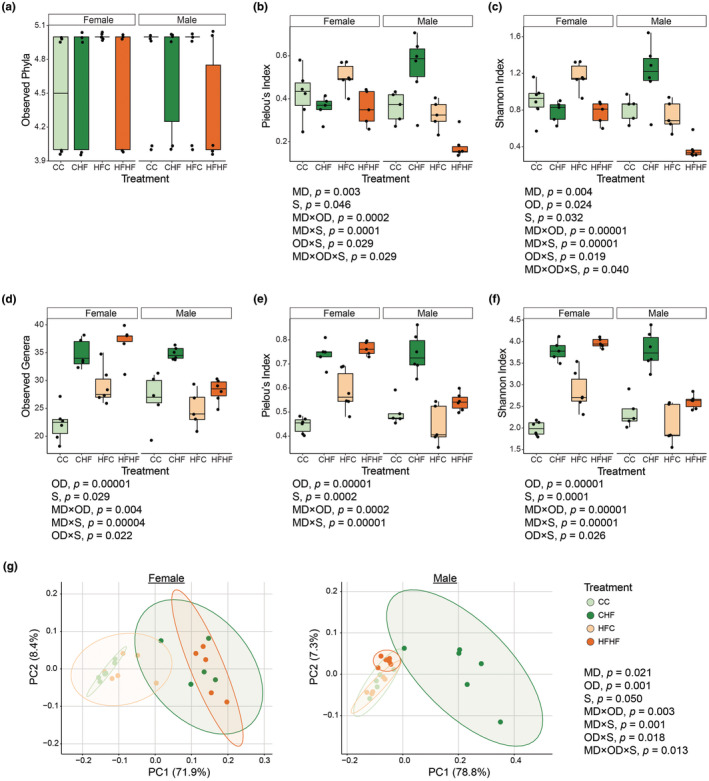
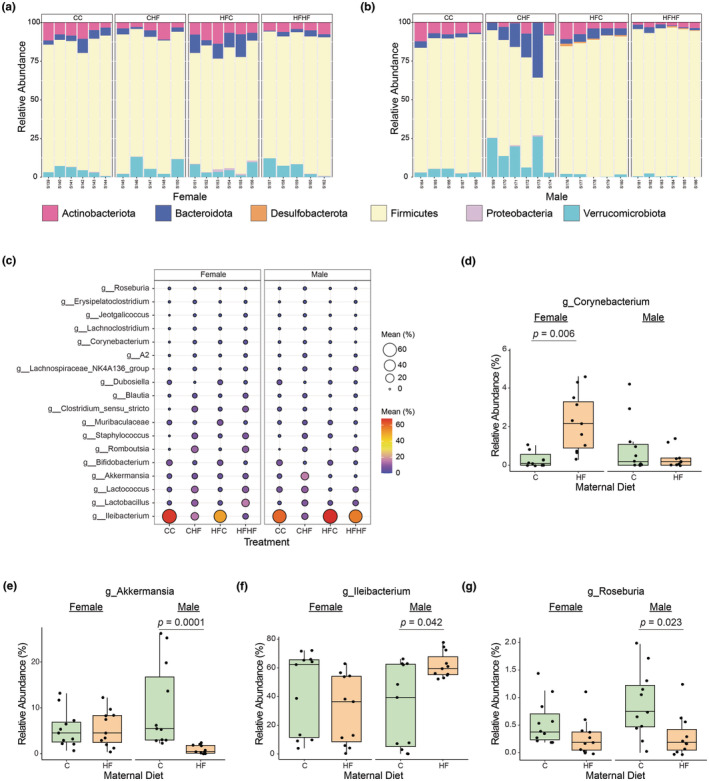
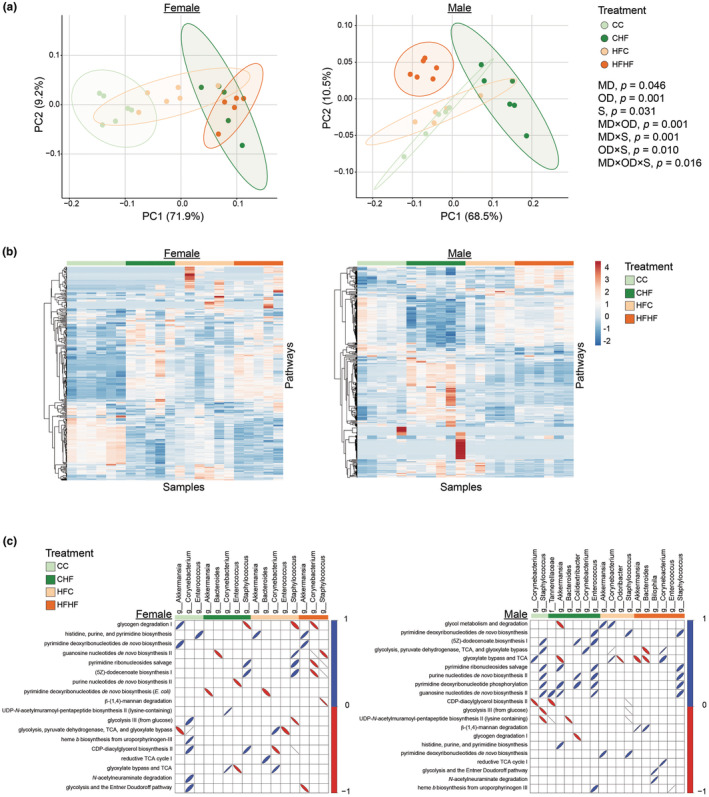
Alterations in the gut microbiome have been linked to obesity, with maternal high-fat diet (HF) playing a role in shaping offspring microbiome composition. However, the sex-specific responses to maternal HF diet and the impact of subsequent dietary challenges remain unclear. This study investigated the effects of maternal HF diet on offspring gut microbiota structure and predicted functional profile in response to short-term postnatal HF diet exposure with a focus on sex-specific responses. Female and male offspring of maternal control (C) diet or maternal HF diet were weaned onto C diet or HF diet. Offspring were euthanized at 13 weeks of age and cecal contents were collected for bacterial taxonomic profiling. Maternal HF diet reduced α-diversity, notably in male offspring weaned onto HF diet. Sex-specific differences were observed in the gut microbial composition and predicted functional potential. Furthermore, the influence of maternal diet on bacterial community structure and functional potential varied depending on postnatal diet. Maternal HF diet led to increased relative abundance of Corynebacterium in female offspring and decreased abundance of Akkermansia and Roseburia in male offspring. These findings underscore the sexually dimorphic nature of maternal HF diet effects on gut microbiota composition and function, with implications for developmental programming and metabolic health.
Keywords: diversity; functional profile; gut microbiota; maternal high‐fat diet; offspring; sexual dimorphism.
© 2024 The Author(s). Physiological Reports published by Wiley Periodicals LLC on behalf of The Physiological Society and the American Physiological Society.
Conflict of interest statement
The authors declare that they have no perceived or potential conflicts of interest, financial or otherwise.
Figures
References
-
- Amir, A. , McDonald, D. , Navas‐Molina, J. A. , Kopylova, E. , Morton, J. T. , Zech Xu, Z. , Kightley, E. P. , Thompson, L. R. , Hyde, E. R. , Gonzalez, A. , & Knight, R. (2017). Deblur rapidly resolves single‐nucleotide community sequence patterns. mSystems, 2, e00191‐16. 10.1128/msystems.00191-16 - DOI - PMC - PubMed
-
- Aron‐Wisnewsky, J. , Warmbrunn, M. V. , Nieuwdorp, M. , & Clément, K. (2021). Metabolism and metabolic disorders and the microbiome: The intestinal microbiota associated with obesity, lipid metabolism, and metabolic health—Pathophysiology and therapeutic strategies. Gastroenterology, 160, 573–599. 10.1053/J.GASTRO.2020.10.057 - DOI - PubMed
-
- Bolyen, E. , Rideout, J. R. , Dillon, M. R. , Bokulich, N. A. , Abnet, C. C. , Al‐Ghalith, G. A. , Alexander, H. , Alm, E. J. , Arumugam, M. , Asnicar, F. , Bai, Y. , Bisanz, J. E. , Bittinger, K. , Brejnrod, A. , Brislawn, C. J. , Brown, C. T. , Callahan, B. J. , Caraballo‐Rodríguez, A. M. , Chase, J. , … Caporaso, J. G. (2019). Reproducible, interactive, scalable and extensible microbiome data science using QIIME 2. Nature Biotechnology, 37, 852–857. 10.1038/s41587-019-0209-9 - DOI - PMC - PubMed
MeSH terms
Grants and funding
LinkOut - more resources
Full Text Sources
Research Materials
Miscellaneous
