


Experiences of Midwestern obstetric clinicians during the Coronavirus disease 2019 pandemic
- PMID: 39493438
- PMCID: PMC11530892
- DOI: 10.1016/j.xagr.2024.100392
Experiences of Midwestern obstetric clinicians during the Coronavirus disease 2019 pandemic
Abstract
Background: The Coronavirus disease 2019 (COVID-19) pandemic led to healthcare system changes aimed at minimizing disease transmission that impacted experiences with obstetric healthcare.
Objective: To explore experiences of clinicians providing obstetric care during the COVID-19 pandemic.
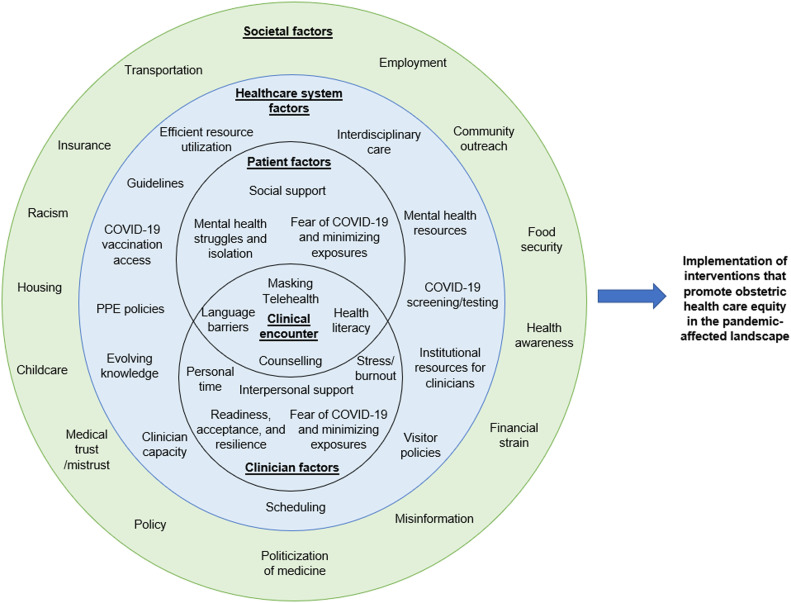
Study design: Qualitative, in-depth, semi-structured interviews were conducted with five nurse practitioners and 16 obstetrical physicians providing a mix of outpatient and inpatient obstetric care during the COVID-19 pandemic in a mid-sized, Midwestern city in the United States. Interviews elucidated challenges and facilitators of obstetric care provision and vaccination of pregnant patients against COVID-19 during the pandemic. Transcripts were coded inductively then deductively using the Health Equity Implementation Framework (HEIF), which integrates a disparities framework and implementation framework to highlight multilevel factors that influence obstetric care. Thematic analysis was conducted, and thematic saturation was reached.
Results: We interviewed 21 clinicians. Clinicians recounted personal challenges such as social isolation and burnout that could be countered by social support. Challenges within the clinical encounter included implementation of infection mitigation efforts, vaccine counseling, and limitations of telehealth. However, when successfully implemented, telehealth facilitated care and circumvented barriers. Clinicians cited challenges at the healthcare system level such as rapidly evolving knowledge and recommendations, restrictive visitor policies, personnel shortage, and inadequate institutional resources to support pandemic-related stressors. However, interdisciplinary care and guidelines available for clinicians facilitated care. Clinicians reported that challenges at the societal level included financial strain, lack of childcare, medical mistrust, politicization of medicine, misinformation, and racism. Societal-level facilitators included insurance access, community outreach, positive policy changes, and fostering trust in medicine.
Conclusion: The pandemic produced unique stressors and exacerbated existing challenges for clinicians providing obstetric care. Applying the HEIF to the findings emphasizes the influence of societal factors on all other levels. Identified facilitators can inform interventions to address stressors in obstetric care that have resulted from the changed sociopolitical landscape of the pandemic.
Keywords: COVID-19 vaccination; challenges; facilitators; health equity; misinformation; mistrust; obstetric care provision; qualitative methods; social determinants of health; telehealth.
© 2024 The Authors.
Figures
References
-
- American College of Obstetricians and Gynecologists. Addressing health equity during the COVID-19 pandemic: Position statement, 2020. (Accessed 31 July, 2024 athttps://www.acog.org/clinical-information/policy-and-position-statements...).
-
- Almuslim H, AlDossary S. Models of incorporating telehealth into obstetric care during the COVID-19 pandemic, its benefits and barriers: a scoping review. Telemed e-Health. 2022;28:24–38. - PubMed
LinkOut - more resources
Full Text Sources
