


Assessment of the microbial contamination in "Do It Yourself" (DIY) stores - a holistic approach to protect workers' and consumers' health
- PMID: 39494078
- PMCID: PMC11528695
- DOI: 10.3389/fpubh.2024.1483281
Assessment of the microbial contamination in "Do It Yourself" (DIY) stores - a holistic approach to protect workers' and consumers' health
Abstract
Introduction: In "Do-It-Yourself" (DIY) stores, workers from the wood department are considered woodworkers. Given the health risks associated with woodworking, particularly from fungi and their metabolites, this study aims to assess microbial contamination and health risks for both workers and customers.
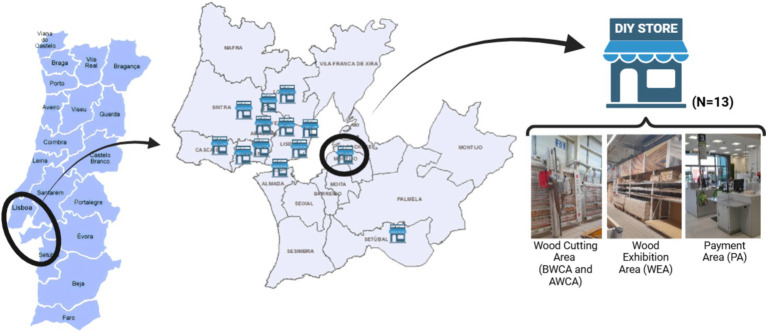
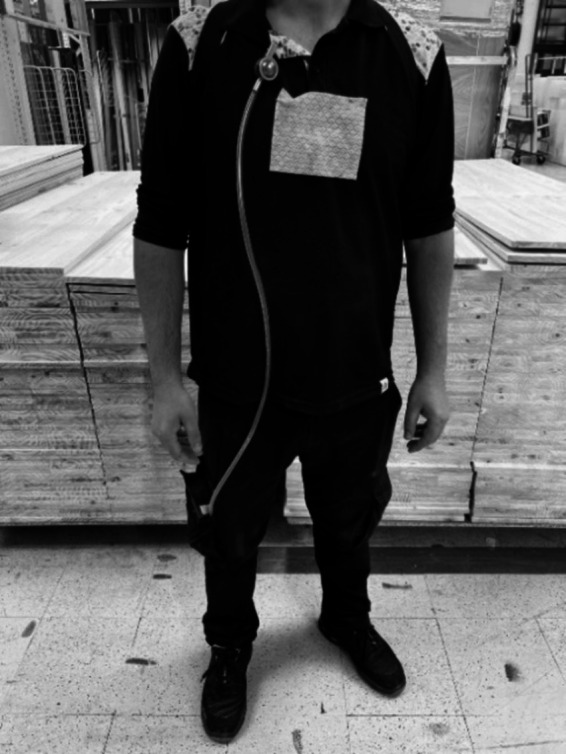
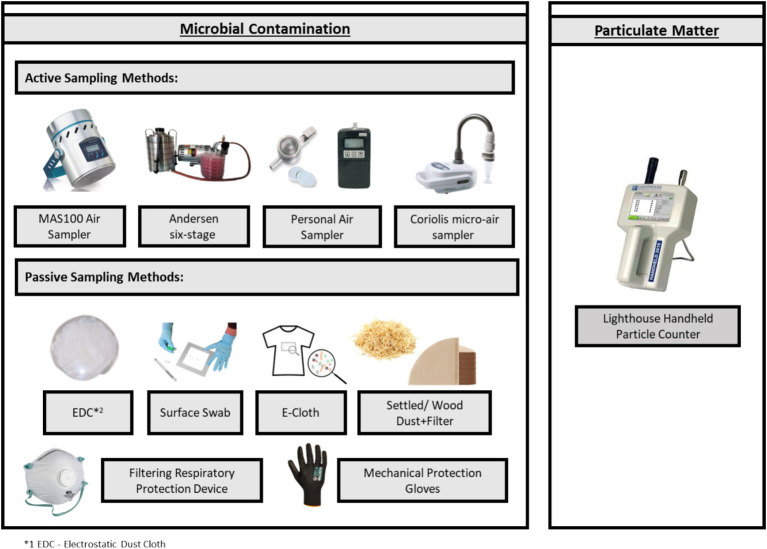
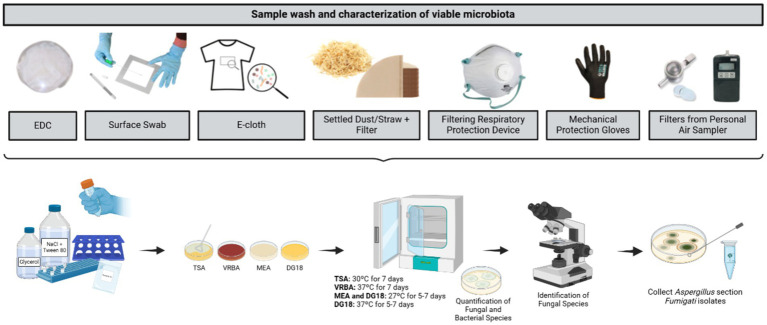
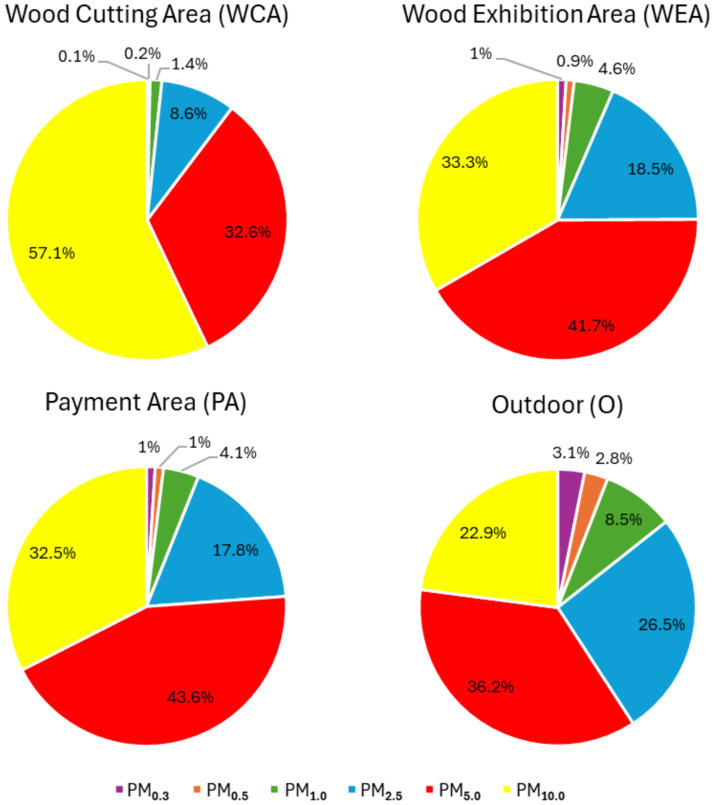
Methods: The study was developed in 13 DIY stores in Lisbon Metropolitan Area, Portugal. It employed a comprehensive sampling approach combining active (MAS-100, Andersen six-stage, Coriolis μ, and SKC Button Aerosol Sampler) and passive (electrostatic dust collectors, surface swabs, e-cloths, settled dust, filters from vacuumed dust, filtering respiratory protection devices, and mechanical protection gloves) methods to assess microbial contamination. A Lighthouse Handheld Particle Counter HH3016- IAQ was used to monitor the particulate matter size, temperature, and humidity.
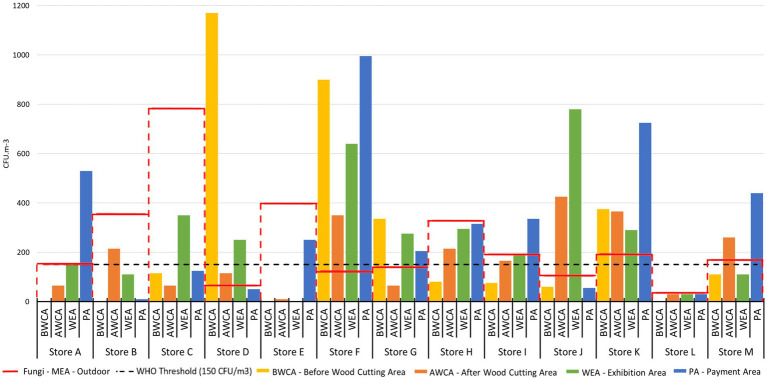
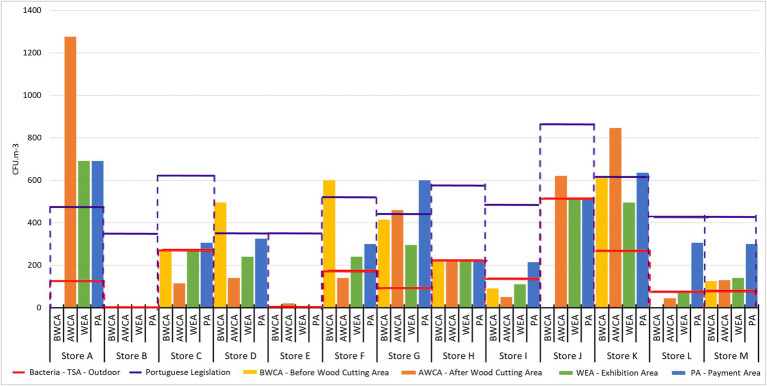
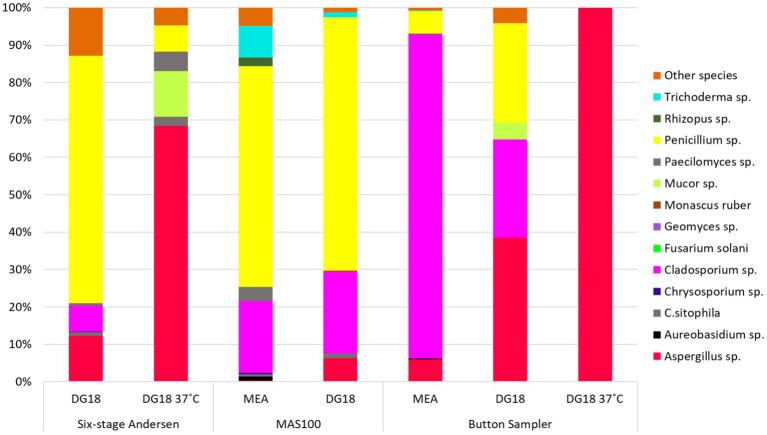
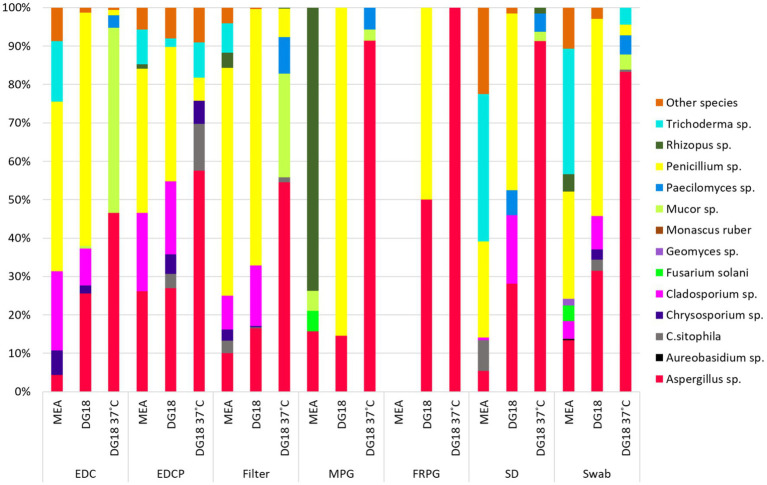
Results: The wood exhibition area presented the highest fungal load, while the payment area exhibited the highest bacterial load. MAS-100 detected the highest fungal load, and surface swabs had the highest bacterial load. Penicillium sp. was the most frequently observed fungal species, followed by Aspergillus sp. Mycotoxins, namely mycophenolic acid, griseofulvin, and aflatoxin G1, were detected in settled dust samples and one filter from the vacuum cleaner from the wood exhibition area. Cytotoxicity evaluation indicates the wood-cutting area has the highest cytotoxic potential. Correlation analysis highlights relationships between fungal contamination and particle size and biodiversity differences among sampling methods.
Discussion: The comprehensive approach applied, integrating numerous sampling methods and laboratory assays, facilitated a thorough holistic analysis of this specific environment, enabling Occupational and Public Health Services to prioritize interventions for accurate exposure assessment and detailed risk management.
Keywords: DIY stores; fungi; occupational exposure assessment; wood dust; woodworkers.
Copyright © 2024 Dias, Gomes, Pena, Cervantes, Gonçalves, Carolino, Twarużek, Kosicki, Ałtyn, Caetano, Viegas and Viegas.
Conflict of interest statement
The authors declare that the research was conducted in the absence of any commercial or financial relationships that could be construed as a potential conflict of interest.
Figures
References
-
- Statista . (2024). DIY & Hardware Store-Worldwide | Statista market forecast. Available at: https://www.statista.com/outlook/cmo/diy-hardware-store/worldwide (Accessed on 4th November, 2023)
-
- Statista . (2024). DIY & Hardware Store - Portugal | Statista market forecast. Available at: https://www.statista.com/outlook/cmo/diy-hardware-store/portugal (Accessed on 4th November, 2023)
MeSH terms
Substances
LinkOut - more resources
Full Text Sources
Medical
Research Materials
