


Early left ventricular unloading during extracorporeal membrane oxygenation in cardiogenic shock: A systematic review and meta-analysis
- PMID: 39494489
- PMCID: PMC11974487
- DOI: 10.1111/aor.14898
Early left ventricular unloading during extracorporeal membrane oxygenation in cardiogenic shock: A systematic review and meta-analysis
Abstract
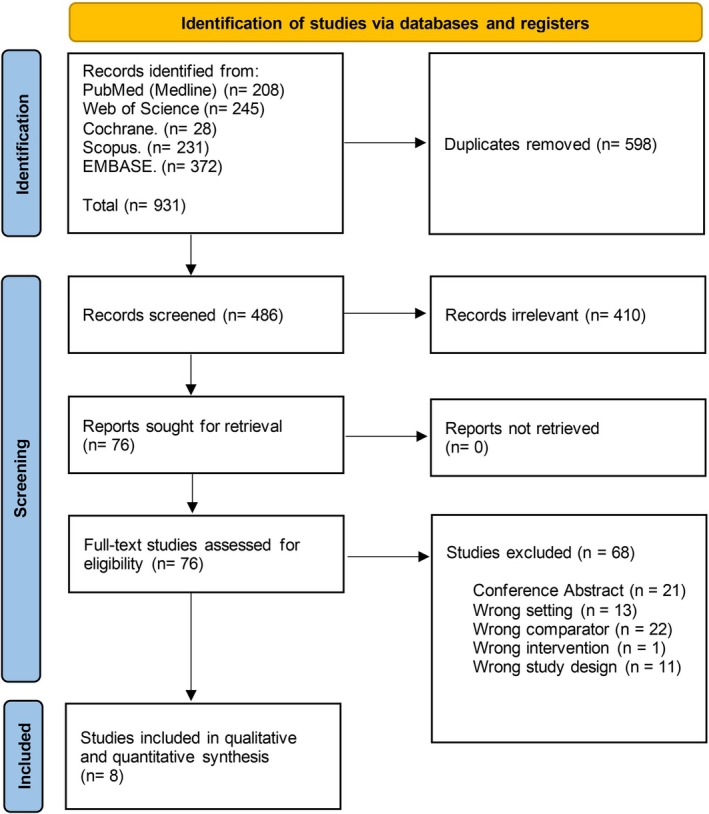
Background: Left ventricular (LV) unloading is a crucial intervention to decrease the harmful consequences of extracorporeal membrane oxygenation (ECMO) on hemodynamic status in cardiogenic shock (CS) patients. However, a lingering question preoccupies experts: Should we intervene early or wait until clinical deterioration caused by increasing afterload is detected?
Methods: A systematic review and meta-analysis synthesizing studies, which were retrieved by systematically searching PubMed, Web of Science, SCOPUS, and Cochrane through December 2023. We used R V. 4.3 to pool dichotomous data using risk ratio (RR) and continuous data using mean difference (MD) with a 95% confidence interval (CI).
Prospero id: CRD42024501643.
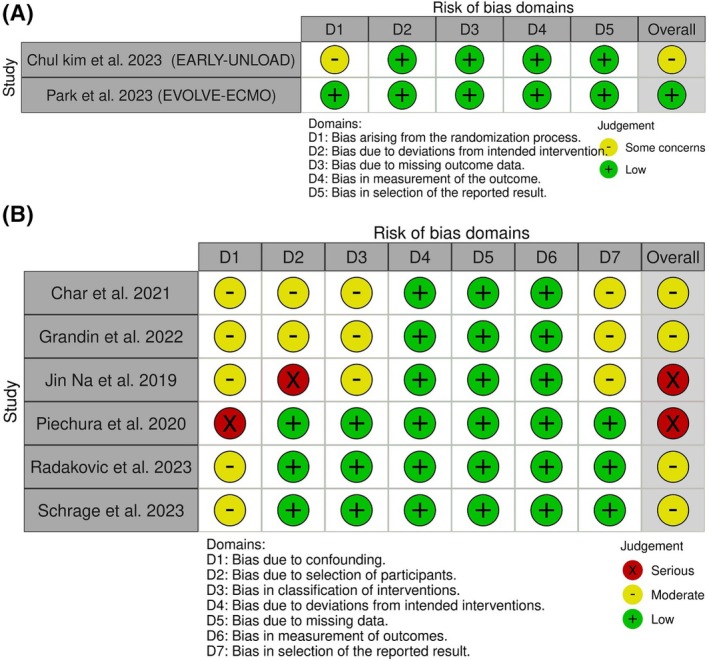
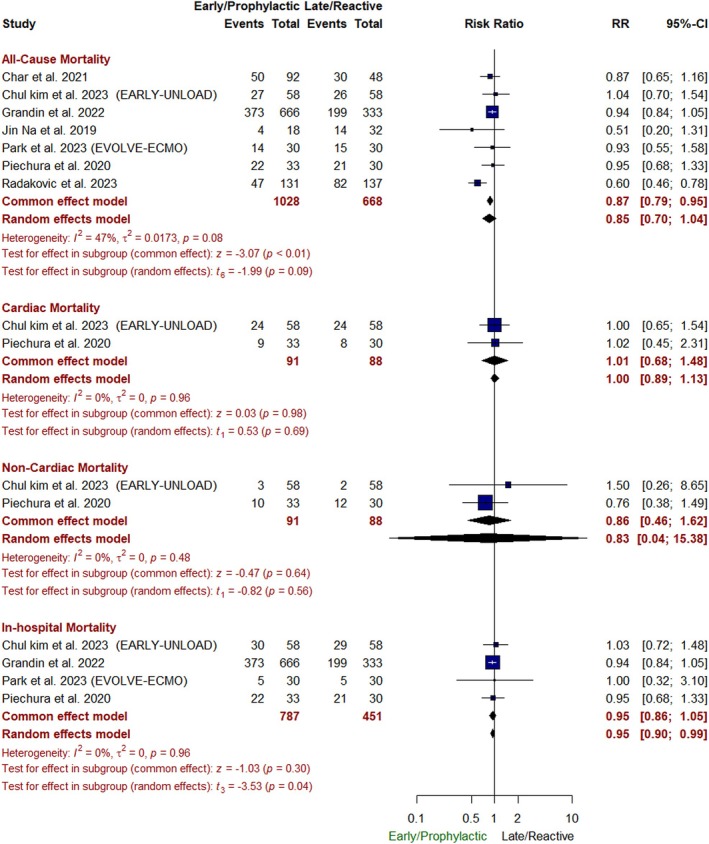
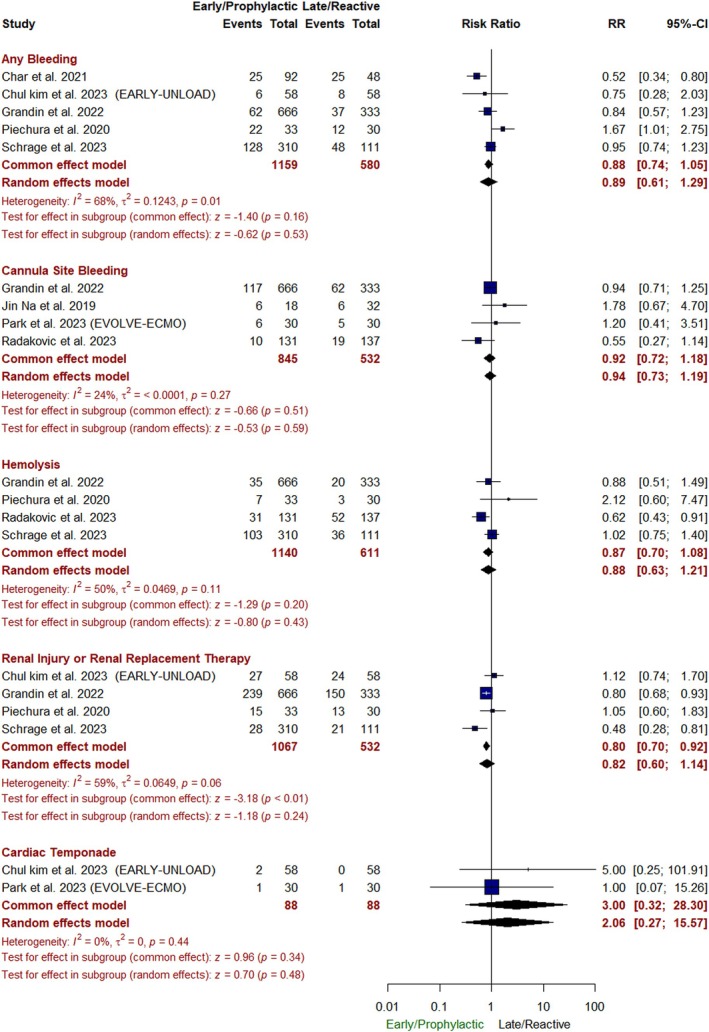
Results: Eight studies with 2.117 patients were included. Early/prophylactic LV unloading was associated with a lower incidence of all-cause mortality [RR: 0.87 with 95% CI (0.79, 0.95), p < 0.01]. However, there was no significant difference between the two groups regarding cardiac mortality [RR: 1.01 with 95% CI (0.68, 1.48), p = 0.98], non-cardiac mortality [RR: 0.86 with 95% CI (0.46, 1.62), p = 0.64], and in-hospital mortality [RR: 0.95 with 95% CI (0.86, 1.05), p = 0.30]. There was no significant difference between the two groups regarding ECMO weaning, myocardial recovery, ECMO duration, and length of hospitalization.
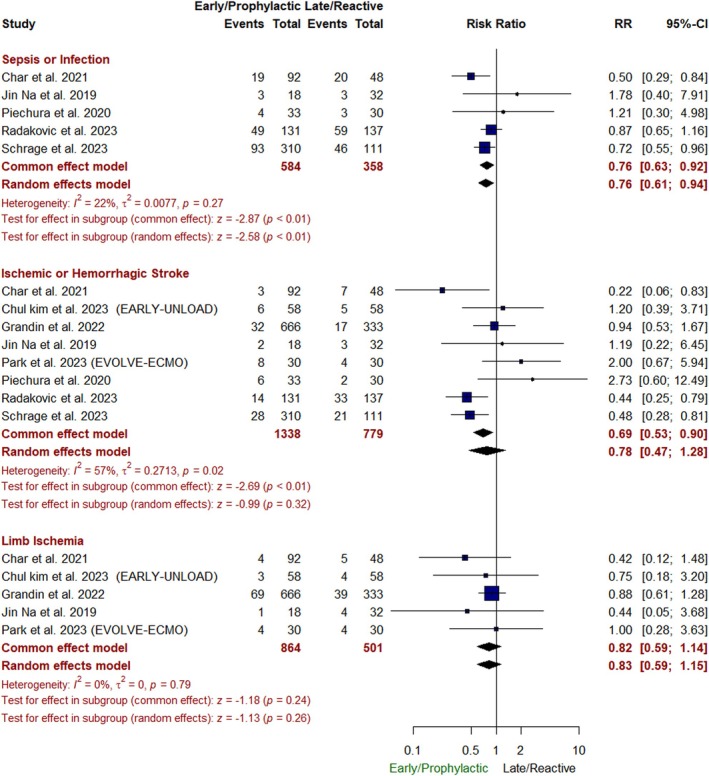
Conclusion: Early/prophylactic LV unloading during ECMO for CS patients was associated with a decreased incidence of all-cause mortality and sepsis or infection, with no effect on ECMO weaning, myocardial recovery, ECMO duration, and hospital length of stay.
Keywords: ECMO; LV unloading; clinical trial; meta‐analysis; review; shock.
© 2024 The Author(s). Artificial Organs published by International Center for Artificial Organ and Transplantation (ICAOT) and Wiley Periodicals LLC.
Conflict of interest statement
The authors declare no conflict of interest.
Figures

References
-
- Ordonez CP, Garan AR. The landscape of cardiogenic shock: epidemiology and current definitions. Curr Opin Cardiol. 2022;37(3):236–240. - PubMed
-
- Ferrari MW. Mechanical circulatory support in cardiogenic shock. Medizinische Klin ‐ Intensivmed und Notfallmedizin. 2019;114(1):77–90. - PubMed
-
- Bartlett RH, Gazzaniga AB, Fong SW, Jefferies MR, Roohk HV, Haiduc N. Extracorporeal membrane oxygenator support for cardiopulmonary failure. Experience in 28 cases. J Thorac Cardiovasc Surg. 1977;73(3):375–386. - PubMed
-
- Sheu JJ, Tsai TH, Lee FY, Fang HY, Sun CK, Leu S, et al. Early extracorporeal membrane oxygenator‐assisted primary percutaneous coronary intervention improved 30‐day clinical outcomes in patients with ST‐segment elevation myocardial infarction complicated with profound cardiogenic shock. Crit Care Med. 2010;38(9):1810–1817. - PubMed
-
- Asaumi Y, Yasuda S, Morii I, Kakuchi H, Otsuka Y, Kawamura A, et al. Favourable clinical outcome in patients with cardiogenic shock due to fulminant myocarditis supported by percutaneous extracorporeal membrane oxygenation. Eur Heart J. 2005;26(20):2185–2192. - PubMed
Publication types
MeSH terms
LinkOut - more resources
Full Text Sources
