


Clinical effectiveness of guided breathing exercises in reducing anxiety, stress, and depression in COVID-19 patients
- PMID: 39496767
- PMCID: PMC11535222
- DOI: 10.1038/s41598-024-78162-3
Clinical effectiveness of guided breathing exercises in reducing anxiety, stress, and depression in COVID-19 patients
Abstract
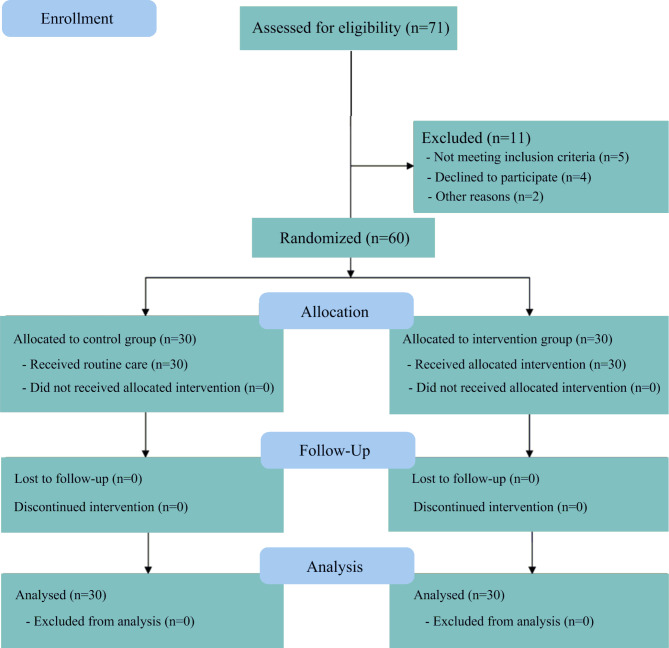
The COVID-19 pandemic has led to an increase in the prevalence of anxiety, stress and depression among affected people. This study was conducted with the aim of investigating the clinical effectiveness of guided breathing exercises in reducing anxiety, stress and depression in patients with COVID-19. A quasi-experimental study design was used, involving a sample of COVID-19 patients who underwent guided breathing exercises as a complementary therapy. After simple sampling, eligible subjects were randomly divided into two groups: intervention (30 patients) and control (30 patients) using random block method. The Depression Anxiety Stress Scale-21 (DASS-21) questionnaire was administered before and after the intervention to evaluate changes in anxiety, stress, and depression levels. The results of this study demonstrated that clinically guided breathing exercises had a significant effect on reducing anxiety and stress in COVID-19 patients. The intervention significantly reduced anxiety and stress scores (p < 0.001). However, there was no significant reduction in depression scores among patients who participated in guided breathing exercises (p = 0.946). Guided breathing exercises are an effective complementary technique in reducing the level of anxiety and stress in COVID-19 patients. Moreover, the exercises may provide a worthy non-pharmacological approach to managing psychological distress in COVID-19 patients.
Keywords: Anxiety; COVID-19; Depression; Depression anxiety stress Scale-21 (DASS-21); Guided breathing exercises; Stress.
© 2024. The Author(s).
Conflict of interest statement
The authors declare no competing interests.
Figures
References
-
- Naderi, M., Ebrahimzadeh, G., Alimohammadi, M. & Past, V. Effect of ozone on the inactivation of indoor airborne viruses with the COVID-19 virus approach: A systematic review. Tehran Univ. Med. J.80, 82–90 (2022).
-
- Alimohammadi, M. & Naderi, M. Effectiveness of ozone gas on airborne virus inactivation in enclosed spaces: A review study. Ozone: Sci. Eng.43, 21–31 (2021). - DOI
-
- Javadzadeh, M. et al. Evaluation of female infertility and viral diseases: A systematic review of coronaviruses. Sex. Disabil. 1–23 (2024).
Publication types
MeSH terms
LinkOut - more resources
Full Text Sources
Medical
