


A Multi-Hospital Comparative Study on the Efficacy of Probiotics Versus Placebo in Preventing Antibiotic-Associated Diarrhea in Adult Patients
- PMID: 39497860
- PMCID: PMC11533712
- DOI: 10.7759/cureus.70881
A Multi-Hospital Comparative Study on the Efficacy of Probiotics Versus Placebo in Preventing Antibiotic-Associated Diarrhea in Adult Patients
Abstract
Background: Antibiotic-associated diarrhea (AAD) is a prevalent complication of antibiotic therapy, attributed to disruptions in gut microbiota. Probiotics are increasingly studied for their potential in preventing AAD by restoring microbial balance.
Objective: The aim of this investigation was to assess the efficacy of probiotics in reducing AAD in adult patients when compared to a placebo.
Methodology: This research was conducted from March 2023 to March 2024 using a randomized, placebo-controlled design at multiple institutions: Khyber Teaching Hospital, Peshawar; Prime Teaching Hospital, Peshawar; Mufti Mahmood Memorial Teaching Hospital, Dera Ismail Khan; Shalamar Hospital, Lahore; University Hospitals of Leicester; and DHQ Teaching Hospital Kohat, enrolling 340 adult patients prescribed systemic antibiotics. Eligible participants were aged 18 years and older, while those with chronic diarrhea, inflammatory bowel disease, immunodeficiency, recent probiotic or antibiotic use, or inability to provide informed consent were excluded. The sample size was calculated using WHO guidelines, resulting in a target of 340 to ensure adequate power. Participants were randomized to receive either probiotics (Lactobacillus rhamnosus GG and Bifidobacterium longum BB536) or placebo, administered within 24 hours of starting antibiotics. Daily monitoring of bowel habits and symptoms was performed using standardized diaries, and adherence was evaluated through pill counts. Statistical analyses were performed using IBM SPSS Statistics for Windows, Version 27 (Released 2020; IBM Corp., Armonk, New York, United States), comparing the incidence, severity, and duration of AAD between groups, with a significance threshold of p < 0.05.
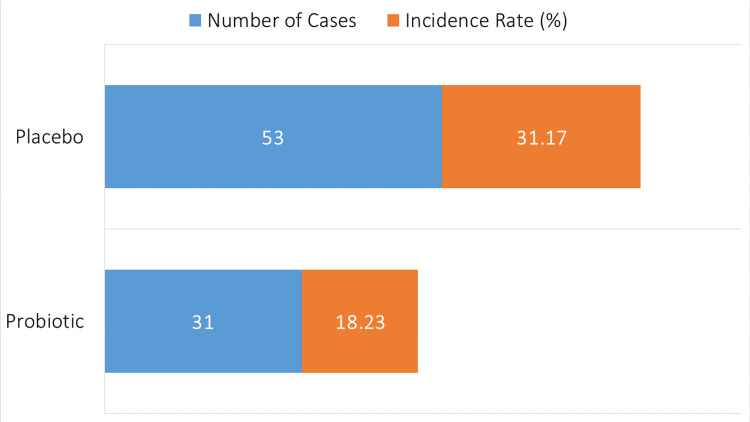
Results: In the probiotic group, 31 patients (18.23%) developed AAD compared to 53 patients (31.17%) in the placebo group (p=0.01). Among those with AAD, the probiotic group experienced a shorter duration (mean 3.5 ± 1.2 days) compared to placebo (mean 5.1 ± 1.8 days, p=0.002). Adherence rates were high in both groups (probiotic: 96.4%, placebo: 95.9%). Significant improvements in bowel habits were reported more frequently in the probiotic group (77.06%) than placebo (50.59%, p=0.02). The hospital stay duration was similar between groups (probiotic: mean 7.8 ± 2.1 days, placebo: mean 8.3 ± 2.4 days, p=0.15).
Conclusion: Probiotics significantly reduced the incidence and duration of AAD compared to placebo, with high adherence and favorable patient-reported outcomes.
Keywords: antibiotic-associated diarrhea; bifidobacterium; gastrointestinal health; lactobacillus; placebo; probiotics.
Copyright © 2024, Shah et al.
Conflict of interest statement
Human subjects: Consent was obtained or waived by all participants in this study. Institutional Review Board (IRB) of Khyber Teaching Hospital and Khyber Medical College Peshawar Institutional Research and Ethical Review Board (IREB) issued approval 624/DME/KMC. This study received ethical approval in December 2022. Permission for data collection was obtained from the Head of Department of all the involved institutes. Animal subjects: All authors have confirmed that this study did not involve animal subjects or tissue. Conflicts of interest: In compliance with the ICMJE uniform disclosure form, all authors declare the following: Payment/services info: All authors have declared that no financial support was received from any organization for the submitted work. Financial relationships: All authors have declared that they have no financial relationships at present or within the previous three years with any organizations that might have an interest in the submitted work. Other relationships: All authors have declared that there are no other relationships or activities that could appear to have influenced the submitted work.
Figures
References
-
- Antimicrobial therapy of acute diarrhoea: a clinical review. Lübbert C. Expert Rev Anti Infect Ther. 2016;14:193–206. - PubMed
-
- Probiotics, mechanisms of action, and clinical perspectives for diarrhea management in children. do Carmo MS, Santos CI, Araújo MC, Girón JA, Fernandes ES, Monteiro-Neto V. Food Funct. 2018;9:5074–5095. - PubMed
-
- Probiotics for the prevention and treatment of antibiotic-associated diarrhea: a systematic review and meta-analysis. Hempel S, Newberry SJ, Maher AR, et al. JAMA. 2012;307:1959–1969. - PubMed
LinkOut - more resources
Full Text Sources