


Ventricular arrhythmias in association with athletic cardiac remodelling
- PMID: 39499658
- PMCID: PMC11641426
- DOI: 10.1093/europace/euae279
Ventricular arrhythmias in association with athletic cardiac remodelling
Abstract
Athletes are predisposed to atrial arrhythmias but the association between intense endurance exercise training, ventricular arrhythmias (VAs), and sudden cardiac death is less well established. Thus, it is unclear whether the 'athlete's heart' promotes specific arrhythmias or whether it represents a more general pro-arrhythmogenic phenotype. Whilst direct causality has not been established, it appears possible that repeated exposure to high-intensity endurance exercise in some athletes contributes to formation of pro-arrhythmic cardiac phenotypes that underlie VAs. Theories regarding potential mechanisms for exercise-induced VAs include repeated bouts of myocardial inflammation and stretch-induced cellular remodelling. Small animal models provide some insights, but larger animal and human data are sparse. The current clinical approach to VAs in athletes is to differentiate those with and without structural or electrical heart disease. However, if the athlete's heart involves a degree of pro-arrhythmogenic remodelling, then this may not be such a simple dichotomy. Questions are posed by athletes with VAs in combination with extreme remodelling. Some markers, such as scar on magnetic resonance imaging, may point towards a less benign phenotype but are also quite common in ostensibly healthy athletes. Other clinical and invasive electrophysiology features may be helpful in identifying the at-risk athlete. This review seeks to discuss the association between athletic training and VAs. We will discuss the potential mechanisms, clinical significance, and approach to the management of athletes with VAs.
Keywords: Arrhythmogenic cardiomyopathy; Athlete; Athlete’s heart; Electroanatomic mapping; Electrophysiology study; Endurance athlete; Non-ischaemic LV scar; Premature ventricular complex; Sudden cardiac death; Ventricular arrhythmias; Ventricular tachycardia.
© The Author(s) 2024. Published by Oxford University Press on behalf of the European Society of Cardiology.
Conflict of interest statement
Conflict of interest: none declared.
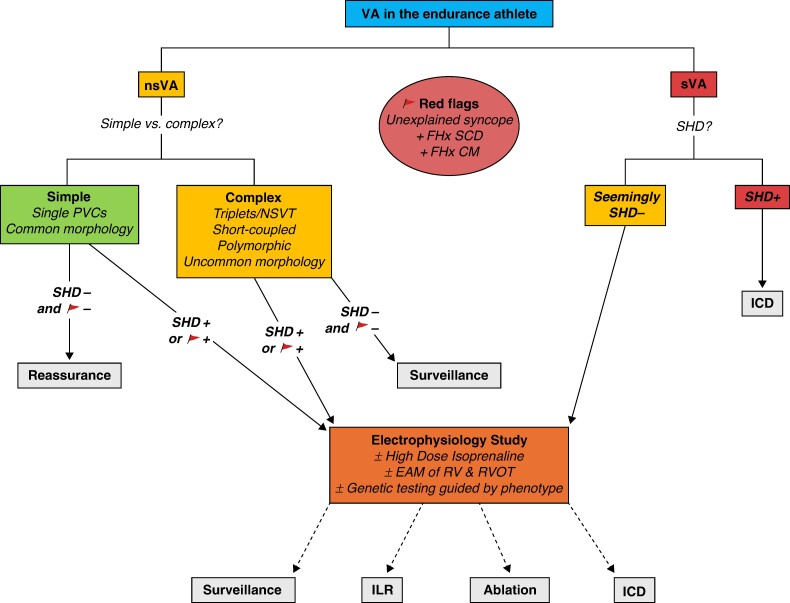
Figures
References
-
- Kokkinos P, Myers J, Faselis C, Panagiotakos DB, Doumas M, Pittaras A et al. Exercise capacity and mortality in older men: a 20-year follow-up study. Circulation 2010;122:790–7. - PubMed
-
- Baldesberger S, Bauersfeld U, Candinas R, Seifert B, Zuber M, Ritter M et al. Sinus node disease and arrhythmias in the long-term follow-up of former professional cyclists. Eur Heart J 2008;29:71–8. - PubMed
-
- Claessen G, Colyn E, La Gerche A, Koopman P, Alzand B, Garweg C et al. Long-term endurance sport is a risk factor for development of lone atrial flutter. Heart 2011;97:918–22. - PubMed
-
- Grimsmo J, Grundvold I, Maehlum S, Arnesen H. High prevalence of atrial fibrillation in long-term endurance cross-country skiers: echocardiographic findings and possible predictors—a 28–30 years follow-up study. Eur J Prev Cardiol 2010;17:100–5. - PubMed
Publication types
MeSH terms
Grants and funding
LinkOut - more resources
Full Text Sources
