. 2024 Nov 7;18(11):e0012612.
doi: 10.1371/journal.pntd.0012612. eCollection 2024 Nov.

Heart function enhancement by an Nrf2-activating antioxidant in acute Y-strain Chagas disease, but not in chronic Colombian or Y-strain

Affiliations

Heart function enhancement by an Nrf2-activating antioxidant in acute Y-strain Chagas disease, but not in chronic Colombian or Y-strain

Hilton Antônio Mata-Santos et al. PLoS Negl Trop Dis. .

Abstract

Oxidative stress promotes T. cruzi growth and development of chronic Chagas heart dysfunction. However, the literature contains gaps that must be fulfilled, largely due to variations in parasite DTU sources, cell types, mouse strains, and tools to manipulate redox status. We assessed the impact of oxidative environment on parasite burden in cardiomyoblasts and the effects of the Nrf2-inducer COPP on heart function in BALB/c mice infected with either DTU-II Y or DTU-I Colombian T. cruzi strains. Treatment with antioxidants CoPP, apocynin, resveratrol, and tempol reduced parasite burden in cardiomyoblasts H9C2 for both DTUI- and II-strains, while H2O2 increased it. CoPP treatment improved electrical heart function when administered during acute stage of Y-strain infection, coinciding with an overall trend towards increased survival and reduced heart parasite burden. These beneficial effects surpassed those of trypanocidal benznidazole, implying that CoPP directly affects heart physiology. CoPP treatment had beneficial impact on heart systolic function when performed during acute and evaluated during chronic stage. No impact of CoPP on heart parasite burden, electrical, or mechanical function was observed during the chronic stage of Colombian-strain infection, despite previous demonstrations of improvement with other antioxidants. Treatment with CoPP also did not improve heart function of mice chronically infected with Y-strain. Our findings indicate that amastigote growth is responsive to changes in oxidative environment within heart cells regardless of the DTU source, but CoPP influence on heart parasite burden in vivo and heart function is mostly confined to the acute phase. The nature of the antioxidant employed, T. cruzi DTU, and the stage of disease, emerge as crucial factors to consider in heart function studies.


Conflict of interest statement

The authors have declared that no competing interests exist.

Figures
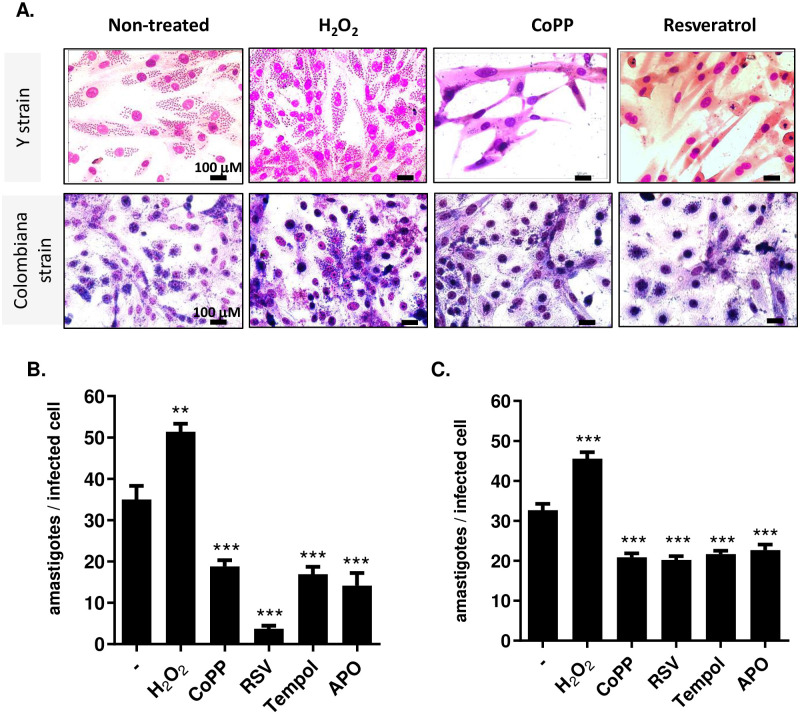
Fig 1
Fig 1. Treatment with antioxidant agents reduces the parasite load in cardiomyoblast lineage cells infected with T. cruzi DTU II and I.
Cardiomyoblast lineage cells, H9C2, were infected at a ratio of 3 parasites per cell (3:1). (A) representative slides; cells were colored with Giemsa. (B) Y strain (DTU II) and (C) Colombian strain (DTU I) amastigote burden. After 12 hours of infection, pro- and antioxidant antioxidant agents were incubated at the following concentrations: 20μM H2O2; 50μM CoPP; 50μM resveratrol; 50μM tempol and 1mM apocynin. After 48h of treatment, the number of amastigotes per infected cell was counted. Representative experiment performed in duplicate. ** p = 0.002; ***p<0.0001.
Fig 2
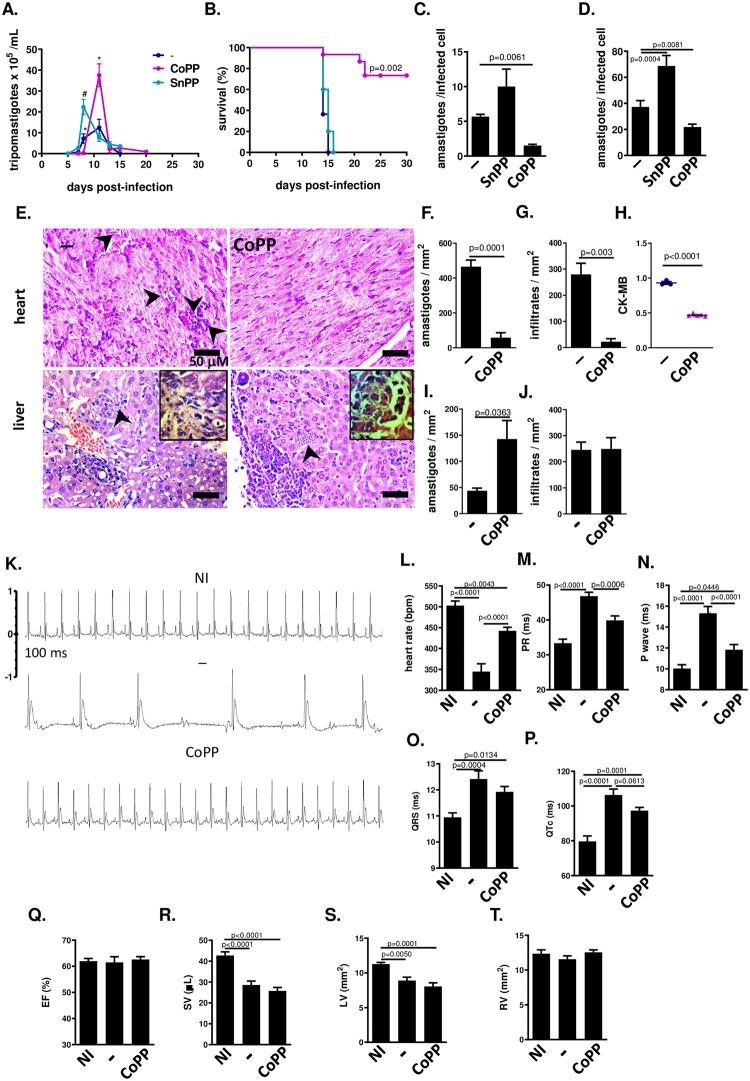
Fig 2. Treatment with CoPP during acute Y strain infection increases survival, reduces heart parasitism and inflammation.
BALB/c mice were infected with 103 blood trypomastigotes of the Y strain of T. cruzi and treated from days 0–10 with CoPP (5 mg/Kg, i.p.) or SnPP (5 mg/Kg, i.p.). (A) Parasitemia (n = 6–7 mice per group); (B) survival (n = 4–11 mice per group); (C) Parasite burden in peritoneal macrophages (ex vivo 15 dpi, n = 3–8 mice per group); (D) Parasite burden in peritoneal macrophages infected in vitro and treated with CoPP or SnPP (n = 20 cels per bar, from experiment of 2); (E) Heart (left ventricle) and liver histopathology (H&E slides); (F) Cardiac parasitic load (amastigote counting in H&E slides; n = 3–5 mice per group); (G) Cardiac infiltrate (leukocyte counting in H&E slides, n = 3–5 mice per group); (H) Plasma levels of the cardiac injury marker CK-MB (n = 3–5 mice per group); (I) Hepatic parasitic load (amastigote counting in H&E slides; n = 3–5 mice per group); (J) Hepatic infiltrate (leukocyte counting in H&E slides, n = 3–5 mice per group); (K) Representative EKG tracing; (L-P) EKG parameters (n = 14–18 mice per group): heart rate (RR interval); duration of PR interval; duration of P wave; duration of QRS; QT interval corrected by heart rate; (Q-T) Echo parameters (n = 10–18 mice per group): % Ejection Fraction (stroke volume/ end diastolic volume); Stroke Volume (μL); Left Ventricle Area (mm2); Right Ventricle Area (mm2), both transverse section. NI = non-infected; − = infected non-treated; CoPP = infected mice treated with CoPP; SnPP = infected treated with SnPP. Student’s t test was used to find a p-value.
Fig 3
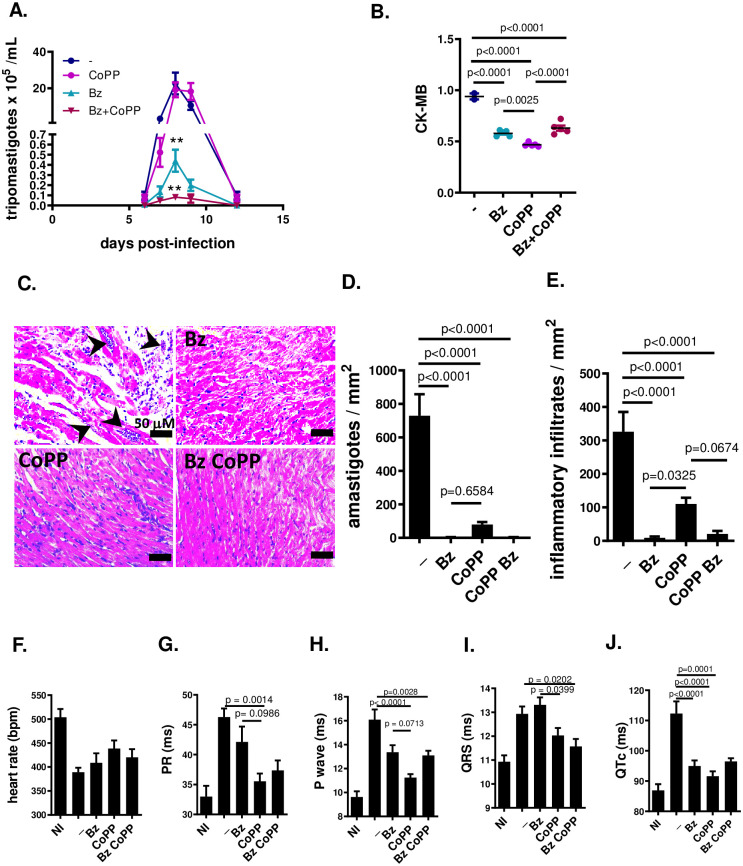
Fig 3. Treatment with CoPP and/ or Benznidazole improves cardiac function in the acute phase of Chagas disease caused by Y strain T. cruzi.
BALB/c mice were infected with 103 blood trypomastigotes of the Y strain of T. cruzi and treated from days 0–8 with CoPP (5 mg/Kg, i.p.) and/or BZ (25 mg/Kg). (A) Parasitemia (n = 5 mice per group); (B) Plasma levels of the cardiac injury marker CK-MB (n = 2–5 mice per group); (C) heart histopathology (H&E slides); (D) Cardiac parasitic load (amastigote counting in H&E slides, n = 5–7 mice per group); (E) Cardiac infiltrate (leukocyte counting in H&E slides, n = 5–7 mice per group); (F-J) EKG parameters (n = 9–10 mice per group); were performed in NI = not infected;— = infected and untreated mice; CoPP = infected mice treated with CoPP.
Fig 4
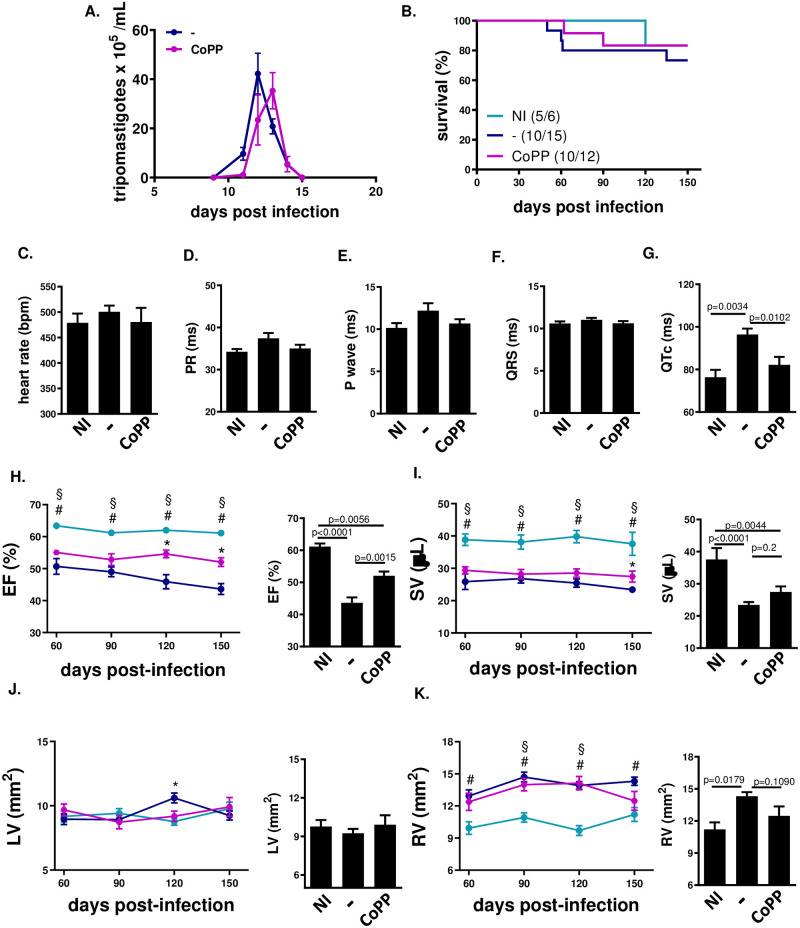
Fig 4. Treatment with CoPP prevents QTc prolongation and improves cardiac mechanical function at later times.
BALB/c mice were infected with 50 blood trypomastigotes of the T. cruzi Y strain and treated daily with CoPP (5 mg/Kg, i.p.) in the period 0–8 dpi, then assessed at the chronic period of infection, from 60–150 dpi. (A) Parasitemia (n = 6–15 mice per group), (B) Survival (n = 6-15mice per group), (C-G) EKG parameters (n = 5–12 mice per group): heart rate (RR interval); duration of PR interval; duration of P wave; duration of QRS; QT interval corrected by heart rate. (H-K) Echo parameters (n-5-9 mice per group): % Ejection Fraction (stroke volume/ end diastolic volume); Stroke volume (μL); Left Ventricle area and Right Ventricle area, mm2, transverse section. NI = not infected;— = infected and untreated mice; CoPP = infected mice treated with CoPP.
Fig 5
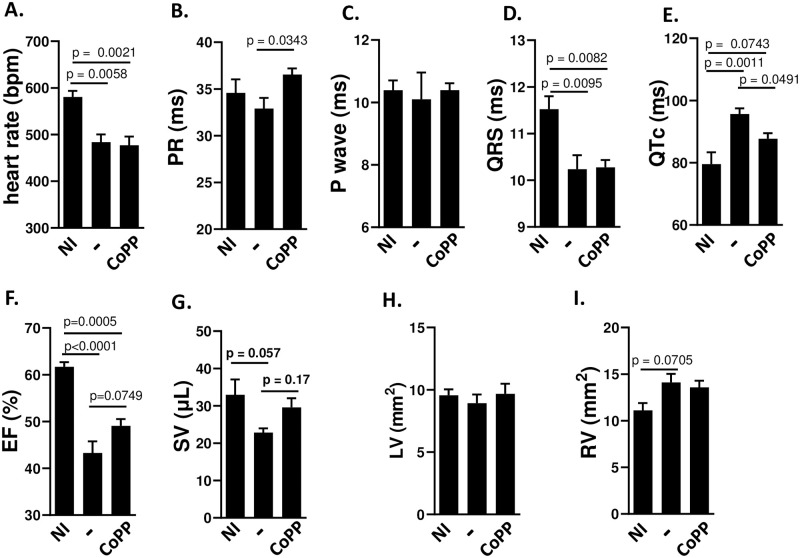
Fig 5. Treatment with CoPP improves mechanical, but not electrical function, of mice chronically infected with Y strain.
BALB/c mice were infected with 50 blood trypomastigotes of the Y strain of T. cruzi and treated from days 60–90 with CoPP (5 mg/Kg, i.p.). (A-E) EKG parameters (n = 5–6 mice per group); heart rate (RR interval); duration of PR interval; duration of P wave; duration of QRS; QT interval corrected by heart rate. (F-I) Echo parameters (n-5-9 mice per group): % Ejection Fraction (stroke volume/ end diastolic volume); Stroke volume (μL); Left Ventricle area and Right Ventricle area, mm2, transverse section. NI = not infected;— = infected and untreated mice; CoPP = infected mice treated with CoPP.
Fig 6
Fig 6. Treatment with CoPP fails to improve heart function of mice chronically infected with Colombiana T. cruzi strain.
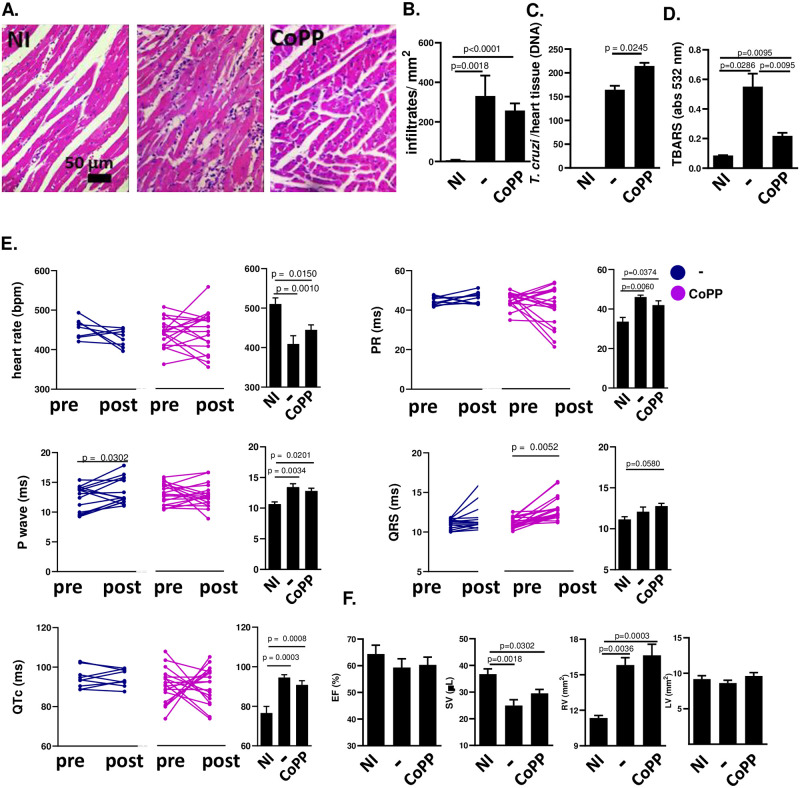
BALB/c mice were infected with 102 blood trypomastigotes of the Colombiana strain of T. cruzi and treated from days 60–90 after infection with CoPP (5 mg/Kg, i.p.). (A) heart histopathology (H&E slides; n = 5–16 mice per group); (B) cardiac infiltrate (leukocyte counting in H&E slides, n = 5–16 mice per group); (C) parasite burden inferred from T. cruzi/ heart tissue DNA (n = 2–3 mice per group); (D) lipid peroxidation as indicative of oxidative stress, measured by TBARS (n = 4–6 mice per group); (E) Pre (60 dpi) and post (90 dpi) EKG parameters (n = 9–21 mice per group): heart rate (RR interval); duration of PR interval; duration of P wave; duration of QRS; QT interval corrected by heart rate; (F) Echo parameters (n = 4–7 mice per group): % Ejection Fraction (stroke volume/ end diastolic volume); Stroke volume (μL); Left Ventricle area and Right Ventricle area, mm2, transverse section. NI = non-infected; − = infected non-treated; CoPP = infected treated with CoPP.

References

    1. Paiva CN, Medei E, Bozza MT. ROS and Trypanosoma cruzi: Fuel to infection, poison to the heart. PLoS Pathog. 2018;14(4):e1006928. Epub 20180419. doi: 10.1371/journal.ppat.1006928 - DOI - PMC - PubMed
    1. Paiva CN, Feijo DF, Dutra FF, Carneiro VC, Freitas GB, Alves LS, et al. Oxidative stress fuels Trypanosoma cruzi infection in mice. J Clin Invest. 2012;122(7):2531–42. Epub 20120625. doi: 10.1172/JCI58525 - DOI - PMC - PubMed
    1. Paiva CN, Bozza MT. Are reactive oxygen species always detrimental to pathogens? Antioxid Redox Signal. 2014;20(6):1000–37. Epub 20131026. doi: 10.1089/ars.2013.5447 - DOI - PMC - PubMed
    1. Goes GR, Rocha PS, Diniz AR, Aguiar PH, Machado CR, Vieira LQ. Trypanosoma cruzi Needs a Signal Provided by Reactive Oxygen Species to Infect Macrophages. PLoS Negl Trop Dis. 2016;10(4):e0004555. Epub 20160401. doi: 10.1371/journal.pntd.0004555 - DOI - PMC - PubMed
    1. Aguiar PH, Furtado C, Repoles BM, Ribeiro GA, Mendes IC, Peloso EF, et al. Oxidative stress and DNA lesions: the role of 8-oxoguanine lesions in Trypanosoma cruzi cell viability. PLoS Negl Trop Dis. 2013;7(6):e2279. Epub 20130613. doi: 10.1371/journal.pntd.0002279 - DOI - PMC - PubMed

MeSH terms