


The Role of Neuroinflammation in Shaping Neuroplasticity and Recovery Outcomes Following Traumatic Brain Injury: A Systematic Review
- PMID: 39519259
- PMCID: PMC11546226
- DOI: 10.3390/ijms252111708
The Role of Neuroinflammation in Shaping Neuroplasticity and Recovery Outcomes Following Traumatic Brain Injury: A Systematic Review
Abstract
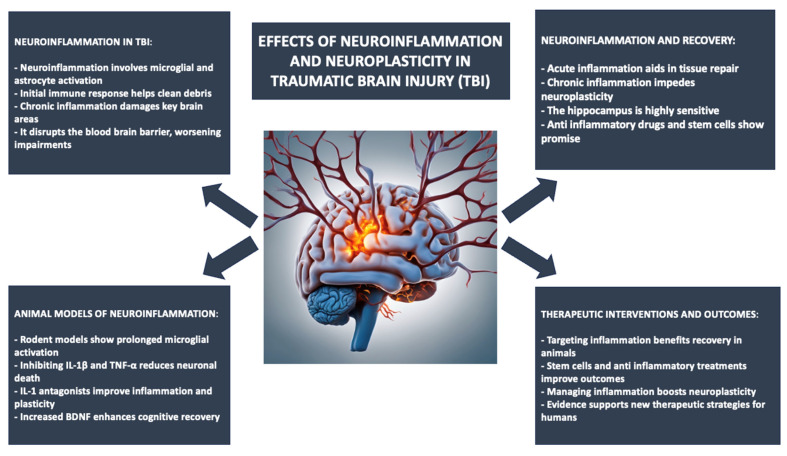
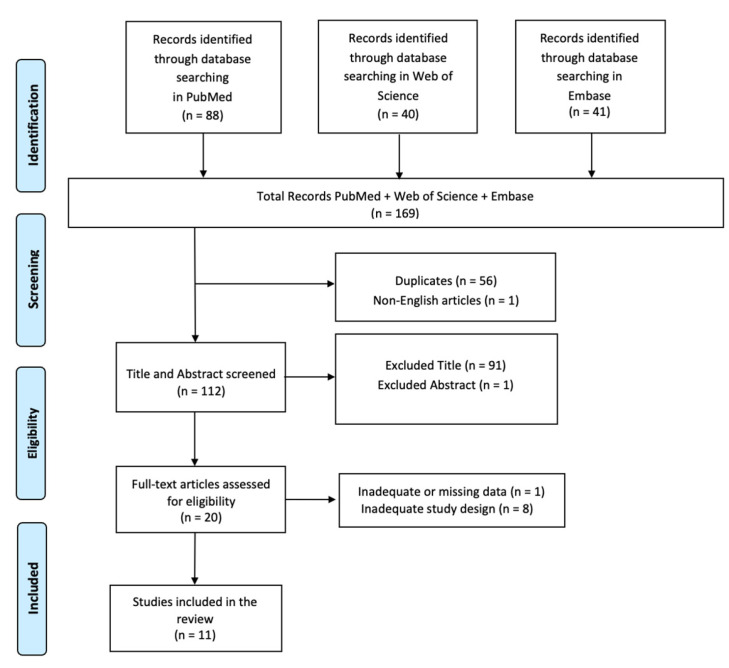
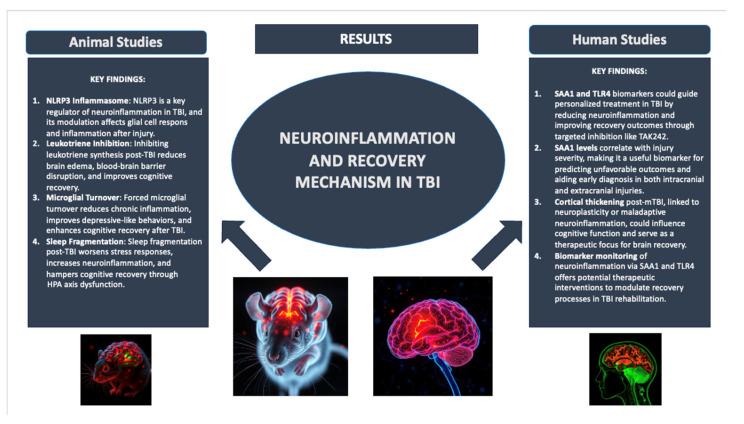
Neuroplasticity and neuroinflammation are variables seen during recovery from traumatic brain injury (TBI), while biomarkers are useful in monitoring injury and guiding rehabilitation efforts. This systematic review examines how neuroinflammation affects neuroplasticity and recovery following TBI in animal models and humans. Studies were identified from an online search of the PubMed, Web of Science, and Embase databases without any search time range. This review has been registered on Open OSF (n) UDWQM. Recent studies highlight the critical role of biomarkers like serum amyloid A1 (SAA1) and Toll-like receptor 4 (TLR4) in predicting TBI patients' injury severity and recovery outcomes, offering the potential for personalized treatment and improved neurorehabilitation strategies. Additionally, insights from animal studies reveal how neuroinflammation affects recovery, emphasizing targets such as NOD-like receptor family pyrin domain-containing 3 (NLRP3) and microglia for enhancing therapeutic interventions. This review emphasizes the central role of neuroinflammation in TBI, and its adverse impact on neuroplasticity and recovery, and suggests that targeted anti-inflammatory treatments and biomarker-based personalized approaches hold the key to improvement. Such approaches will need further development in future research by integrating neuromodulation and pharmacological interventions, along with biomarker validation, to optimize management in TBI.
Keywords: neuroinflammation; neuroplasticity; neurorehabilitation; traumatic brain injury.
Conflict of interest statement
The authors declare no conflicts of interest.
Figures
References
Publication types
MeSH terms
Substances
LinkOut - more resources
Full Text Sources
Medical
Miscellaneous
