


Ultra-Processed Food Intake and Risk of Insomnia: A Systematic Review and Meta-Analysis
- PMID: 39519600
- PMCID: PMC11548003
- DOI: 10.3390/nu16213767
Ultra-Processed Food Intake and Risk of Insomnia: A Systematic Review and Meta-Analysis
Abstract
Objectives: The objective of this investigation was to compile existing observational research and quantify the potential association between ultra-processed foods (UPFs) and the risk of insomnia using meta-analysis.
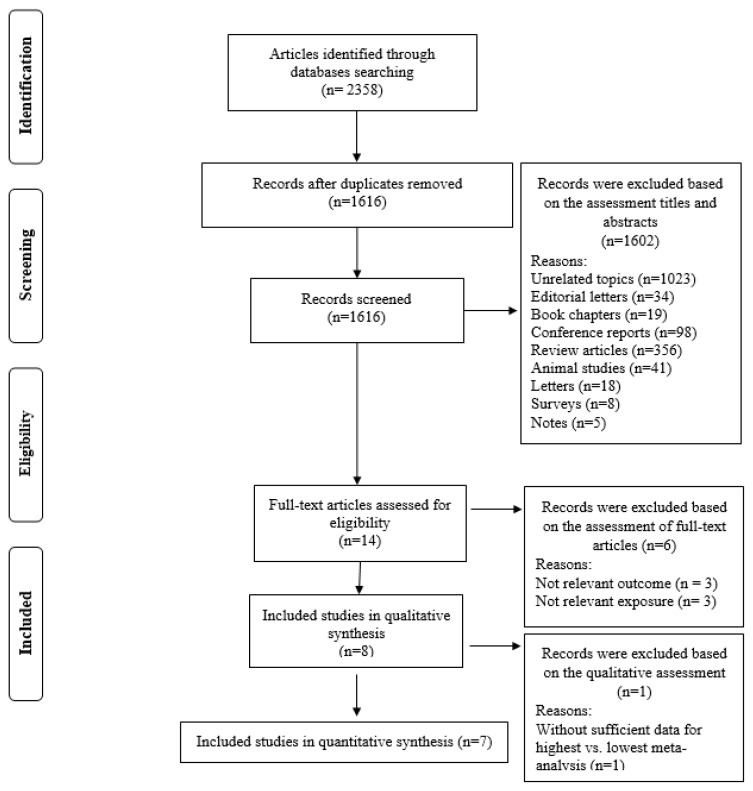
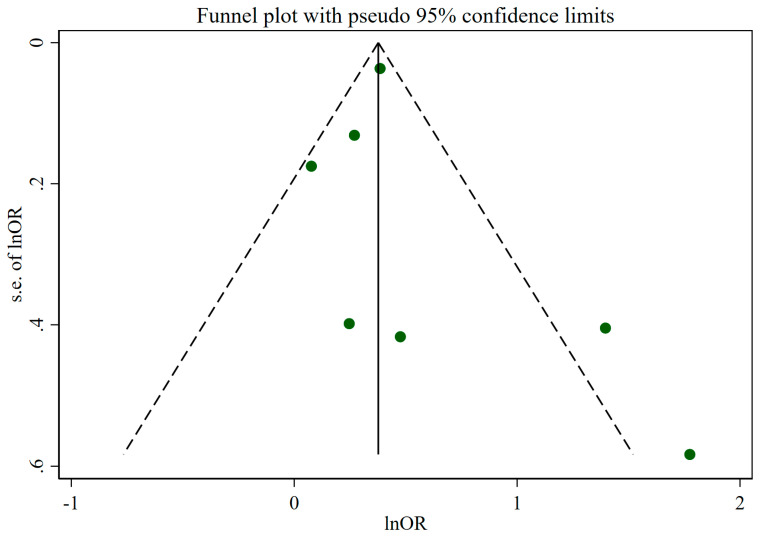
Setting: We conducted a systematic search of the PubMed/MEDLINE, Scopus, and ISI Web of Science databases with no restrictions until 29 June 2024. Odds ratios (OR) and 95% confidence intervals (CI) were aggregated using a random-effects model, while the Newcastle-Ottawa Scale and Egger's regression asymmetry test assessed study quality and publication bias, respectively.
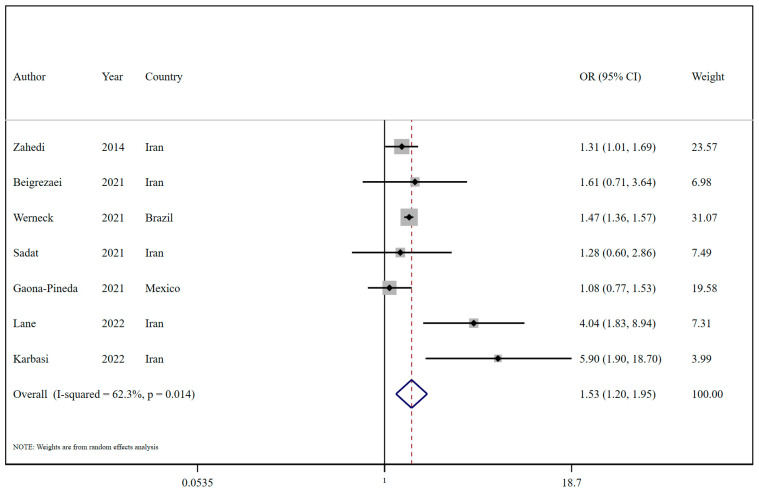
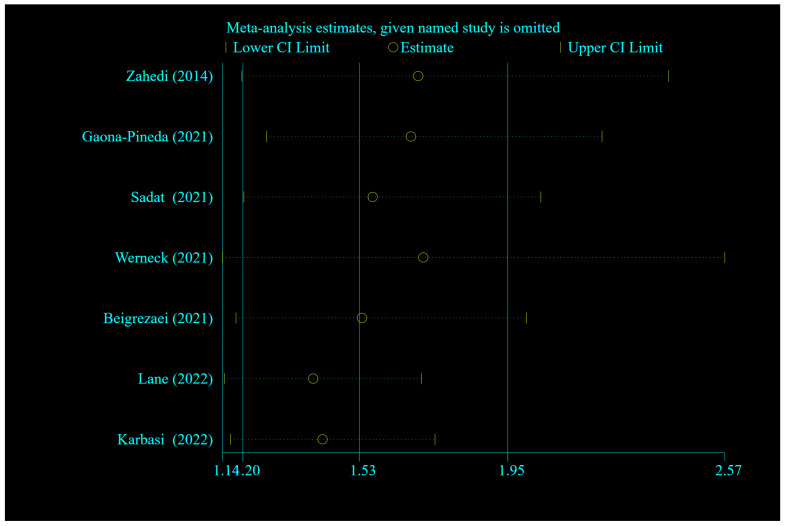
Results: Analysis of data from seven studies showed a significant positive association between higher intake of UPFs and an increased risk of insomnia (OR = 1.53; 95% CI: 1.20, 1.95; I2 = 62.3%; p = 0.014). Subgroup analysis indicated this positive relationship was particularly strong under the NOVA food classification (OR = 1.57; 95% CI: 1.03, 2.40; I2 = 78.5%; p = 0.009; n = 3) and with snack intake (OR = 1.33; 95% CI: 1.04, 1.71; I2 = 0.0%; p < 0.001; n = 2), compared to adherence to Western dietary patterns. Moreover, subgroup analysis based on age group showed that higher UPF intake was significantly associated with increased risk of insomnia among adolescents (OR = 1.55; 95% CI: 1.21, 1.99; I2 = 57.4%; p < 0.001) but not in adults.
Conclusions: Our findings underscore a significant association between higher consumption of UPFs and increased risk of insomnia, particularly among adolescents. Further research is necessary to explore the intricacies of this association and to ensure the generalizability of these results.
Keywords: insomnia; meta-analysis; sleep; ultra-processed foods.
Conflict of interest statement
The authors declare no potential conflicts of interest with respect to the research, authorship, and/or publication.
Figures
References
-
- Chung K.-F., Yeung W.-F., Ho F.Y.-Y., Yung K.-P., Yu Y.-M., Kwok C.-W. Cross-cultural and comparative epidemiology of insomnia: The Diagnostic and statistical manual (DSM), International classification of diseases (ICD) and International classification of sleep disorders (ICSD) Sleep Med. 2015;16:477–482. doi: 10.1016/j.sleep.2014.10.018. - DOI - PubMed
Publication types
MeSH terms
LinkOut - more resources
Full Text Sources
Medical
