


Follow-up and transition practices in esophageal atresia: a review of European Reference Network on rare Inherited and Congenital Anomalies (ERNICA) centres and affiliates
- PMID: 39521743
- PMCID: PMC11550284
- DOI: 10.1007/s00383-024-05865-z
Follow-up and transition practices in esophageal atresia: a review of European Reference Network on rare Inherited and Congenital Anomalies (ERNICA) centres and affiliates
Abstract
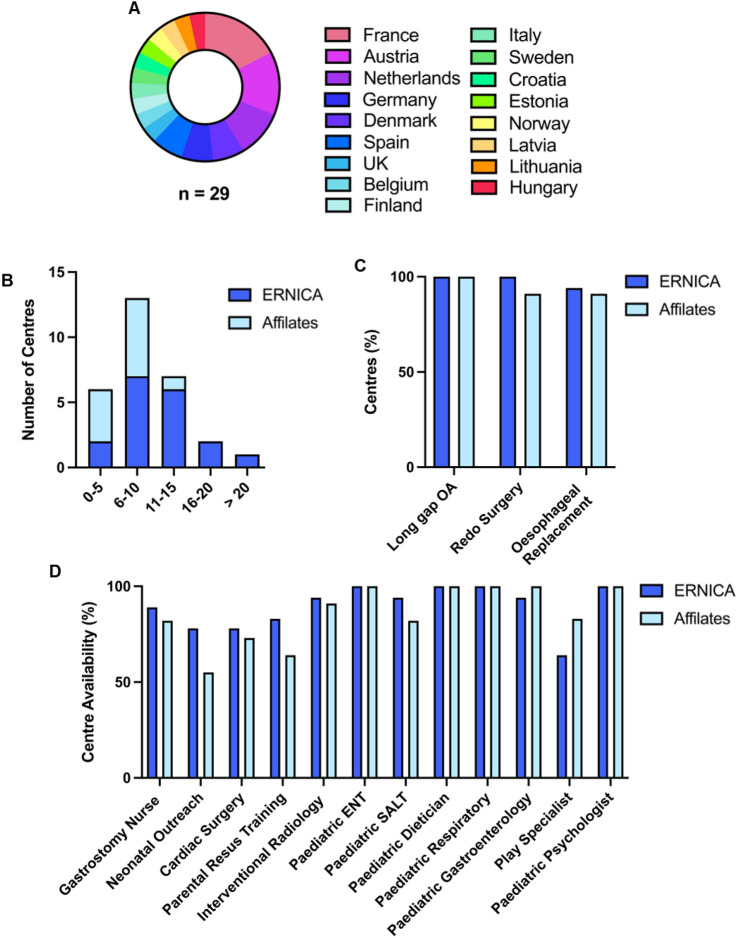
Purpose: The purpose of this study was to understand the provision and distribution of esophageal atresia (EA) follow-up (FU) and transition services across European Reference Network for rare Inherited and Congenital Anomalies (ERNICA) member and affiliate centers.
Methods: A REDCap questionnaire was sent to clinical leads of 18 ERNICA members and 14 affiliate centers.
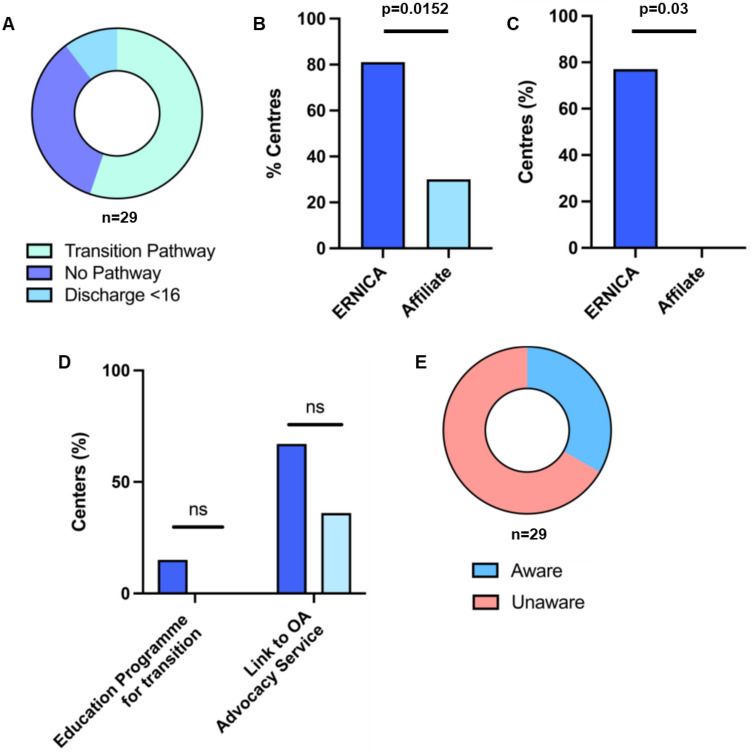
Results: 29 of 32 centers responded (91%), the majority of which were highly specialized. Two-thirds had a dedicated EA clinic with a specialist multi-disciplinary team (MDT), offered to selected/complex patients only in 40% of centers. ERNICA centers were more likely to offer an MDT FU clinic than affiliates, with lack of resources most cited as a barrier to uptake (67%). Delivery of routine investigations was heterogeneous, particularly provision of three endoscopies over the course of FU (24%). Only 55% had a dedicated transition pathway, more prevalent in ERNICA centers (81% vs. 30%; p < 0.01). Self-reported awareness of ERNICA and European Society for Pediatric Gastroenterology Hepatology and Nutrition (ESPGHAN) guidance for FU and transition was poor (28%).
Conclusion: Despite the existence of European follow-up and transition guidelines, their delivery is not uniform and may be limited by lack of awareness of the guidelines and a lack of resources.
Keywords: Esophageal atresia; European reference networks; Follow-up; Transition.
© 2024. The Author(s).
Conflict of interest statement
The authors declare no competing interests.
Figures


References
MeSH terms
Grants and funding
LinkOut - more resources
Full Text Sources
