


Role of intestinal testosterone-degrading bacteria and 3/17β-HSD in the pathogenesis of testosterone deficiency-induced hyperlipidemia in males
- PMID: 39521773
- PMCID: PMC11550401
- DOI: 10.1038/s41522-024-00599-1
Role of intestinal testosterone-degrading bacteria and 3/17β-HSD in the pathogenesis of testosterone deficiency-induced hyperlipidemia in males
Abstract
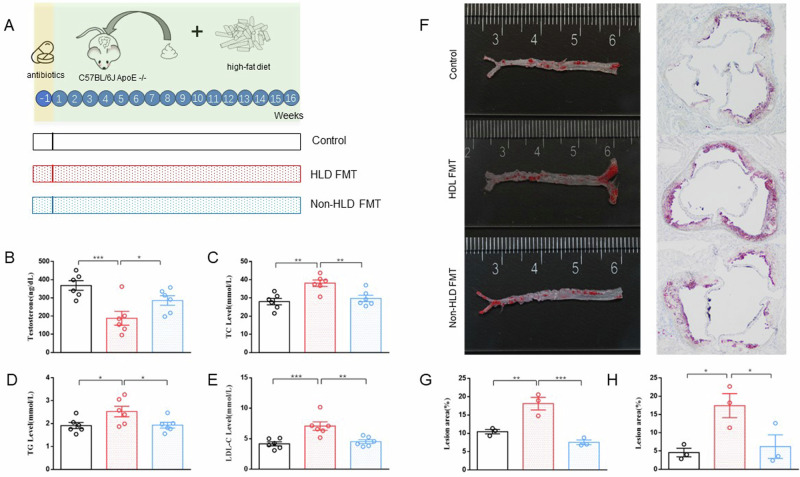
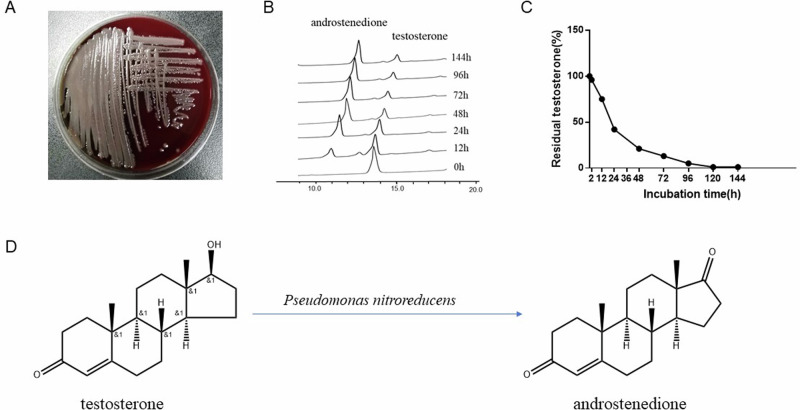
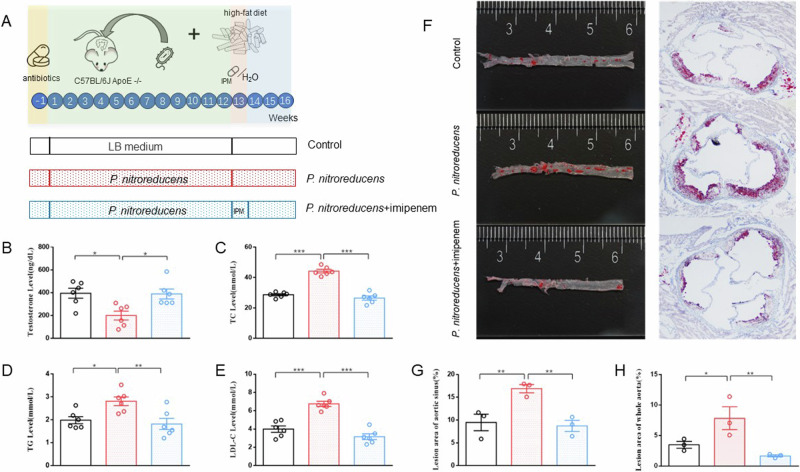
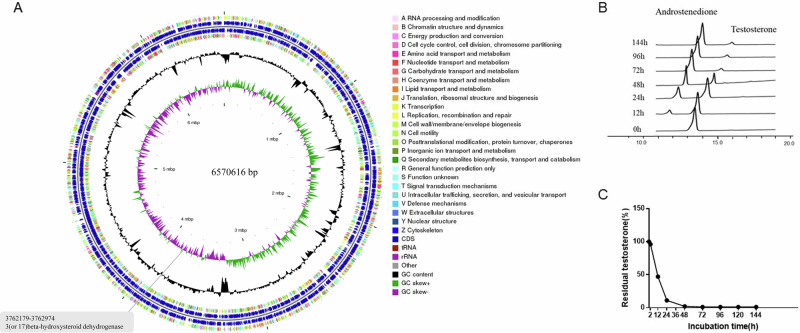
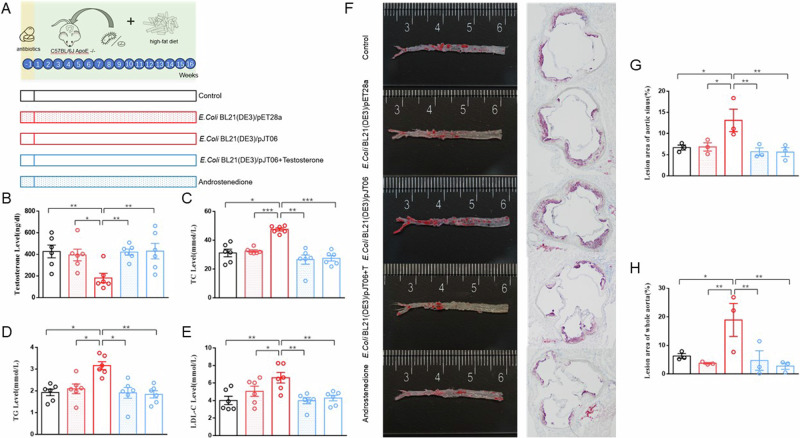
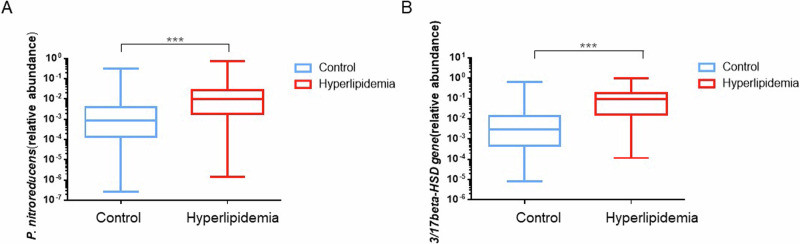
Testosterone deficiency can cause abnormal lipid metabolism in men, leading to hyperlipidemia. We identified the testosterone-degrading bacterium Pseudomonas nitroreducens in the fecal samples of male patients with hyperlipidemia. Gastric administration of P. nitroreducens in mice led to testosterone deficiency and elevated blood lipid levels. Whole-genome sequencing of P. nitroreducens revealed the presence of 3/17β-hydroxysteroid dehydrogenase (3/17β-HSD), a gene responsible for testosterone degradation, which is also associated with hyperlipidemia. Microbiota analysis of fecal samples collected from 158 patients with hyperlipidemia and 151 controls revealed that the relative abundance of P. nitroreducens and 3/17β-HSD in the fecal samples of patients with hyperlipidemia was significantly higher than that in controls. These results suggest that P. nitroreducens and 3/17β-HSD may be related to the onset of testosterone deficiency-induced hyperlipidemia. Therefore, treatments targeted at eradicating testosterone-degrading bacteria are a potential future option for patients with testosterone-induced hyperlipidemia and should thus be studied further.
© 2024. The Author(s).
Conflict of interest statement
The authors declare no competing interests.
Figures
References
-
- Ascaso, J. F. et al. Prevalence of metabolic syndrome and cardiovascular disease in a hypertriglyceridemic population. Eur. J. Intern. Med.22, 177–181 (2011). - PubMed
-
- Simon, D. et al. Association between plasma total testosterone and cardiovascular risk factors in healthy adult men: the Telecom Study. J. Clin. Endocrinol. Metab.82, 682–685 (1997). - PubMed
-
- Zhang, N. et al. The relationship between endogenous testosterone and lipid profile in middle-aged and elderly Chinese men. Eur. J. Endocrinol.170, 487–494 (2014). - PubMed
MeSH terms
Substances
LinkOut - more resources
Full Text Sources
Medical
