


A cross-sectional study of stigma towards opioid users among rural law enforcement and community members in tennessee
- PMID: 39522042
- PMCID: PMC11549791
- DOI: 10.1186/s12954-024-01114-7
A cross-sectional study of stigma towards opioid users among rural law enforcement and community members in tennessee
Abstract
Background: The U.S. opioid crisis, resulting in nearly 500,000 deaths from 1999 to 2019, has been exacerbated by persistent stigma, which hinders treatment and recovery efforts. This stigma, whether structural, social, or self-imposed, challenges overdose prevention and recovery. Our study aimed to assess and compare levels of stigma towards opioid users among rural law enforcement officers (LEOs) and community members in Tennessee, highlighting rural community-level attitudes.
Methods: Methods involved surveying two groups: LEOs (N=48) and community members (N=393). Utilizing a Likert Scale based on prior research, the survey probed attitudes toward drug use across four stigma domains: dangerousness, blame, social distancing, and fatalism. Analysis employed standardized scoring and ANOVA for evaluating stigma differences by participant characteristics.
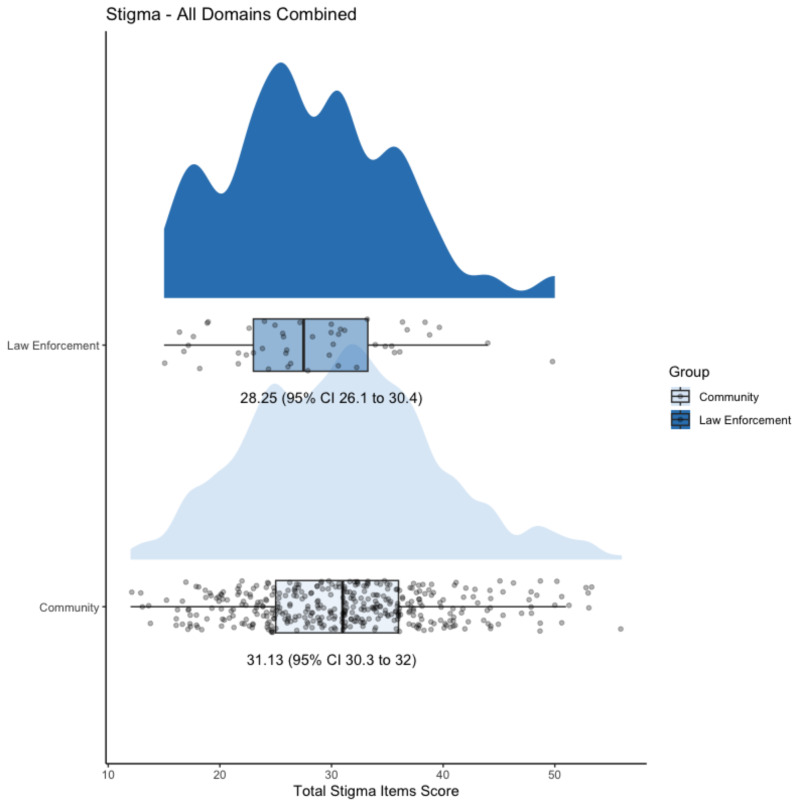
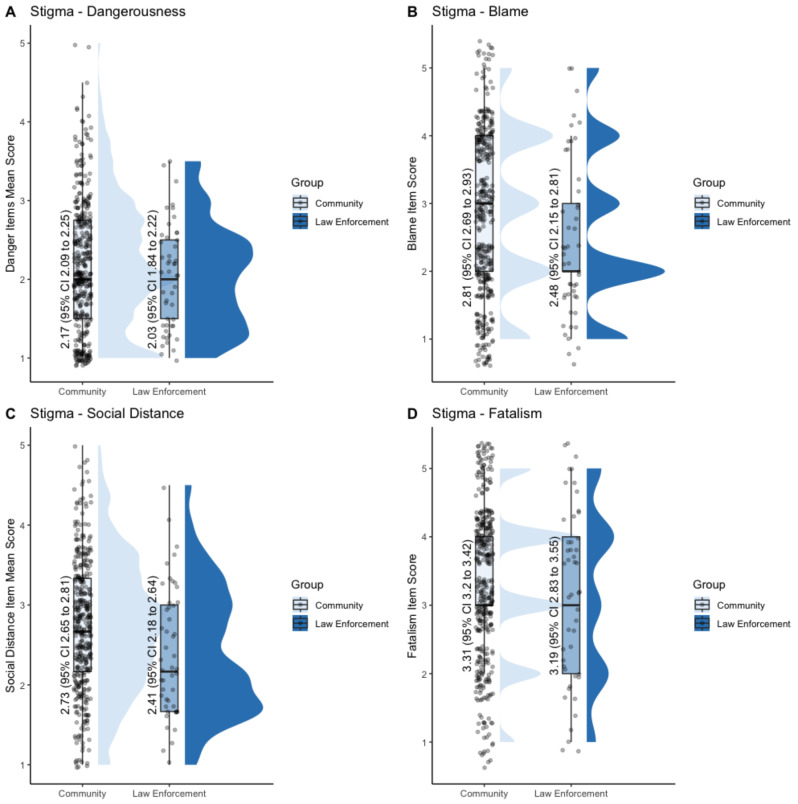
Results: LEOs (75%) and community members (51.7%) predominantly identify drug users as white, with varied perceptions regarding socioeconomic status and employment. Despite similar perceptions, normalized stigma scores revealed statistical differences between groups across stigma domains. ANOVA found no significant impact of participant type or gender on stigma levels, though race/ethnicity and its interaction with gender suggested potential influences on overall stigma score.
Conclusions: Both LEOs and community members in rural Tennessee hold measurable stigma against opioid users, spanning dangerousness, blame, social distancing, and fatalism domains. These insights highlight the need for further research into both professional and public attitudes toward individuals with opioid or other substance use disorders within shared communities. This research should aim to develop specific stigma-reducing interventions that target both providers and community members.
Keywords: Community; Law enforcement; Opioids; People who use drugs; Provider; Stigma.
© 2024. The Author(s).
Conflict of interest statement
The authors declare no competing interests.
Figures
References
-
- Centers for Disease Control and Prevention. Understanding the Opioid Overdose Epidemic | Opioids | CDC [Internet]. 2023 [cited 2023 Oct 12]. https://www.cdc.gov/overdose-prevention/about/understanding-the-opioid-o...
-
- Tennessee Department of Health. Opioids [Internet]. 2023 [cited 2023 Oct 12]. https://www.tn.gov/tbi/crime-issues/crime-issues/opioids.html
-
- Tennessee Department of Health. Tennessee Drug Overdose Data Dashboard [Internet]. 2024 [cited 2024 Sep 19]. https://www.tn.gov/health/health-program-areas/pdo/pdo/data-dashboard.html
-
- Assistant Secretary for Planning and Evaluation. U.S. DEPARTMENT OF HEALTH AND HUMAN SERVICES OVERDOSE PREVENTION STRATEGY [Internet]. Health and Human Services (HHS); 2021 [cited 2023 Oct 12]. https://aspe.hhs.gov/sites/default/files/documents/101936da95b69acb8446a...
-
- The White House. The White House. 2023 [cited 2023 Oct 12]. ICYMI: Biden-Harris Administration Announces $450 M to Support President Biden’s Unity Agenda Efforts to Beat the Overdose Epidemic Save Lives | ONDCP. https://www.whitehouse.gov/ondcp/briefing-room/2023/09/01/icymi-biden-ha...
MeSH terms
Grants and funding
LinkOut - more resources
Full Text Sources
Medical
Research Materials
