


Influence of decades-long irrigation with secondary treated wastewater on soil microbial diversity, resistome dynamics, and antibiotrophy development
- PMID: 39524766
- PMCID: PMC11544057
- DOI: 10.1016/j.heliyon.2024.e39666
Influence of decades-long irrigation with secondary treated wastewater on soil microbial diversity, resistome dynamics, and antibiotrophy development
Abstract
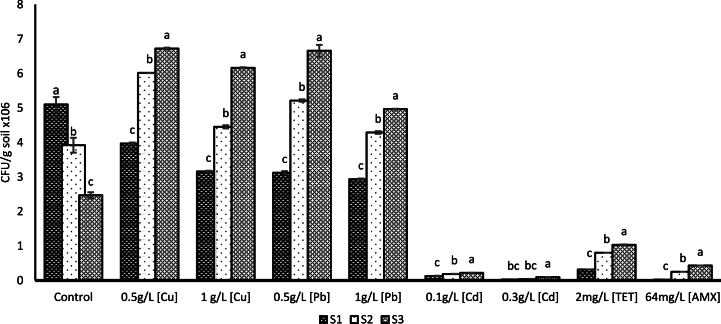
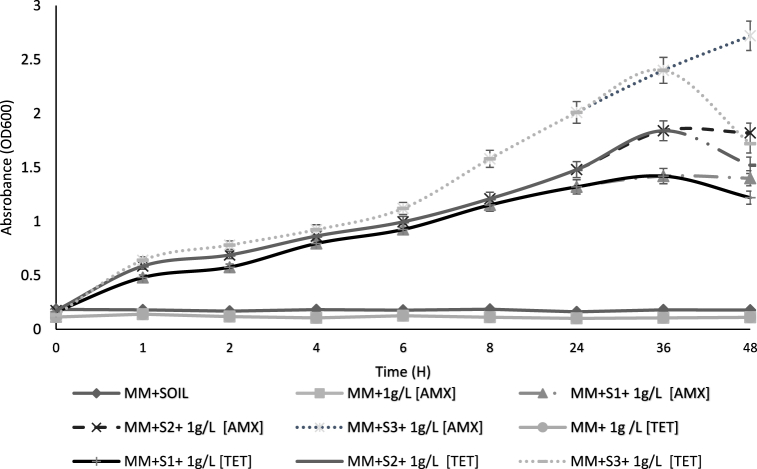
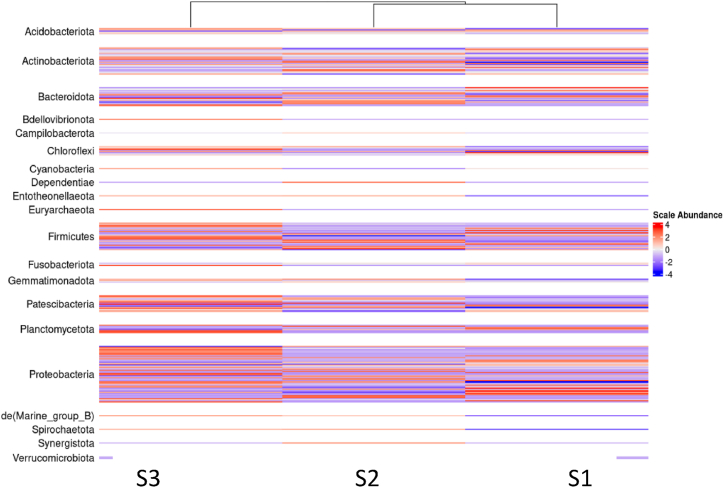
In arid and semi-arid regions, the use of treated wastewater (TWW) for irrigation is gaining ground to alleviate pressure on natural water sources. Despite said treatment, the existing methods fail to eliminate potentially dangerous contaminants. As such, this study assessed the impact of long-term TWW irrigation (5 and 25 years) on soil physicochemical properties and bacterial resistance to heavy metals (Pb, Cu, Cd) and antibiotics (tetracycline and amoxicillin). The results revealed heightened salinity and conductivity and reduced pH in irrigated soils. TWW induces harmful effects by reducing microbial density and size, leading to the disappearance of sensitive populations. Conversely, resilient populations, which mainly utilize antibiotics as a carbon source, have adapted. Metagenomic 16S amplicon sequencing analysis demonstrated a shift, notably reducing Actinobacteria, Bacteroidetes, and Firmicutes while increasing Acidobacteriota and Patescibacteria in treated soils. Operational Taxonomic Units affiliated with either Halomonadacea, or Saccharimonadacea and Vicinamibacteracea, were defined as indicators of the absence or presence of TWW contamination, respectively. We conclude that TWW irrigation significantly increases bacterial resistance to heavy metals, whereas the impact of antibiotics is nuanced, with antibiotrophy leveraging lower concentrations in treated soils.
Keywords: Antibiotics; Antibiotrophy; Heavy metals; Resistance gene co-selection; Soil resistome; Wastewater irrigation.
© 2024 The Authors.
Conflict of interest statement
The authors declare that they have no known competing financial interests or personal relationships that could have appeared to influence the work reported in this paper.
Figures

References
-
- FAO . 2003. Organisation des Nations Unies pour l'Alimentation et l'Agriculture Bureau Régional pour le Proche-orient et Bureau sous-régional pour l'Afrique du Nord. L'irrigation avec des eaux usées traitées : Manuel d'utilisation.
-
- UNWWDR . UNESCO; Paris: 2017. The United Nations World Water Development Report 2017. Wastewater: the Untapped Resource; p. 180.
LinkOut - more resources
Full Text Sources
Research Materials
