. 2024 Nov 12;22(11):e3002916.
doi: 10.1371/journal.pbio.3002916. eCollection 2024 Nov.

Deep mutational scanning of H5 hemagglutinin to inform influenza virus surveillance

Affiliations

Deep mutational scanning of H5 hemagglutinin to inform influenza virus surveillance

Bernadeta Dadonaite et al. PLoS Biol. .

Abstract

H5 influenza is considered a potential pandemic threat. Recently, H5 viruses belonging to clade 2.3.4.4b have caused large outbreaks in avian and multiple nonhuman mammalian species. Previous studies have identified molecular phenotypes of the viral hemagglutinin (HA) protein that contribute to pandemic potential in humans, including cell entry, receptor preference, HA stability, and reduced neutralization by polyclonal sera. However, prior experimental work has only measured how these phenotypes are affected by a handful of the >10,000 different possible amino-acid mutations to HA. Here, we use pseudovirus deep mutational scanning to measure how all mutations to a 2.3.4.4b H5 HA affect each phenotype. We identify mutations that allow HA to better bind α2-6-linked sialic acids and show that some viruses already carry mutations that stabilize HA. We also measure how all HA mutations affect neutralization by sera from mice and ferrets vaccinated against or infected with 2.3.4.4b H5 viruses. These antigenic maps enable rapid assessment of when new viral strains have acquired mutations that may create mismatches with candidate vaccine virus, and we show that a mutation present in some recent H5 HAs causes a large antigenic change. Overall, the systematic nature of deep mutational scanning combined with the safety of pseudoviruses enables comprehensive measurements of the phenotypic effects of mutations that can inform real-time interpretation of viral variation observed during surveillance of H5 influenza.


Conflict of interest statement

J.D.B. and B.D. are inventors on Fred Hutch licensed patents related to the pseudovirus deep mutational scanning technique used in this paper and a provisional patent describing stabilizing mutations to HA.. J.D.B. consults for Apriori Bio, Invivyd, the Vaccine Company, Moderna, and GSK. B.D. consults for Moderna. N.P.K. is a cofounder, shareholder, paid consultant, and chair of the scientific advisory board of Icosavax, Inc. The King lab has received unrelated sponsored research agreements from Pfizer and GlaxoSmithKline.

Figures

Fig 1
Fig 1. Deep mutational scanning of H5 HA.
(A) HA phenotypes relevant to pandemic risk that were measured in this study. (B) Phylogenetic tree of H5Nx HAs. The A/goose/Guangdong/1/96-like lineage that was first identified as a highly pathogenic form of avian influenza in 1996 forms the large lower clade on the tree. The 2.3.4.4b clade that recently has spread globally is in red, and the A/American Wigeon/South Carolina/USDA-000345-001/2021 (H5N1) sequence used in our deep mutational scanning study is indicated. The tree file can be found in S1 Data. (C) Schematic of a library of genotype-phenotype linked pseudoviruses. See S1 Fig for more details on the library.
Fig 2
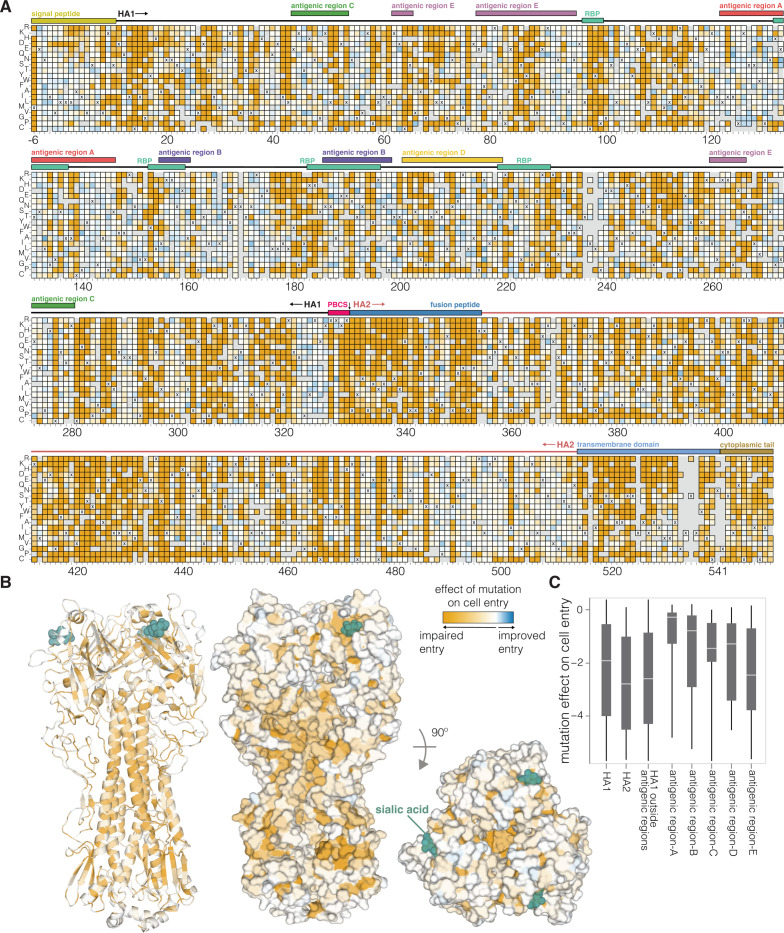
Fig 2. Effects of mutations on cell entry.
(A) Effects of HA mutations on pseudovirus entry into 293T cells. Orange indicates impaired entry, white parental-like entry, and blue improved entry. The x’s indicate the parental amino acid, and light gray indicates mutations that were not reliably measured in our experiments. See https://dms-vep.org/Flu_H5_American-Wigeon_South-Carolina_2021-H5N1_DMS/cell_entry.html for an interactive version of this heatmap that allows zooming and mousing over points for details. Sites are numbered using the H3 scheme (see https://dms-vep.org/Flu_H5_American-Wigeon_South-Carolina_2021-H5N1_DMS/numbering.html for details). (B) HA structure (PDBs: 4KWM, 1JSO) colored by the average effect of amino-acid mutations at each site on cell entry (orange indicates sites where mutations tend to impair cell entry). (C) Effects of mutations on cell entry for different domains and regions of HA. The boxes show the median and interquartile range, and more negative values indicate mutations adversely affect cell entry. In the heatmap overlays in (A) “RBP” denotes the receptor-binding pocket and “PBCS” denotes the polybasic cleavage site. The data underlying this figure can be found in S2 Data.
Fig 3
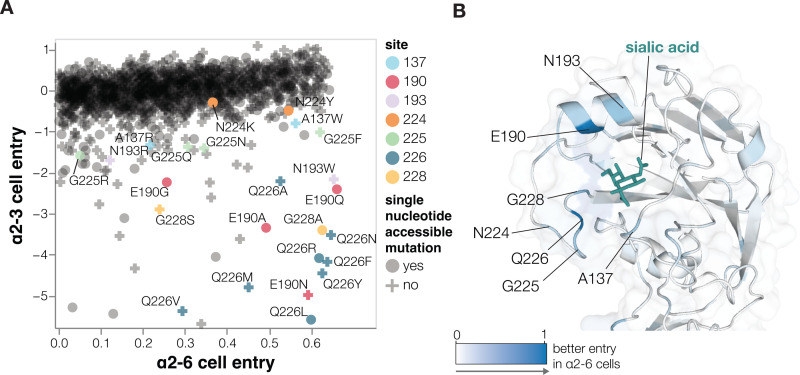
Fig 3. Effects of mutations on entry into cells expressing α2-6- versus α2-6-linked sialic acids.
(A) Effects of mutations on pseudovirus entry into 293 cells expressing α2-6- or α2-3-linked sialic acids. Each point is a different amino-acid mutation, with shapes indicating whether the mutation is accessible by a single-nucleotide change to the natural HA gene sequence. Sites where more than one mutation has large differences between α2–3 and α2–6 cell entry are labeled. Note that only mutations with a net favorable effect on entry into α2–6 cells are shown. Note that these experiments were performed in cell-culture media that contained 10% fetal bovine serum, which may also impact the effects of some mutations due to decoy receptors present in the serum. (B) Structure of the HA near the sialic-acid binding pocket (PDBs: 4KWM, 1JSO) with sites colored according to the average increase in α2–6 usage caused by mutations at that site. See https://dms-vep.org/Flu_H5_American-Wigeon_South-Carolina_2021-H5N1_DMS/a26_usage.html for interactive plots including a version of A that includes all mutations (not just those with net positive α2–6 cell entry) and an interactive heatmap of the change in α2–6 versus α2–3 usage for all mutations. The data underlying this figure can be found in S2 Data.
Fig 4
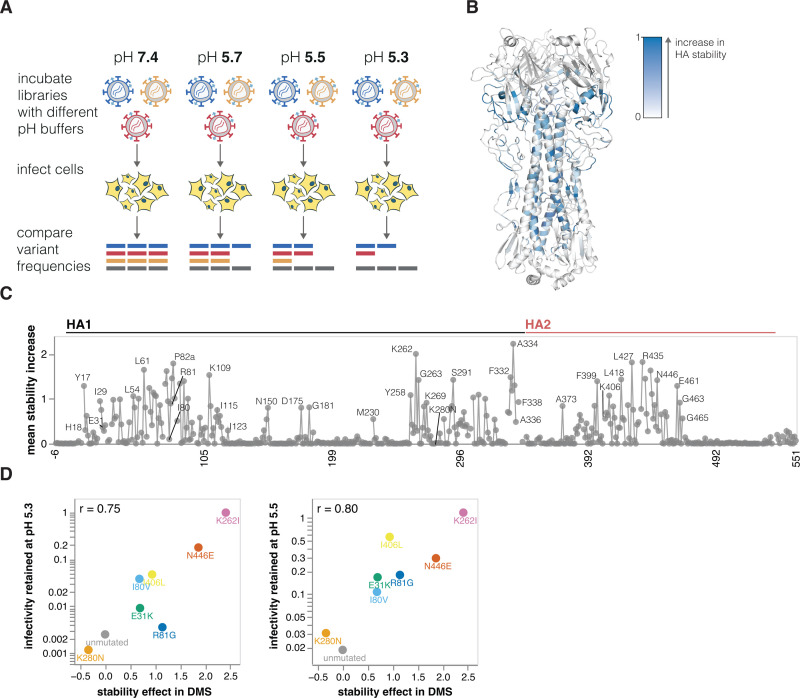
Fig 4. Effects of mutations on stability.
(A) To measure how mutations affect HA stability, the pseudovirus library was incubated in increasingly acidic buffers and then used to infect cells. Stability was quantified as the resistance of each mutant to inactivation by acidic pH. (B) HA structure colored by the average increase in HA stability caused by mutations at each site, with blue indicating sites where mutations increase stability. (C) The average increase in HA stability caused by mutations at each site. See https://dms-vep.org/Flu_H5_American-Wigeon_South-Carolina_2021-H5N1_DMS/stability.html for an interactive heatmap of the effects of all mutations that includes options to show destabilizing as well as stabilizing mutations. The data underlying this panel can be found in S3 Data. (D) Validation of deep mutational scanning measurements by comparison to direct measurements of acid-induced inactivation of conditionally replicative influenza virions carrying the indicated mutations (see S5 Fig for details). The mutations validated here were chosen to span a wide range of effects on stability. The r value in the upper-left of each panel indicates the Pearson correlation. The data underlying this panel can be found in S4 Data.
Fig 5
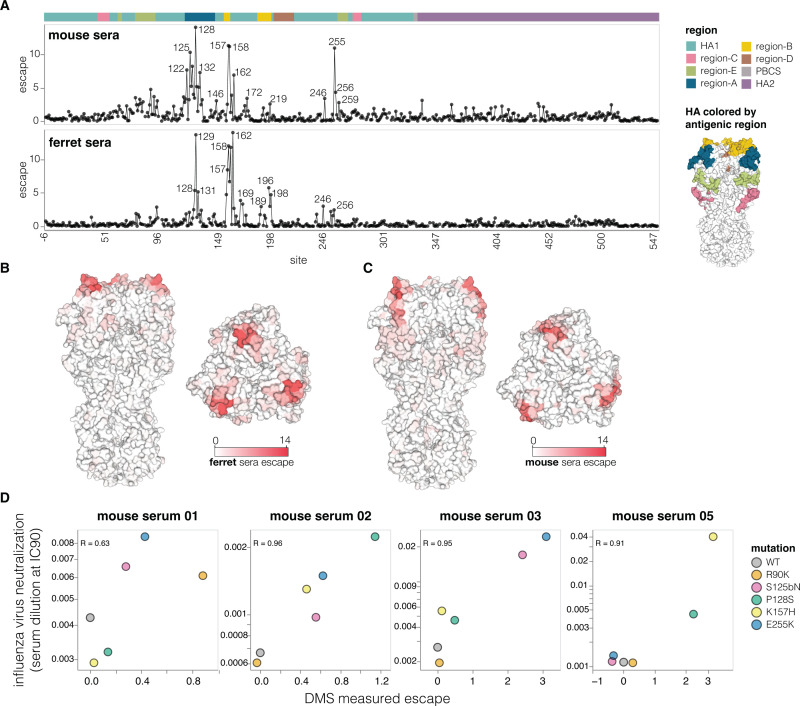
Fig 5. Effects of mutations on escape from serum neutralization.
(A) Total escape caused by all tolerated mutations at each HA site as measured in the deep mutational scanning, averaged across the sera of all animals from each species. The HA structure on the right shows the classically defined H3 antigenic regions [60]. See S6B Fig for details on the number of animals and immunization methods. See https://dms-vep.org/Flu_H5_American-Wigeon_South-Carolina_2021-H5N1_DMS/escape.html for interactive plots showing escape for each animal. The data underlying this panel can be found in S5 Data. (B) Average ferret sera escape overlaid on a surface representation of HA (PBD: 4KWM). (C) Same as in (B) but for mouse sera. (D) Correlation between escape for different HA mutants measured with deep mutational scanning (DMS) versus the change in neutralization measured using conventional neutralization assays with conditionally replicative influenza virus. The data underlying this panel can be found in S6 Data.
Fig 6
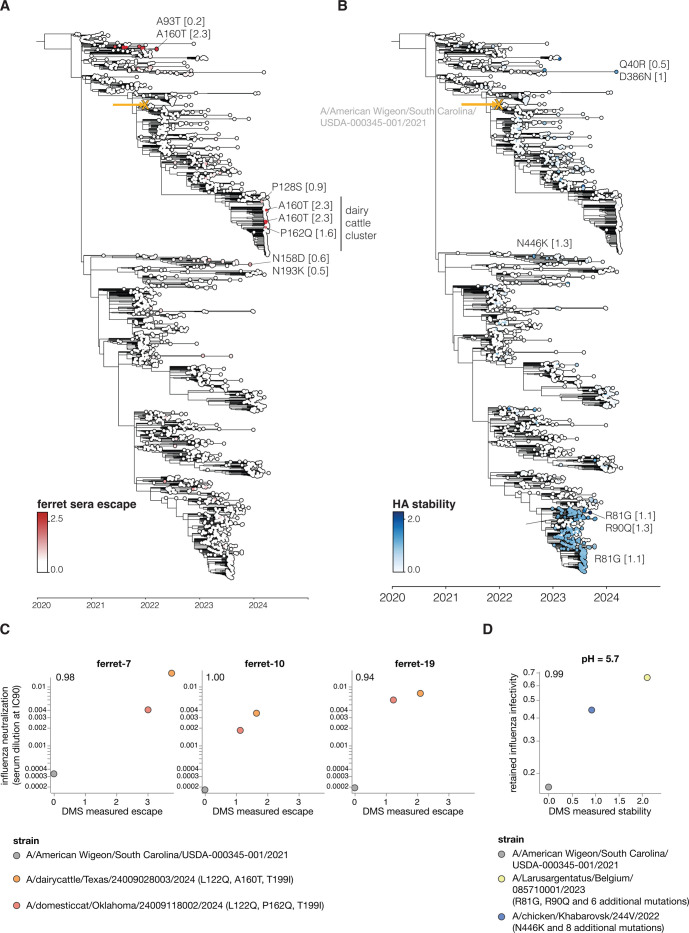
Fig 6. Estimated HA phenotypes of recent 2.3.4.4b strains.
Phylogenetic trees of the HA gene of a subsample of H5 2.3.4.4b clade viruses collected from 2020 onwards. The trees are colored by (A) ferret serum escape and (B) HA stability. A phenotype is estimated for each sequence by summing the experimentally measured effects of all constituent HA mutations relative to the parental A/American Wigeon/South Carolina/USDA-000345-001/2021 strain used in the deep mutational scanning (indicated with a yellow “x” and arrow), only including mutations with positive effects in the sum. Some key mutations strongly affecting the displayed phenotypes are labeled on the tree, with the number in brackets indicating the effect of the mutation. See S9 Fig for additional phenotypes mapped onto the same tree, and https://nextstrain.org/groups/moncla-lab/h5nx/h5-dms/clade-2344b for an interactive Nextstrain tree showing the phenotypes mapped onto various sets of sequences. The tree file can be found in S1 Data. (C) The HAs for strains carrying mutations that caused strong escape from ferret sera neutralization in the deep mutational scanning were assayed for neutralization by the ferret sera in conditionally replicative influenza virus neutralization assays (S10A Fig). These scatter plots show the neutralization measured in the influenza virus assays (y-axis) versus the predicted escape calculated as the simple sum of the mutations in each HA relative to the strain used in the deep mutational scanning. The r values indicate the Pearson correlation. The data underlying this panel can be found in S7 Data. (D) HAs from selected strains with stability-increasing mutations were assayed for their infectivity at different pHs using conditionally replicative influenza viruses. The scatterplot shows retained influenza virus infectivity at pH 5.7 relative to deep mutational scanning measured stability, which was calculated as a sum of stability effects for all mutations in a strain relative to the strain used in the deep mutational scanning. The data underlying this panel can be found in S8 Data. Retained infectivity at other pHs is shown in S10C Fig. The full list of HA amino-acid mutations in each strain is in S10D Fig.

Update of

References

    1. Imai M, Watanabe T, Hatta M, Das SC, Ozawa M, Shinya K, et al.. Experimental adaptation of an influenza H5 HA confers respiratory droplet transmission to a reassortant H5 HA/H1N1 virus in ferrets. Nature. 2012. Jun;486(7403):420–428. doi: 10.1038/nature10831 - DOI - PMC - PubMed
    1. Reed ML, Bridges OA, Seiler P, Kim JK, Yen HL, Salomon R, et al.. The pH of Activation of the Hemagglutinin Protein Regulates H5N1 Influenza Virus Pathogenicity and Transmissibility in Ducks. J Virol. 2010. Feb;84(3):1527–1535. doi: 10.1128/JVI.02069-09 - DOI - PMC - PubMed
    1. Herfst S, Schrauwen EJA, Linster M, Chutinimitkul S, de Wit E, Munster VJ, et al.. Airborne Transmission of Influenza A/H5N1 Virus Between Ferrets. Science. 2012. Jun 22;336(6088):1534–41. doi: 10.1126/science.1213362 - DOI - PMC - PubMed
    1. Benjamin Mänz, Martin Schwemmle, Linda Brunotte. Adaptation of Avian Influenza A Virus Polymerase in Mammals To Overcome the Host Species Barrier. J Virol. 2013. Jul 1;87(13):7200–7209. doi: 10.1128/JVI.00980-13 - DOI - PMC - PubMed
    1. Long JS, Giotis ES, Moncorgé O, Frise R, Mistry B, James J, et al.. Species difference in ANP32A underlies influenza A virus polymerase host restriction. Nature. 2016. Jan;529(7584):101–104. doi: 10.1038/nature16474 - DOI - PMC - PubMed

Substances

LinkOut - more resources