. 2024 Nov 13;38(1):18.
doi: 10.1007/s13577-024-01147-x.

Generation of human induced pluripotent stem cell lines derived from patients of cystic biliary atresia

Affiliations

Generation of human induced pluripotent stem cell lines derived from patients of cystic biliary atresia

Ningxin Ge et al. Hum Cell. .

Abstract

Biliary atresia (BA), resulting from abnormal development of the liver's internal or external bile ducts, can lead to liver damage and potentially fatal cirrhosis. Type I cystic biliary atresia is a relatively uncommon, but clinically significant variant of BA. It is critical to develop experimental models of BA to examine the etiology and pathogenesis, which remain elusive, and to develop future therapeutics. Here, we have successfully generated a panel of human induced pluripotent stem cells (hiPSCs) from five Japanese patients carrying type I cystic BA. These hiPSC lines exhibited characteristics of self-renewal and pluripotency. These cells held normal karyotypes mostly, but one of them carried hemizygous deletions, the clinical significance of which is unknown yet. Whole genome sequence analysis indicated that some of the mutations or single nucleotide polymorphisms (SNPs) commonly found in these patients are related to hepatobiliary abnormality. Given the limited understanding of the molecular pathogenesis of cystic BA, attributed to unknown factors of genetic and environmental causes, these cellular resources will be instrumental in replicating disease phenotypes and in advancing novel therapies for this disease.

Keywords: Biliary atresia (BA); Human induced pluripotent stem cells; Pluripotency; Self-renewal; Whole genome sequencing.


Conflict of interest statement

Declarations Conflicts of interest There was no conflict of interest for the works of this manuscript. Ethics approval The generation and use of human iPSCs were approved by the Ethics Committee of RIKEN BioResource Research Center and the Ethics Committee of the medical hospital of the Medical Department of University of Tokyo, Dokkyo Medical University, and the RIKEN BioResource Research Center (approved No. 2020075G and Tsukuba 29–3). Informed consent Formal informed consent was obtained from all the patients who participated in this study.

Figures

Fig. 1
Fig. 1
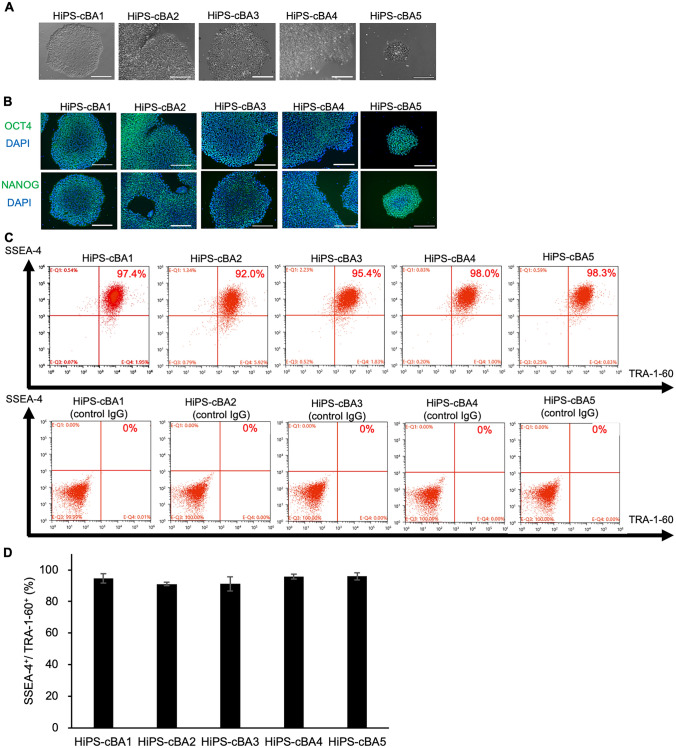
Self-renewal marker expression of hiPSC lines derived from cystic BA patients. A Morphologies of BA-specific hiPSCs taken with phase contrast microscopy. Scale bars, 200 µm. B Immunocytochemistry of OCT3/4 and NANOG on cBA-hiPSCs. Scale bars, 200 µm. C Flow cytometry analysis of SSEA-4 and TRA-1-60 on cBA-hiPSCs. Top panels: samples with anti-SSEA1 and anti-TRA-1-60 antibodies. Bottom panels: samples with control IgG. D The ratio of positive cells for SSEA-4 and TRA-1-60. The bar graph shows mean + standard errors (SE), n = 3 (biological samples)
Fig. 2
Fig. 2
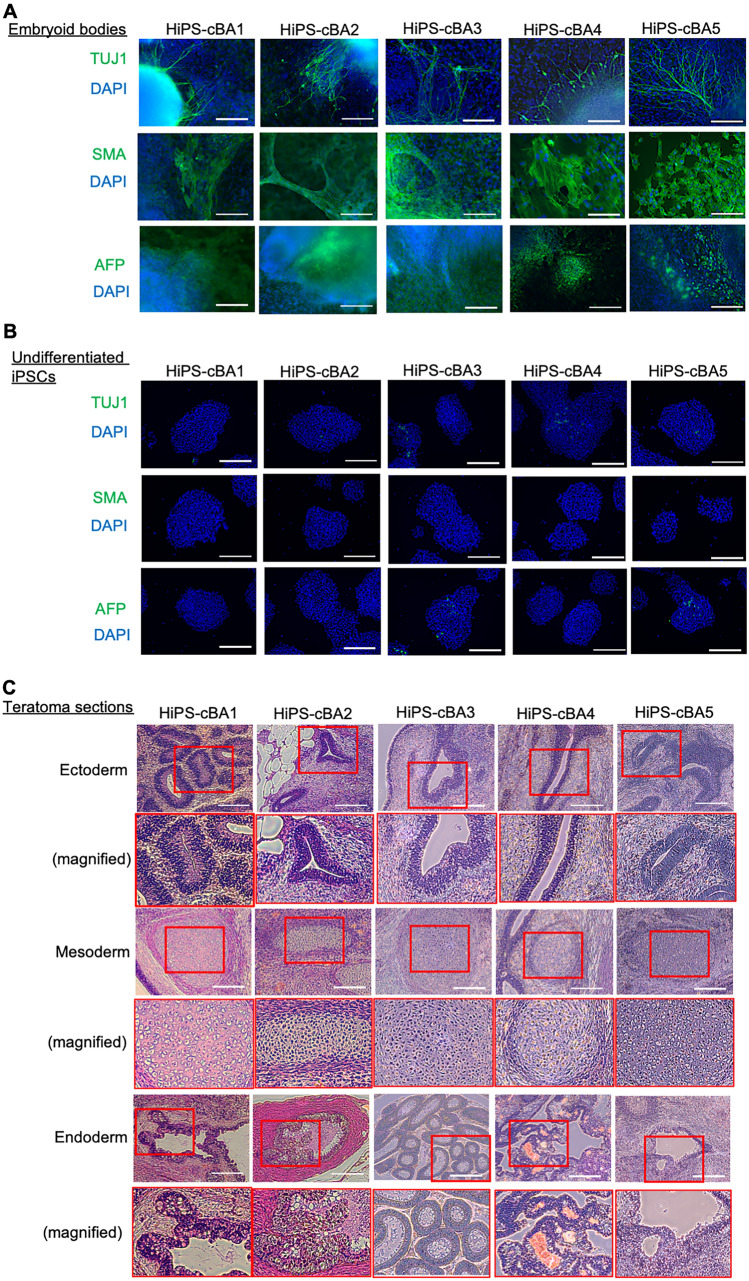
Pluripotency of hiPSC lines derived from cystic BA patients. A Immunocytochemistry of TUJ1, SMA, and AFP on embryoid bodies (EBs) differentiated from BA-specific hiPSCs. Scale bars, 200 µm. B Immunocytochemistry of TUJ1, SMA, and AFP on undifferentiated cBA-hiPSCs. Scale bars, 200 µm. C Sections with hematoxylin and eosin (HE) staining on teratomas derived from cBA-hiPSCs. Neural rosettes, cartilages, or intestine-like secretion tissues are indicated as derivatives of ectoderm, mesoderm, or endoderm, respectively. Red rectangles are magnified regions. Scale bars, 200 µm
Fig. 3
Fig. 3
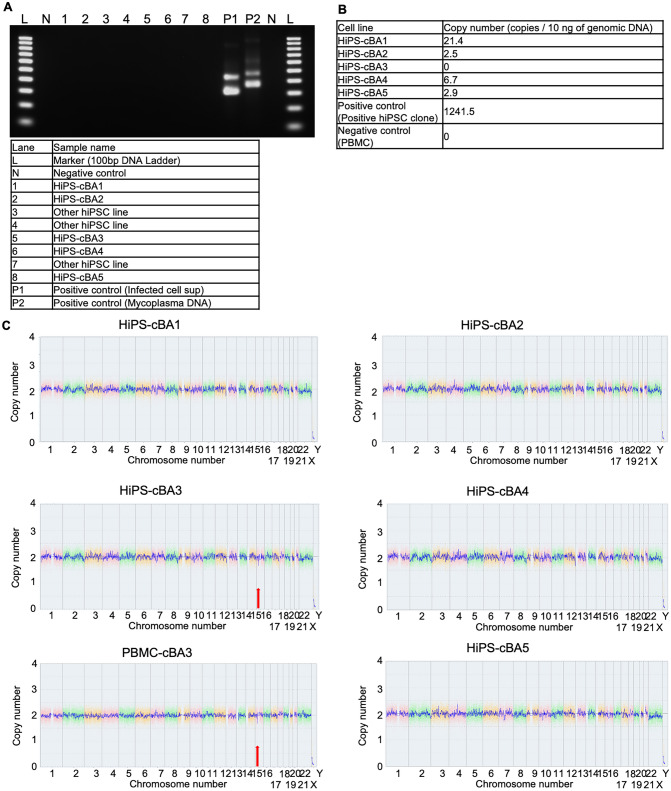
Characterization of hiPSC lines derived from cystic BA patients. A Mycoplasma test using PCR on conditioned medium samples. B Episomal vector test using PCR on genomic DNA samples. C Copy number analysis from CGH array on genomic DNA samples. Red arrows indicate heterozygous deletion of the 16p12.2 region
Fig. 4
Fig. 4
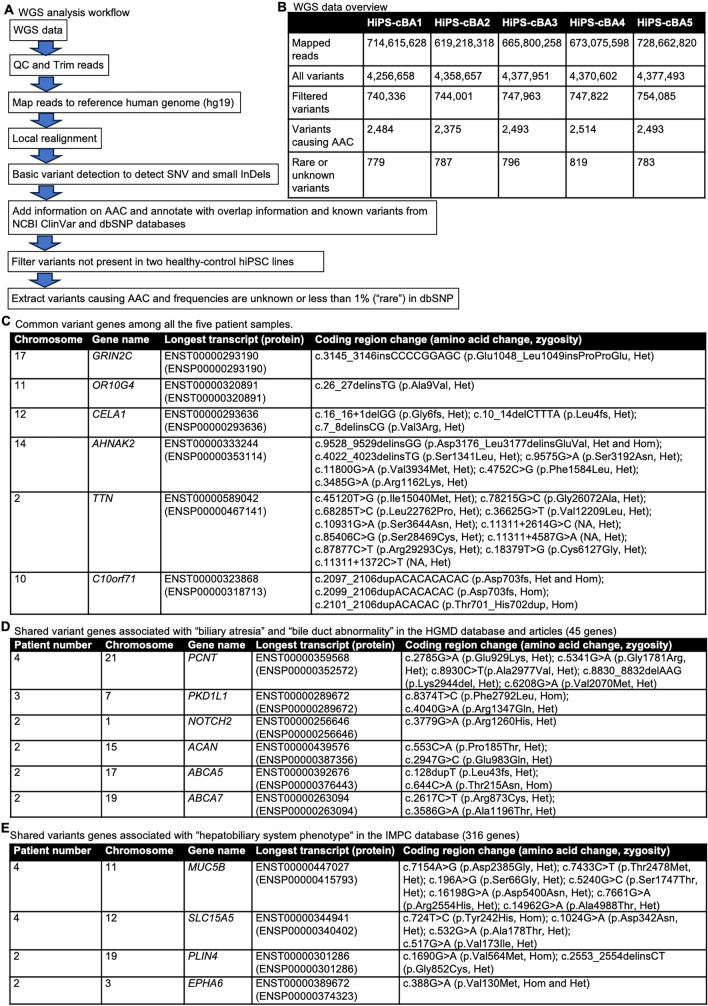
Whole genome sequencing (WGS) analysis of cystic BA patients. A Workflow of WGS analysis. QC: quality check, hg19: human genome assembly, Genome Reference Consortium (GRC) h37, SNV: single nucleotide variant, InDels: insertions or deletions, AAC: amino acid changes, and SNP: single nucleotide polymorphism. B Summary of WGS and variant numbers in the analysis of each sample. C Common variant genes among all the five patient samples. Chromosome numbers, gene names, longest transcript and its proteins in Ensembl format, coding region change with amino acid change, and zygosity are shown. D Shared variant genes associated with “biliary atresia” and “bile duct abnormality” in the HGMD database and articles (45 genes). Patient numbers, chromosome numbers, gene names, longest transcript and its proteins in Ensembl format, coding region change with amino acid change, and zygosity are shown. E Shared variant genes associated with “hepatobiliary system phenotype" in the HGMD database and articles (316 genes). Patient numbers, chromosome numbers, gene names, longest transcript and its proteins in Ensembl format, coding region change with amino acid change, and zygosity are shown

References

    1. Ando H, Inomata Y, Iwanaka T, et al. Clinical practice guidelines for biliary atresia in Japan: a secondary publication of the abbreviated version translated into English. J Hepatobiliary Pancreat Sci. 2021;28:55–61. - PubMed
    1. Uemura M, Higashi M, Pattarapanawan M, et al. Gallbladder wall abnormality in biliary atresia of mouse Sox17(+/-) neonates and human infants. Dis Model Mech. 2020. 10.1242/dmm.042119. - PMC - PubMed
    1. Higashiyama H, Ozawa A, Sumitomo H, et al. Embryonic cholecystitis and defective gallbladder contraction in the Sox17-haploinsufficient mouse model of biliary atresia. Development. 2017;144:1906–17. - PMC - PubMed
    1. Uemura M, Ozawa A, Nagata T, et al. Sox17 haploinsufficiency results in perinatal biliary atresia and hepatitis in C57BL/6 background mice. Development. 2013;140:639–48. - PMC - PubMed
    1. Lim YZ, Zhu M, Wang Y, et al. Pkd1l1-deficiency drives biliary atresia through ciliary dysfunction in biliary epithelial cells. J Hepatol. 2024. 10.1016/j.jhep.2024.02.031. - PubMed