


Lassa fever in Nigeria: epidemiology and risk perception
- PMID: 39532966
- PMCID: PMC11558002
- DOI: 10.1038/s41598-024-78726-3
Lassa fever in Nigeria: epidemiology and risk perception
Abstract
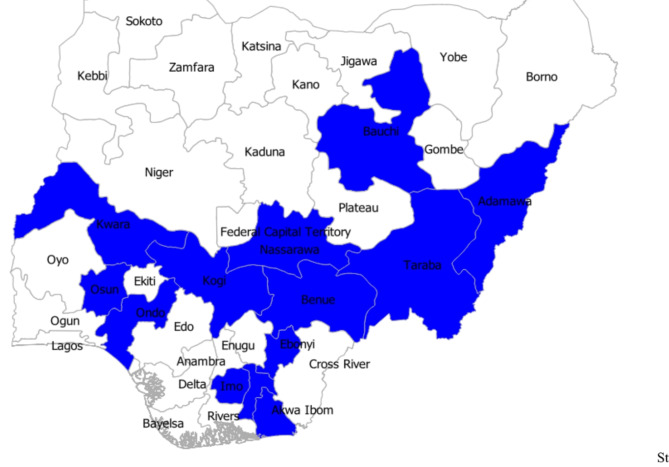
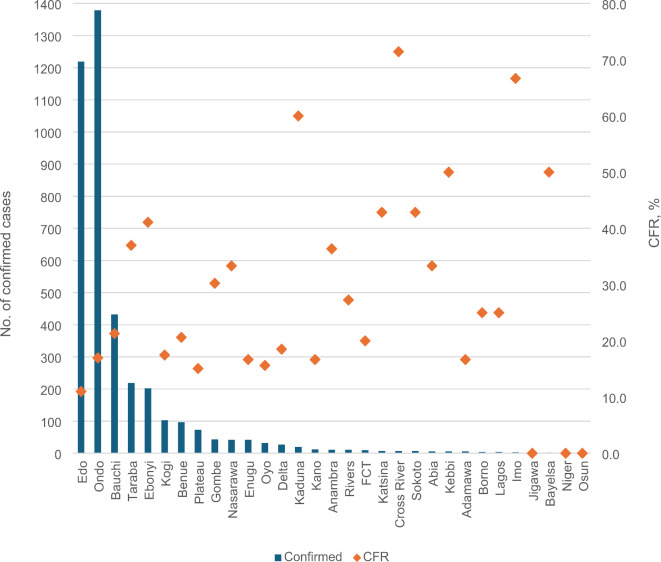
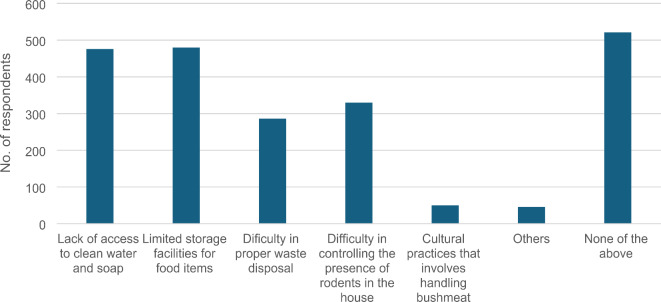
Annual outbreaks of Lassa fever have resulted in a public health threat in Nigeria and other endemic countries in Sub-Saharan Africa. While the Lassa Virus (LASV) is endemic in rodent populations, zoonotic spillover to humans causes annual outbreaks. This study reviewed the burden of Lassa fever (LF) in Nigeria between 2020 and 2023 and conducted a cross-sectional survey of Nigerians to evaluate their risk perceptions of LF. During the period under review, 28,780 suspected and 4,036 confirmed cases of LF were reported from 34 of the 37 states of Nigeria. These cases resulted in 762 deaths (a CFR of 18.9%). The overall case positivity rate was 14% (4,036/28,780), with more positive cases in 2020 (17.5%, n = 1,189/6,791). A total of 2,150 study participants were enrolled in the prospective cross-sectional study, with most of them (87.5%, n = 1,881/2,150) having previously heard of Lassa fever (LF). The numerical scoring system revealed that 35.43% (n = 762/1,881) of those aware of LF have poor knowledge of its preventive measures, route of transmission, and control measures. Approximately 6.84% (n = 147/2,150) of them were at a high risk of contracting LF, with 27.6% (n = 584/2,150) of study participants feeling concerned about contracting LF because of the presence of rodents in their immediate vicinity, occupational exposure to healthcare workers, and the probability of contamination of food by infected rodents without necessary food safety measures. Multivariable logistic regression analysis revealed that tertiary education was associated with an increased likelihood of better LF knowledge (OR: 17.32; 95% CI: 10.62, 28.26; p < 0.01) and a lower risk of contracting LF when compared to respondents with no formal education. In addition, study participants who reside in low-burden states have lower LF perception than those residents in high-LF-burden states (OR: 0.59; 95% CI: 0.38-0.91; p = 0.049). On the other hand, study participants with poor risk perception (knowledge) of LF had a higher likelihood (RR: 0.33; 95% CI: 0.20, 0.53; p < 0.01) of contracting LF when compared to those with good knowledge of LF. Similarly, those residents in low LF burden states were less likely (OR: 0.09; 95% CI: 0.05,0.17; p < 0.01) to contract LF when compared to those residents in high burden states. There is a need to improve LF diagnostics capacity, infection prevention and control measures, and implementation of the One Health approach to controlling LASV from animal reservoirs. In addition, public enlightenment campaigns to address fundamental knowledge gaps are crucial to mitigating the ongoing and future impact of LF in Nigeria.
Keywords: LASV; LF; Lassa; Nigeria; Rodent.
© 2024. The Author(s).
Conflict of interest statement
Figures

References
-
- Smither, A. R. & Bell-Kareem, A. R. Ecology of Lassa Virus. In: (ed Garry, R.) Lassa Fever: Epidemiology, Immunology, Diagnostics, and Therapeutics. Current Topics in Microbiology and Immunology, vol 440. Springer, Cham. 10.1007/82_2020_231 (2020).
MeSH terms
LinkOut - more resources
Full Text Sources
