


NFE2L2 and ferroptosis resistance in cancer therapy
- PMID: 39534872
- PMCID: PMC11555182
- DOI: 10.20517/cdr.2024.123
NFE2L2 and ferroptosis resistance in cancer therapy
Abstract
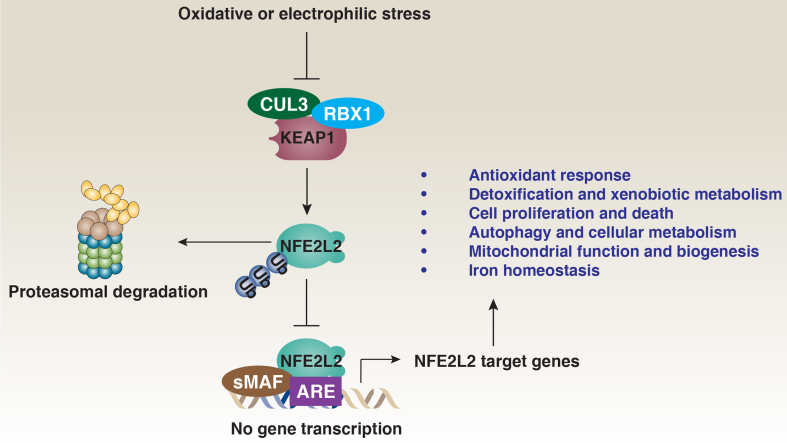
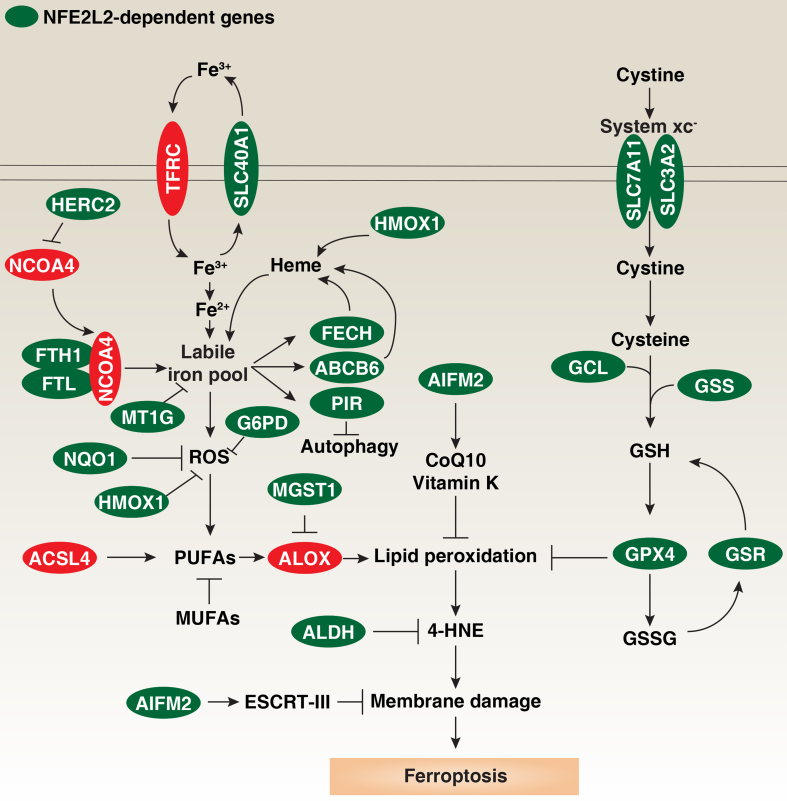
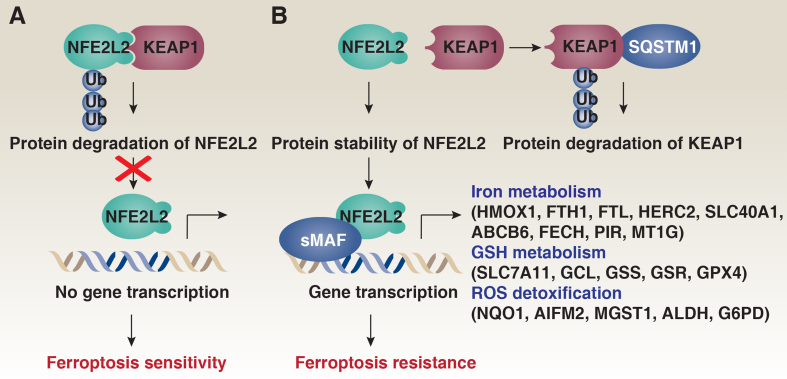
NFE2-like basic leucine zipper transcription factor 2 (NFE2L2, also known as NRF2), is a key transcription factor in the cellular defense against oxidative stress, playing a crucial role in cancer cell survival and resistance to therapies. This review outlines the current knowledge on the link between NFE2L2 and ferroptosis - a form of regulated cell death characterized by iron-dependent lipid peroxidation - within cancer cells. While NFE2L2 activation can protect normal cells from oxidative damage, its overexpression in cancer cells contributes to drug resistance by upregulating antioxidant defenses and inhibiting ferroptosis. We delve into the molecular pathways of ferroptosis, highlighting the involvement of NFE2L2 and its target genes, such as NQO1, HMOX1, FTH1, FTL, HERC2, SLC40A1, ABCB6, FECH, PIR, MT1G, SLC7A11, GCL, GSS, GSR, GPX4, AIFM2, MGST1, ALDH1A1, ALDH3A1, and G6PD, in ferroptosis resistance. Understanding the delicate balance between NFE2L2's protective and deleterious roles could pave the way for novel therapeutic strategies targeting NFE2L2 to enhance the efficacy of ferroptosis inducers in cancer therapy.
Keywords: Cancer therapy; NFE2L2; drug resistance; ferroptosis; oxidative stress.
© The Author(s) 2024.
Conflict of interest statement
Both authors declared that there are no conflicts of interest.
Figures
References
Publication types
LinkOut - more resources
Full Text Sources
Miscellaneous