


Dysfunctional suction dynamics in newborns with ankyloglossia
- PMID: 39536166
- PMCID: PMC10727230
- DOI: 10.1590/2317-1782/20232023054
Dysfunctional suction dynamics in newborns with ankyloglossia
Abstract
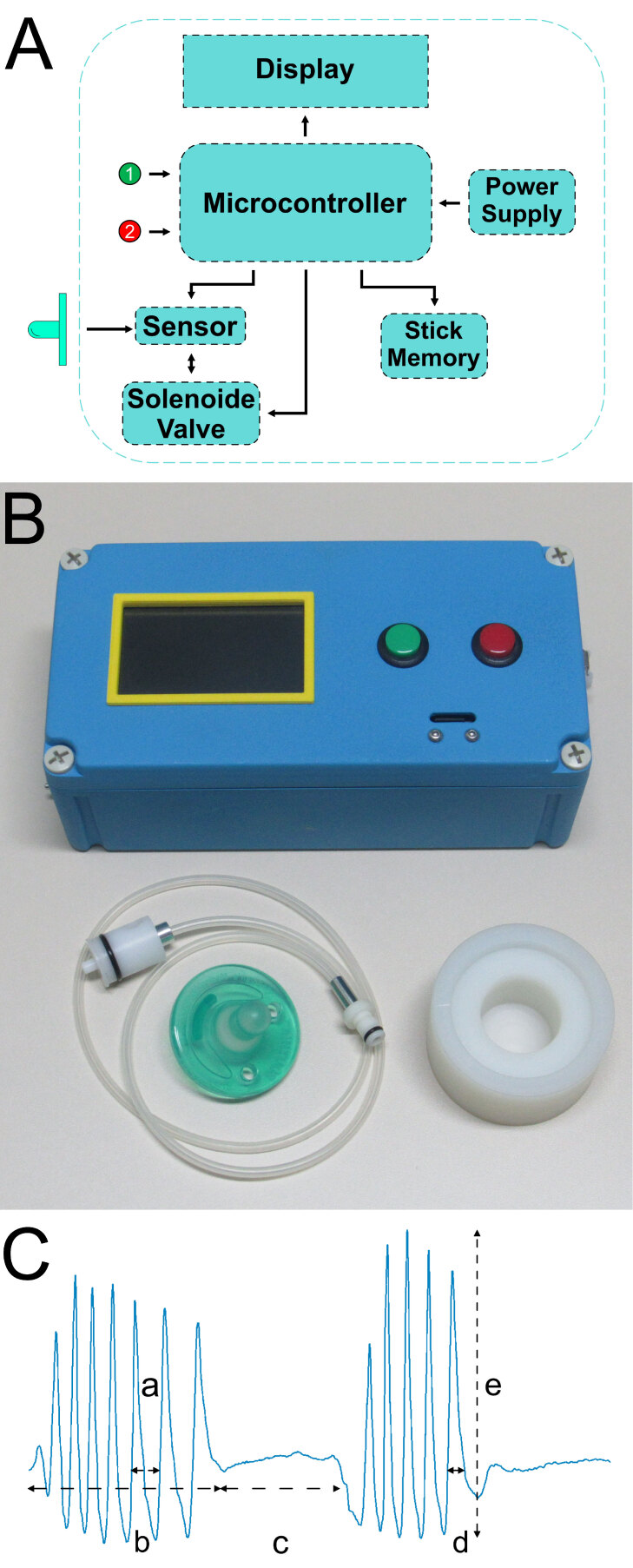
Purpose: Compare infant suction in babies with and without ankyloglossia using a microprocessor-controlled pressure sensor coupled to a pacifier.
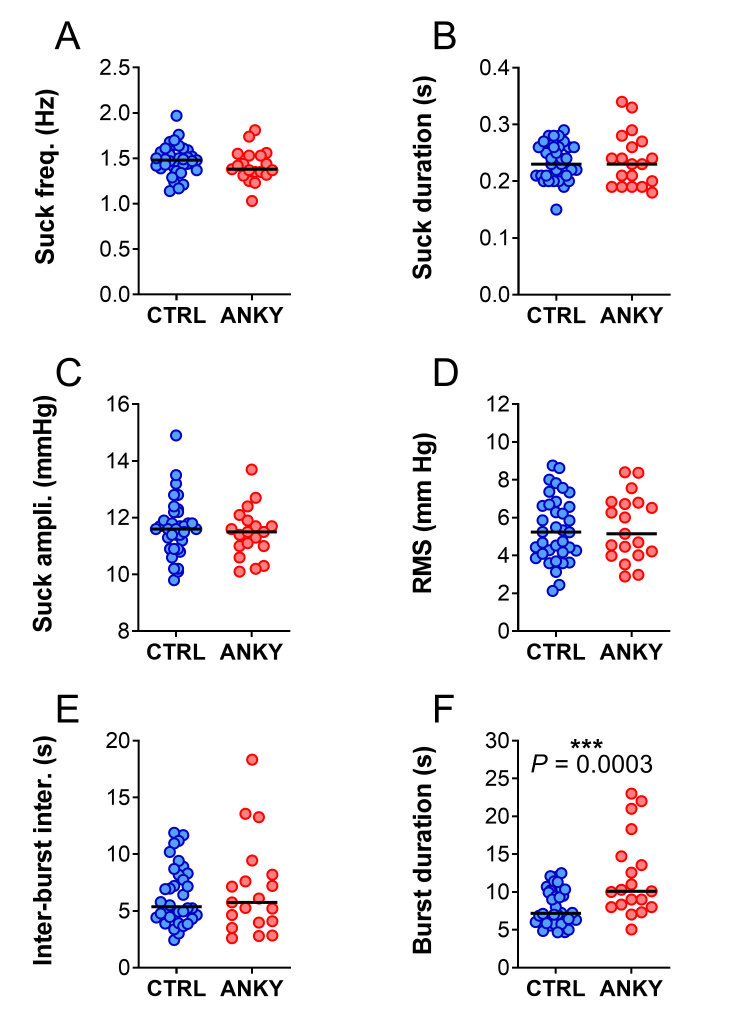
Methods: Fifty-five infants from 0 to 2 months of age underwent clinical examination for ankyloglossia, after which they were offered a silicone pacifier connected to the pressure acquisitiondevice and suction activity was recorded. Thus, we extracted the frequency of sucks within a burst, the average suck duration, the burst duration, the number of sucks per burst, the maximum amplitude of sucks per burst and the inter-burst interval.
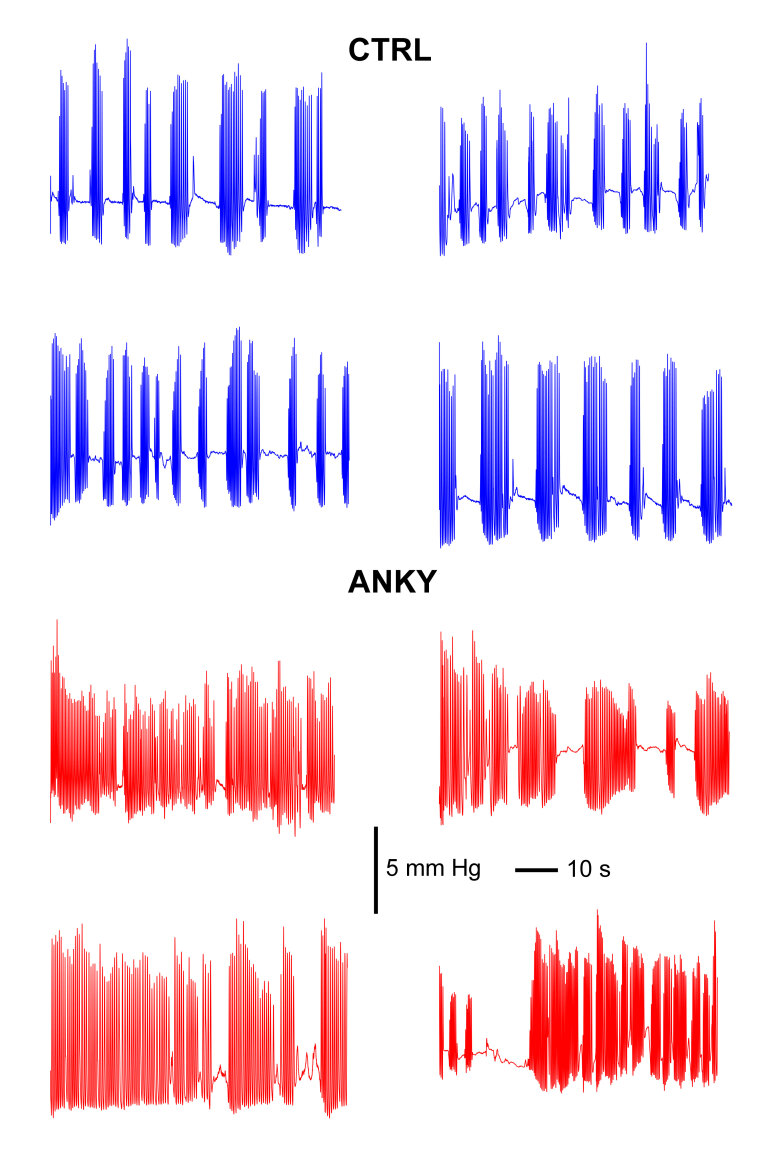
Results: The key difference in newborns with ankyloglossia in relation to control was that they perform longer bursts of suction activity.
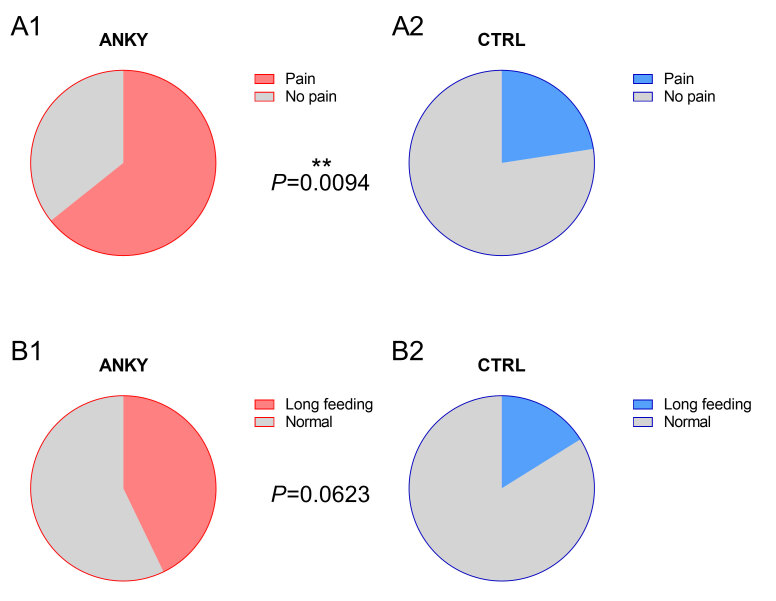
Conclusion: The longer burst durations are likely a compensatory strategy and may underlie the pain reported by mothers during breastfeeding. We therefore propose a method for objectively quantifying some parameters of infant suction capacity and demonstrate its use in assisting the evaluation of ankyloglossia.
Objetivo: Comparar a sucção infantil em bebês com e sem anquiloglossia usando um sensor de pressão controlado por microprocessador acoplado a uma chupeta.
Método: Cinquenta e cinco lactentes de 0 a 2 meses de idade foram submetidos ao exame clínico de anquiloglossia, em seguida foi oferecido uma chupeta de silicone conectada ao dispositivo de aquisição de pressão e a atividade de sucção foi registrada. Assim, obtivemos dados sobre a frequência de sucções dentro de um período de sucções, a duração média da sucção, a duração da rajada, o número de sucções por rajada, a amplitude máxima das sucções por rajada e o intervalo entre rajadas. O teste t não pareado foi utilizado para comparações entre os grupos.
Resultados: A principal diferença dos recém-nascidos com anquiloglossia em relação aos do grupo controle é que eles realizam rajadas mais longas durante a atividade de sucção.
Conclusão: A duração mais longa das rajadas é provavelmente uma estratégia compensatória e pode estar por trás da dor relatada pelas mães durante a amamentação. Portanto, propomos um método para quantificar objetivamente alguns parâmetros da sucção infantil e demonstramos seu uso para auxiliar na avaliação da anquiloglossia.
Conflict of interest statement
Conflict of interests: nothing to declare
Figures
References
-
- World Health Organization . Global strategy for infant and young child feeding. Geneva: WHO; 2003. [cited 2023 Feb 10]. United Nations Children’s Fund. Internet. Available from: http://apps.who.int/iris/bitstream/10665/42590/1/9241562218.pdf .
-
- Neu AP, Silva AMT, Mezzom CL, Busanello-Stella AR, Moraes AB. Relationship between time and type of breastfeeding and stomatognathic system functions. CEFAC. 2013;15(2):420–426. doi: 10.1590/S1516-18462012005000020. - DOI
-
- Knox I. Tongue tie and frenotomy in the breastfeeding newborn. Neoreviews. 2010;11(9):513–519. doi: 10.1542/neo.11-9-e513. - DOI
-
- Schwartz J. Identifying ankyloglossia in newborns at Paoli Hospital : a quality improvement project. Filadélfia: Drexel University; 2018. 72. [dissertation] - DOI
MeSH terms
LinkOut - more resources
Full Text Sources
