


Weighted Vest Combined With Vibrotactile Stimulations Decrease the Sympathetic Activity: A Repeated Measures Study
- PMID: 39540026
- PMCID: PMC11558260
- DOI: 10.1002/hsr2.70194
Weighted Vest Combined With Vibrotactile Stimulations Decrease the Sympathetic Activity: A Repeated Measures Study
Abstract
Background and aims: Mental and neurological disorders are a growing global concern, further intensified by the COVID-19 pandemic. Stress management techniques, such as deep pressure therapy, have gained attention, with weighted vests commonly used for anxiety relief. However, there is limited scientific evidence supporting their efficacy. This study aimed to rigorously assess the effectiveness of a weighted vest incorporating vibrotactile stimulation in reducing anxiety by measuring physiological indicators-pulse rate and skin conductance (SC)-as well as subjective comfort ratings.
Methods: A total of 30 final-semester college students participated in the study. Participants wore a vibrotactile-weighted vest, and both pulse rate and skin conductance (SC) were measured to gauge anxiety levels. Additionally, participants rated their comfort using a Comfort Rating Scale (CRS). Changes in pulse rate and SC were statistically analyzed, and effect sizes (Cohen's d) were calculated to assess the magnitude of the intervention's impact.
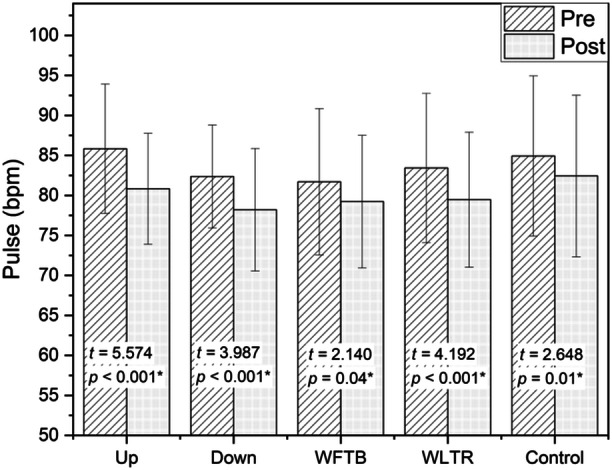
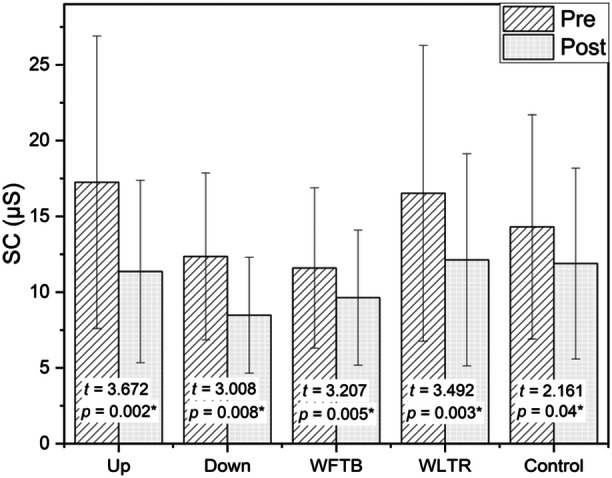
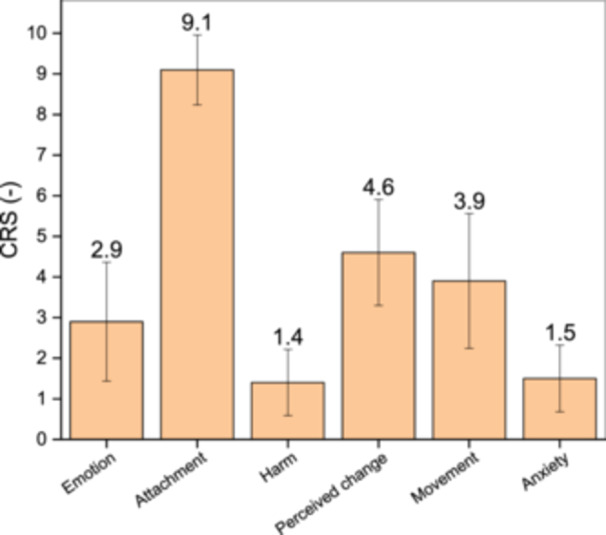
Results: The weighted vest with vibrotactile stimulation resulted in a significant reduction in both pulse rate (dpulse = 0.23-0.62) and SC (dsc = 0.32-0.66), indicating a small to medium effect size in anxiety reduction. Subjective evaluations of the vest using the CRS revealed low scores on discomfort-related items, with participants rating unfavorable statements between 1.5/10 and 4.6/10, suggesting overall comfort during use.
Conclusion: This study provides compelling evidence that vibrotactile-weighted vests effectively reduce anxiety, as indicated by both physiological measures and subjective comfort ratings. The findings support the potential of this intervention as a formal therapeutic tool for stress and anxiety reduction. Further research may explore long-term effects and broader applications in clinical settings.
Keywords: Comfort Rating Scale, skin conductance, pulse rate; anxiety; deep pressure therapy; stress; vibrotactile.
© 2024 The Author(s). Health Science Reports published by Wiley Periodicals LLC.
Conflict of interest statement
The authors declare no conflicts of interest.
Figures
References
-
- World Health Organization, “World Health Statistics 2022: Monitoring Health for the SDGs, Sustainable Development Goals,” Geneva: World Health Organization, 2022, http://apps.who.int/bookorders.
-
- Astutik E., Sebayang S. K., Puspikawati S. I., Tama T. D., and Dewi D. M. S. K., “Depression, Anxiety, and Stress Among Students in Newly Established Remote University Campus in Indonesia,” Malaysian Journal of Medical Health Sciences 16, no. 1 (2020): 270–277, https://medic.upm.edu.my/upload/dokumen/2020011612245840_MJMHS_0229.pdf.
LinkOut - more resources
Full Text Sources
