


Fatiguing high-intensity intermittent exercise depresses maximal Na+-K+-ATPase activity in human skeletal muscle assessed using a novel NADH-coupled assay
- PMID: 39540939
- PMCID: PMC11761784
- DOI: 10.1007/s00424-024-03036-6
Fatiguing high-intensity intermittent exercise depresses maximal Na+-K+-ATPase activity in human skeletal muscle assessed using a novel NADH-coupled assay
Abstract
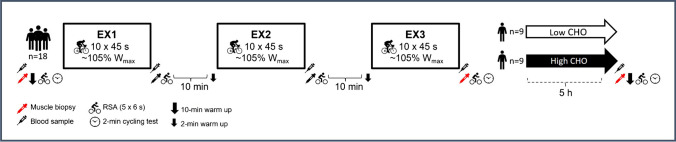
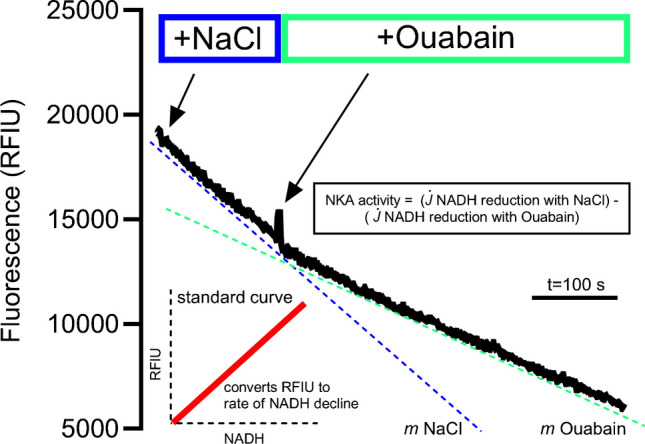
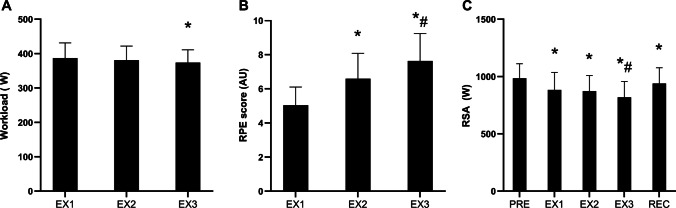
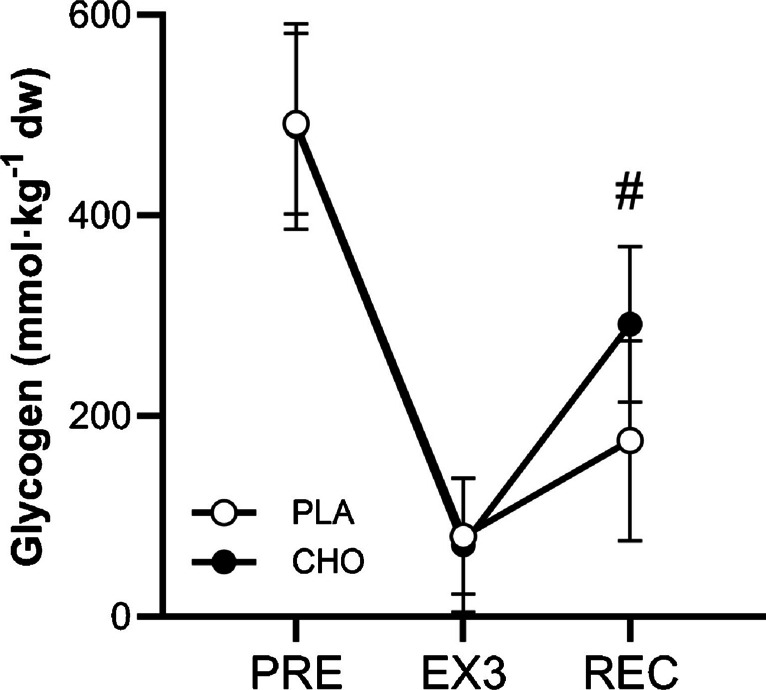
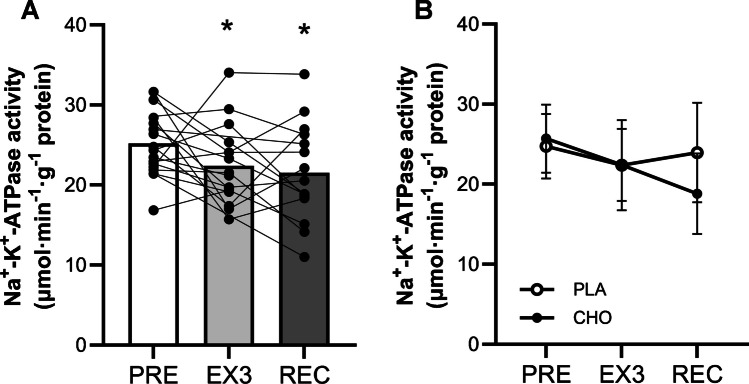
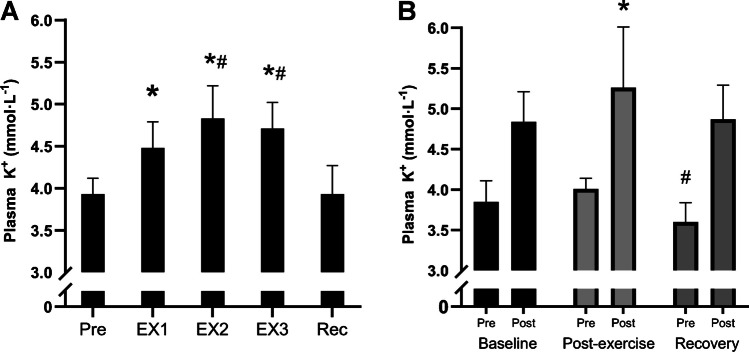
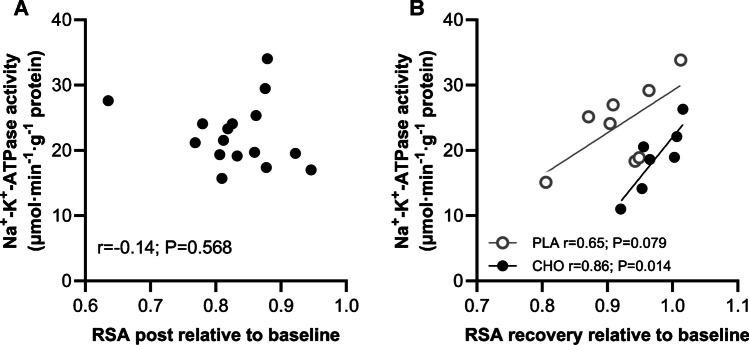
The Na+-K+-ATPase is a critical regulator of ion homeostasis during contraction, buffering interstitial K+ accumulation, which is linked to muscle fatigue during intense exercise. Within this context, we adopted a recently reported methodology to examine exercise-induced alterations in maximal Na+-K+-ATPase activity. Eighteen trained healthy young males completed a repeated high-intensity cycling protocol consisting of three periods (EX1-EX3) of intermittent exercise. Each period comprised 10 × 45-s cycling at ~ 105% Wmax and a repeated sprint test. Muscle biopsies were sampled at baseline and after EX3 for determination of maximal in vitro Na+-K+-ATPase activity. Blood was drawn after each period and in association with a 2-min cycling test at a standardized high intensity (~ 90% Wmax) performed before and after the session to assess plasma K+ accumulation. Further, a 5-h recovery period with the ingestion of carbohydrate or placebo supplementation was implemented to explore potential effects of carbohydrate availability before sampling a final biopsy and repeating all tests. A ~ 12% reduction in maximal Na+-K+-ATPase activity was demonstrated following EX3 compared to baseline (25.2 ± 3.9 vs. 22.4 ± 4.8 μmol·min-1·g-1 protein, P = 0.039), which was sustained at the recovery time point (~ 15% decrease compared to baseline to 21.6 ± 5.9 μmol·min-1·g-1 protein, P = 0.008). No significant effect of carbohydrate supplementation was observed on maximal Na+-K+-ATPase activity after recovery (P = 0.078). In conclusion, we demonstrate an exercise-induced depression of maximal Na+-K+-ATPase activity following high-intensity intermittent exercise, which was sustained during a 5-h recovery period and unrelated to carbohydrate availability under the present experimental conditions. This was shown using a novel NADH coupled assay and confirms previous findings using other methodological approaches.
Keywords: Carbohydrate; Excitability; Excitation–contraction coupling; Fatigue; Glycogen; Potassium.
© 2024. The Author(s).
Conflict of interest statement
Declarations. Competing interest: The authors declare no competing interests.
Figures
References
-
- Clausen T, Nielsen OB (1994) The Na+, K(+)-pump and muscle contractility. Acta Physiol Scand 152(4):365–373 - PubMed
-
- Hostrup M, Cairns SP, Bangsbo J (2021) Muscle Ionic Shifts During Exercise: Implications for Fatigue and Exercise Performance. Compr Physiol 11(3):1895–1959 - PubMed
-
- Sejersted OM, Sjogaard G (2000) Dynamics and consequences of potassium shifts in skeletal muscle and heart during exercise. Physiol Rev 80(4):1411–1481 - PubMed
-
- Ruff RL, Simoncini L, Stuhmer W (1988) Slow sodium channel inactivation in mammalian muscle: a possible role in regulating excitability. Muscle Nerve 11(5):502–510 - PubMed
Publication types
MeSH terms
Substances
Grants and funding
LinkOut - more resources
Full Text Sources
Medical
Miscellaneous
