Air Pollution and Interstitial Lung Disease
- PMID: 39542009
- PMCID: PMC11704737
- DOI: 10.4046/trd.2024.0116
Air Pollution and Interstitial Lung Disease
Abstract
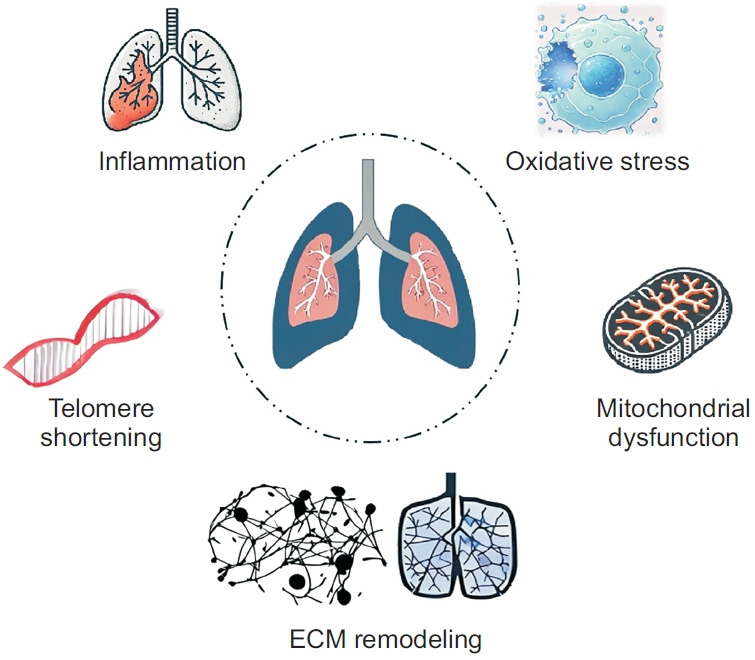
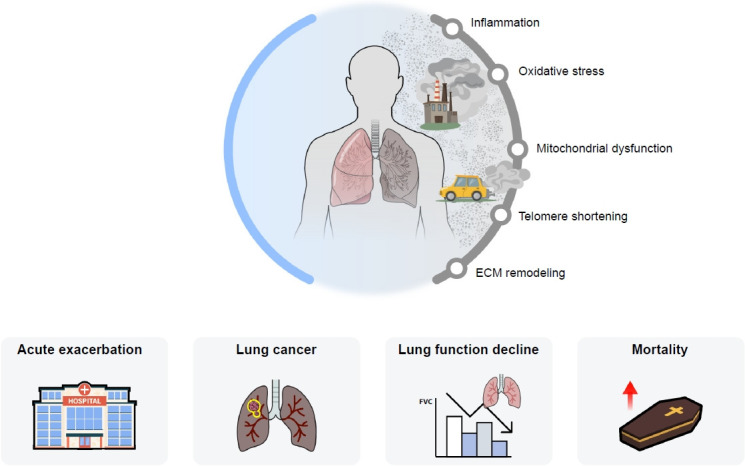
This review article explores the multifaceted relationship between air pollution and interstitial lung diseases (ILDs), particularly focusing on idiopathic pulmonary fibrosis, the most severe form of fibrotic ILD. Air pollutants are mainly composed of particulate matter, ozone (O3), nitrogen dioxide (NO2), carbon monoxide (CO), and sulfur dioxide (SO2). They are recognized as risk factors for several respiratory diseases. However, their specific effects on ILDs and related mechanisms have not been thoroughly studied yet. Emerging evidence suggests that air pollutants may contribute to the development and acute exacerbation of ILDs. Longitudinal studies have indicated that air pollution can adversely affect the prognosis of disease by decreasing lung function and increasing mortality. Lots of in vitro, in vivo , and epidemiologic studies have proposed possible mechanisms linking ILDs to air pollution, including inflammation and oxidative stress induced by exposure to air pollutants, which may induce mitochondrial dysfunction, promote cellular senescence, and disrupt normal epithelial repair processes. Despite these findings, effective interventions to mitigate effects of air pollution on ILD are not well established yet. This review emphasizes the urgent need to address air pollution as a key environmental risk factor for ILDs and calls for further studies to clarify its effects and develop preventive and therapeutic strategies.
Keywords: Air Pollution; Interstitial Lung Disease; Prognosis.
Conflict of interest statement
Jin Woo Song is an associate editor and Yong Suk Jo is an editorial board member of the journal, but they were not involved in the peer reviewer selection, evaluation, or decision process of this article. No other potential conflicts of interest relevant to this article were reported.
Figures
References
-
- Sinharay R, Gong J, Barratt B, Ohman-Strickland P, Ernst S, Kelly FJ, et al. Respiratory and cardiovascular responses to walking down a traffic-polluted road compared with walking in a traffic-free area in participants aged 60 years and older with chronic lung or heart disease and age-matched healthy controls: a randomised, crossover study. Lancet. 2018;391:339–49. - PMC - PubMed
-
- World Health Organization . Geneva: WHO; 2021. WHO global air quality guidelines: particulate matter (PM25 and PM10), ozone, nitrogen dioxide, sulfur dioxide and carbon monoxide. - PubMed
Grants and funding
LinkOut - more resources
Full Text Sources