


Exploratory dietary patterns, the global diet quality score, and their associated socio-demographic factors among young adults in Rwanda: a cross-sectional study using a food list-validated, semi-quantitative food frequency questionnaire
- PMID: 39543676
- PMCID: PMC11566664
- DOI: 10.1186/s12986-024-00859-z
Exploratory dietary patterns, the global diet quality score, and their associated socio-demographic factors among young adults in Rwanda: a cross-sectional study using a food list-validated, semi-quantitative food frequency questionnaire
Abstract
Background: Economic growth in Rwanda is associated with significant changes in food systems, access to health and other services, lifestyle, and nutritional transitions. Nevertheless, our knowledge of dietary patterns in Rwanda remains limited. The present study aimed to identify the dietary habits of young adult population in Rwanda and to assess associated factors.
Methods: A developed and validated semi-quantitative food frequency questionnaire covering a one-year period was used to collect data on food intake of 1,218 participants (18-35 years old) from end of January to April 2023 in a cross-sectional study. Dietary habits were assessed using two indicators: the Global Diet Quality Score (GDQS) and dietary patterns. The latest was developed using exploratory factor analysis.
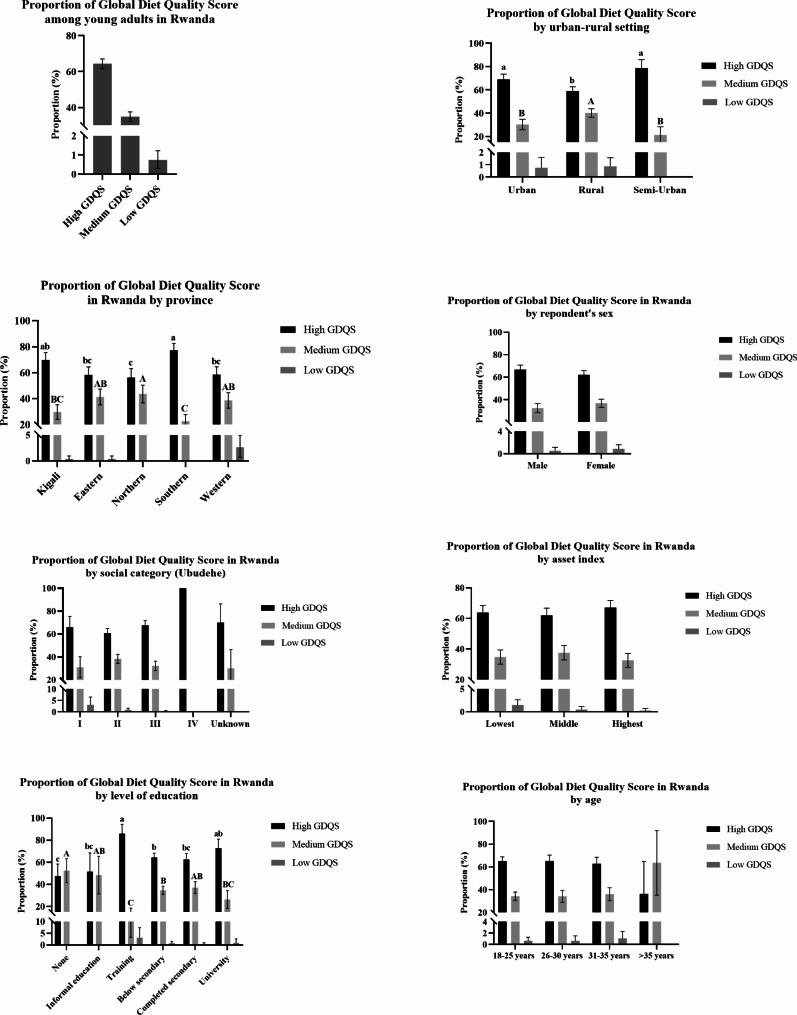
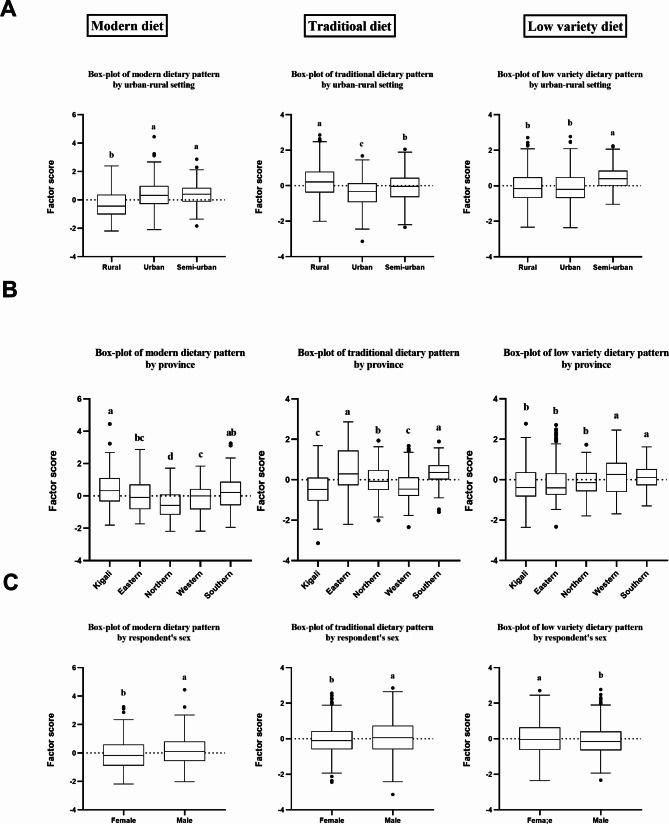
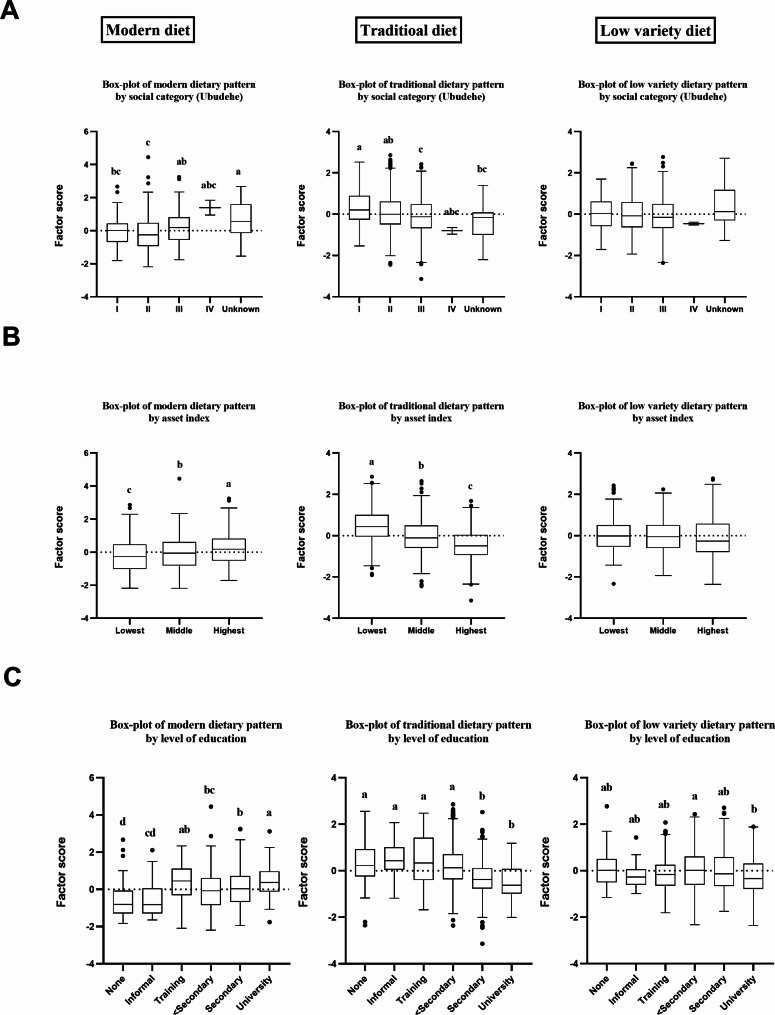
Results: Rwandan adults had a mean GDQS of 24.1; 64.4% had high GDQS, especially urban, and educated respondents. The Southern province led at 77.4%. Three dietary patterns were identified: "Modern" (high in processed foods and drinks), "Traditional" (rich in cereals, roots, and plant-based proteins), and "low variety" (low in diverse foods but high in sugar and salt). Dietary patterns significantly varied by residency, province, sex, age, social category, asset, and education level.
Conclusion: This study identified distinct dietary patterns among adult population of Rwanda, suggesting a nutritional transition associated with urbanization. The findings highlight the need for further research into the relationships between diet, obesity, and metabolic syndrome in Rwandan population.
Keywords: Dietary patterns; Exploratory Factor Analysis; Food frequency questionnaire; Global Diet Quality score; Rwanda; Urbanization.
© 2024. The Author(s).
Conflict of interest statement
Figures
References
-
- Ambikapathi R, Schneider KR, Davis B, Herrero M, Winters P, Fanzo JC. Global food systems transitions have enabled affordable diets but had less favourable outcomes for nutrition, environmental health, inclusion and equity. Nat Food. 2022;3:764–79. - PubMed
-
- Phillips L. Food and globalization. Annu Rev Anthropol. 2006;35:37–57.
-
- Black E. Globalization of the food industry: Transnational food corporations, the spread of processed food, and their implications for food security and nutrition. 2016.
-
- HLPE: Nutrition and Food Systems. A Report by the High Level Panel of Experts on Food Security and Nutrition of the Committee on World Food Security. 2017, 152.
LinkOut - more resources
Full Text Sources
Miscellaneous
