. 2024 Nov 15;15(1):9896.
doi: 10.1038/s41467-024-54144-x.

Eliminating malaria transmission requires targeting immature and mature gametocytes through lipoidal uptake of antimalarials

Affiliations

Eliminating malaria transmission requires targeting immature and mature gametocytes through lipoidal uptake of antimalarials

Mariska Naude et al. Nat Commun. .

Abstract

Novel antimalarial compounds targeting both the pathogenic and transmissible stages of the human malaria parasite, Plasmodium falciparum, would greatly benefit malaria elimination strategies. However, most compounds affecting asexual blood stage parasites show severely reduced activity against gametocytes. The impact of this activity loss on a compound's transmission-blocking activity is unclear. Here, we report the systematic evaluation of the activity loss against gametocytes and investigate the confounding factors contributing to this. A threshold for acceptable activity loss between asexual blood stage parasites and gametocytes was defined, with near-equipotent compounds required to prevent continued gametocyte maturation and onward transmission. Target abundance is not predictive of gametocytocidal activity, but instead, lipoidal uptake is the main barrier of dual activity and is influenced by distinct physicochemical properties. This study provides guidelines for the required profiles of potential dual-active antimalarial agents and facilitates the development of effective transmission-blocking compounds.


Conflict of interest statement

Competing interests D.L. is a senior director in drug discovery at the Medicines for Malaria Venture (M.M.V.). M.M.V. funded part of this study. The other authors declare no competing interest.

Figures

Fig. 1
Fig. 1. Differential activity profiles of antimalarial compounds against multiple stages of P. falciparum parasites.
A The activities (IC50s) of compounds previously evaluated against different life cycle stages of P. falciparum (asexual blood stage parasites (ABS); immature gametocytes (iGc); late-stage gametocytes (LGc) and mature gametocytes (mGc)) were obtained from a meta-analysis of previous work as provided in Supplementary Data S1. These activities (IC50s values) were subsequently K-means clustered and the average IC50s against ABS parasites, iGc, LGc, and mGc determined in each cluster were shown in the line graphs. B For each cluster, the fold change (FC) was calculated between the average IC50s as determined against ABS parasites and that determined against different gametocyte stages ([avgIC50 Gc]/[avgIC50 ABS]) are indicated. The significant difference between the average IC50s between the different parasite stages was determined with a Kruskal–Wallis test followed by Dunn’s multiple comparison test, with each p-value adjusted to account for multiple comparisons. The p-value for each comparison is indicated in a heat scale. The distribution of compounds to each cluster is indicated as a % of the whole next to the heatmap. ADQ amodiaquine, AQ atovaquone, ART artemisinin, AST astemizole, CHX cyclohexidine, CQ chloroquine, Dox doxycycline, Epox epoxomicin, Lum lumefantrine, MMV048 MMV390048, NQ naphtoquinone, Pip piperaquine, PQ primaquine, Ptd pentamidine, Pyr pyrimethamine, Pyrd pyronaridine, Qn quinine, Tet tetracycline, TQ tafenoquine.
Fig. 2
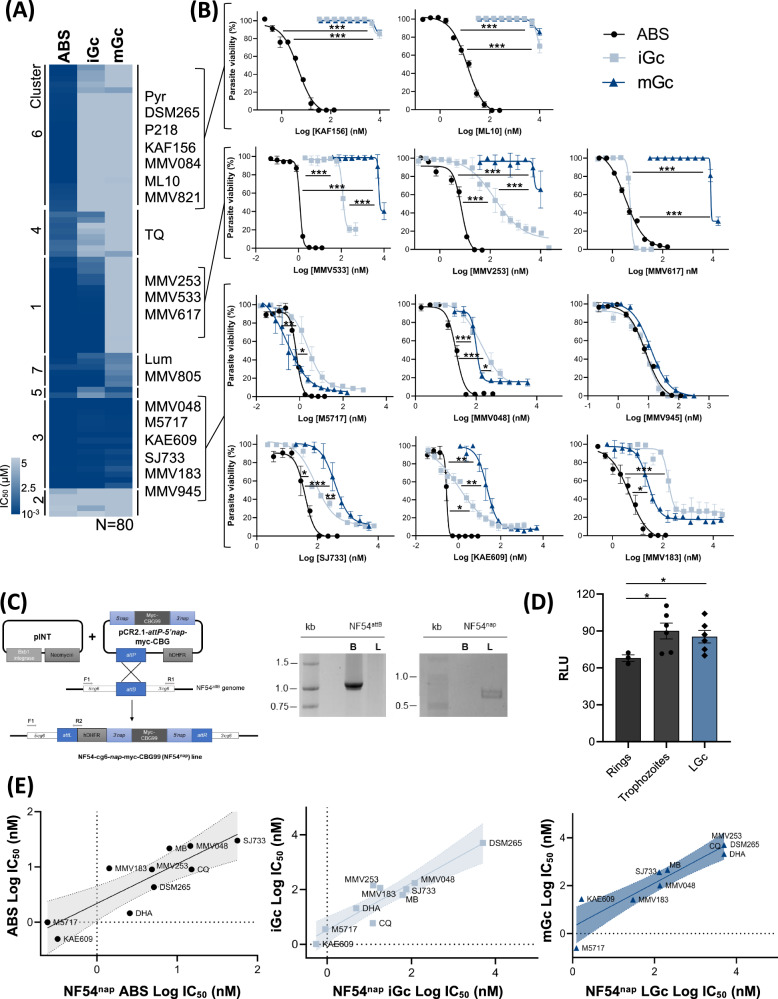
Fig. 2. Parallel evaluation of asexual and gametocytocidal activity of MMV compounds.
The activity (IC50s) of 80 compounds provided by the MMV were determined in parallel against asexual blood stage (ABS, 95% ring-stages) parasites with SYBR Green I fluorescence after 96 h, and against immature gametocytes (iGc, 80% stage II/III, 13% stage I), and mature gametocytes (mGc, 90% stage V) with luciferase reporter lines after 48 h drug pressures. The data are from n = 3 independent biological repeats, each performed in technical triplicates. A K-means clustering of the activities (IC50s) obtained. B Dose-response curves of selected compounds indicate the IC50 shifts between ABS parasites (black), iGc (light blue), and mGc (dark blue). The activities of compounds (IC50s) were determined from three independent biological repeats (n = 3), performed in technical triplicates, mean ± S.E., with significance indicated using an unpaired two-tailed Student’s t test. Exact p-values provided in Supplementary Data S2. C Construction of a constitutive luciferase reporter line via Bxb1 attB-attP integration of a myc-tagged CBG99 luciferase fusion gene under the control of the 5’ nucleosome assembly protein (nap) promoter (prom) and the 3’ regulatory region of the nap gene. The wild-type NF54attB and the transgenic line NF54nap were PCR screened for the attB (B) sites which would denote wild-type, unintegrated parasites, whilst the presence of the attL (L) region will indicate successful integration using primers shown (attB: F1 and R1, attL: F1 and R2). The expected DNA band sizes were obtained on the gel (attB: 1100 bp, attL: 701 bp). D The bioluminescent signal (RLU) from CBG99 luciferase activity across ABS parasites and gametocytes (n = 3 independent biological experiments for rings; n = 6 independent experiments for trophozoites and LGc, all in technical triplicates, mean ± S.E.). Individual data points are indicated in symbols. Statistical evaluation was performed with one-way ANOVA (total DF = 14). p = 0.018 rings vs. trophozoites and p = 0.019 rings vs. LGc. E Correlation of the activities of antimalarial compounds between the constitutive luciferase reporter line and other assay platforms, with 95% confidence bands on each point indicated as ribbons on the regression line. Data from three independent biological repeats (n = 3), performed in technical triplicates. CQ Chloroquine, DHA dihydroartemisinin, Lum Lumefantrine, MB Methylene blue, MMV183 MMV693183, MMV253 MMV674253, Pyr Pyrimethamine, TQ Tafenoquine. *p < 0.05; **p < 0.01, ***p < 0.001.
Fig. 3
Fig. 3. Implications of different inhibition profiles on gametocyte stages.
A Experimental set-up to determine sexual commitment rates (SCR) and gametocyte maturation. Created in BioRender. Birkholtz, L. (2023) BioRender.com/d75n707”. B SCR after asexual blood stage (ABS) parasite drug pressure as the ratio of stage II gametocytes on day 4 to ring stages on day 2. Individual data points are indicated in symbols. Data are from three independent biological repeats, in technical triplicates (n = 3, mean ± S.E.). Statistical evaluation was performed with one-way ANOVA (total DF = 26). Exact p-values are provided in main text. C Inhibition of viability of ABS parasites or immature gametocytes (iGc, >80% stage II/III) as determined with SYBR Green I fluorescence or luciferase expression, respectively. Parasites were exposed to compounds at concentrations corresponding to their therapeutic efficacy in vivo for 48 h for either the same cell numbers between ABS and iGc parasites (1 × 105 cells/well) or reduced iGc numbers (1 × 104 cells/well, 10% iGc). Data are from three independent biological repeats, technical triplicates (n = 3, mean ± S.E.). Individual data points are indicated in symbols. Statistical evaluation was performed with two-way ANOVA (total DF = 62). Exact p-values provided in Supplementary Data S6. D Evaluation of gametocyte maturation after iGc was exposed to compounds for the 48 h period in C. Data are from three independent biological repeats (n = 3), with one-way ANOVA (total DF = 27) significance evaluation. Exact p-values provided in main text. E The viability of developed mature gametocytes (mGc) was evaluated with male and female gamete formation for three independent biological repeats (n = 3, mean ± S.E.), with technical triplicates. Individual data points are indicated. Statistical evaluation was performed with one-way ANOVA in relation to the untreated control at 100% viability (total DF = 17). Exact p-values provided in Supplementary Data S6. *p < 0.05; **p < 0.01, ***p < 0.001.
Fig. 4
Fig. 4. Correlation of abundance of proposed drug targets to compound activities.
The fold change (FC) in a compound’s activity (IC50 difference) was calculated as the IC50 ratio measured on asexual blood stage (ABS) parasites vs immature gametocytes (iGc) (ABS/iGc); or ABS parasites vs mature gametocytes (mGc) (ABS/mGc). Additionally, the FC in the protein abundance levels for the drug targets for each compound was calculated for the same parasite stages (FC in protein abundance ABS/iGc or ABS/mGc). The correlation of the amplitude in FC in activity vs the FC in protein abundance was K-means clustered and indicated in the heatmap. The darkest blue indicates compounds nearing a 1:1 ratio between the change in activity of the compound from ABS to i/mGc and the change in that compound’s protein abundance. White shows compounds with a considerable loss in activity but not a similar change in protein abundance. The Sankey diagram between heatmaps illustrates the connection in compounds and their targets between iGc and mGc, as the profile of these compounds changes from active to inactive between these parasite stages. Some compounds and their corresponding targets within each cluster are highlighted. AcAS Acetyl-CoA synthetase, ATP4 non-SERCA-type Ca2+ P-ATPase, DHFR dihydrofolate reductase-thymidylate synthase, DHODH dihydroorotate dehydrogenase, EF2 elongation factor 2, IRS isoleucine-tRNA synthetase, MDR1 multidrug resistance protein 1, PheRS phenylalanine-tRNA synthetase, PKG cGMP-dependent protein kinase, PRS proline-tRNA synthetase, V-ATPase V-type ATPase.
Fig. 5
Fig. 5. Physicochemical properties of compounds with different activity profiles against ABS parasites and gametocytes.
A Shapely values for the physicochemical properties of the compounds that contributed to the different stage-specific activities. B PCA analysis of the physicochemical properties of compounds with different activity profiles against asexual blood stage (ABS) parasites and gametocytes. HBA Hydrogen bond acceptor, HBD Hydrogen bond donor, MW Molecular weight, RB Rotatable bonds, tPSA Topological polar surface area.
Fig. 6
Fig. 6. Uptake mechanisms influencing different inhibition profiles of compounds with similar biological targets.
A Chemical structures and B activities (IC50) of MMV048 (n = 3 biological repeats, in triplicate), UCT943 (n = 3, in triplicate), and UCT594 (n = 2, published data), mean ± S.E. in each instance. Individual data points are indicated in symbols. Statistical evaluation was performed with one-way ANOVA (total DF = 7). Exact p-values provided in Supplementary Data S6. C Difference in the amount of compound present in the supernatant (S) and pellet (P) of asexual blood stage (ABS) parasites and gametocytes (immature (iGc) and late-stage (LGc) gametocytes) as determined with LC-MS (n = 1, performed in technical triplicates, mean ± SD, one-way ANOVA, total DF = 8). Exact p-values provided in Supplementary Data S6. D ABS trophozoites, iGc, and LGc, were either pre-treated with or without Furosemide (PSAC blocker, 30 min) followed by treatment with the positive control (Blasticidin, Blast), MMV048, UCT943, UCT594 and DHA for a further 48 h and proliferation and viability measured with luciferase. Activity is expressed as a fold change (FC) in activity in the presence or absence of Furosemide. Data are from three independent biological repeats, in technical triplicates (n = 3, mean ± S.E.). Individual data points are indicated in symbols. Statistical evaluation was performed with unpaired two-tailed Student’s t test (df = 4). Exact p-values provided in Supplementary Data S6. E ABS parasites, iGc and LGc, were pre-treated with or without Auphen (AQP3 blocker, 30 min), followed by treatment with MMV048, UCT943, and UCT594 for a further 24 h, and proliferation and viability were measured. FC was determined relative to treatments without Auphen. Data are from three independent biological repeats, with technical triplicates (n = 3, mean ± S.E.). Individual data points are indicated in symbols. Statistical evaluation was performed with unpaired two-tailed Student’s t test (df = 4). Exact p-values provided in main text. F ABS parasites and LGc were pre-treated with or without saponin (0.05%, 10 min) followed by treatment with MMV048, UCT943, and UCT594 for a further 12 h and viability measured with luciferase, with % inhibition indicated. FC in activity in the presence and absence of saponin are indicated. Data are from three independent biological repeats (n = 3, mean ± S.E.) except for MMV533 in LGc for which data are from n = 2 biological repeats. Individual data points are indicated in symbols. Statistical evaluation was performed with unpaired two-tailed Student’s t test (df = 4). Exact p-values provided in Supplementary Data S6. *p < 0.05; **p < 0.01, ***p < 0.001.
Fig. 7
Fig. 7. Physicochemical properties of dual-active compounds.
Boiled-egg model (blue ellipses) for frontrunner antimalarials with asexual blood stage (ABS)-specific activity (black) and activity against both ABS parasites and gametocytes (blue). 95% and 99% confidence ellipses (gray) are shown as indications of good absorption. Pyr Pyrimethamine.

References

    1. World Health Organization. World Malaria Report 2023 (WHO, 2023).
    1. Birkholtz, L.-M., Alano, P. & Leroy, D. Transmission-blocking drugs for malaria elimination. Trends Parasitol.38, 390–403 (2022). - PubMed
    1. Josling, G. A. & Llinás, M. Sexual development in Plasmodium parasites: knowing when it’s time to commit. Nat. Rev. Microbiol.13, 573–587 (2015). - PubMed
    1. Plouffe, D. M. et al. High-throughput assay and discovery of small molecules that interrupt malaria transmission. Cell Host Microbe19, 114–126 (2016). - PMC - PubMed
    1. Duffy, S. & Avery, V. M. Identification of inhibitors of Plasmodium falciparum gametocyte development. Malar. J.12, 408 (2013). - PMC - PubMed

Publication types

MeSH terms

LinkOut - more resources