. 2024 Nov 17;9(1):220.
doi: 10.1038/s41541-024-01012-w.

A Lassa virus live attenuated vaccine candidate that is safe and efficacious in guinea pigs

Affiliations

A Lassa virus live attenuated vaccine candidate that is safe and efficacious in guinea pigs

Brian D Carey et al. NPJ Vaccines. .

Abstract

Lassa virus (LASV) is a rodent-borne mammarenavirus that causes tens to hundreds of thousands of human infections annually in Western Africa. Approximately 20% of these infections progress to Lassa fever (LF), an acute disease with case-fatality rates from ≈20-70%. Currently, there are no approved vaccines or specific therapeutics to prevent or treat LF. The LASV genome consists of a small (S) segment that has two genes, GP and NP, and a large (L) segment that has two genes, L and Z. In both segments, the two genes are separated by non-coding intergenic regions (IGRs). Recombinant LASVs (rLASVs), in which the L segment IGR was replaced with the S segment IGR or in which the GP gene was codon-deoptimized, lost fitness in vitro, were highly attenuated in vivo, and, when used as vaccines, protected domesticated guinea pigs from otherwise lethal LASV exposure. Here, we report the generation of rLASV/IGR-CD, which includes both determinants of attenuation and further enhances the safety of the vaccine compared with its predecessors. rLASV/IGR-CD grew to high titers in Vero cells, which are approved for human vaccine production, but did not cause signs of disease or pathology in guinea pigs. Importantly, guinea pigs vaccinated with rLASV/IGR-CD were completely protected from disease and death after a typically lethal exposure to wild-type LASV. Our data support the development of rLASV/IGR-CD as a live-attenuated LF vaccine with stringent safety features.


Conflict of interest statement

Competing interests The authors declare no competing interests.

Figures

Fig. 1
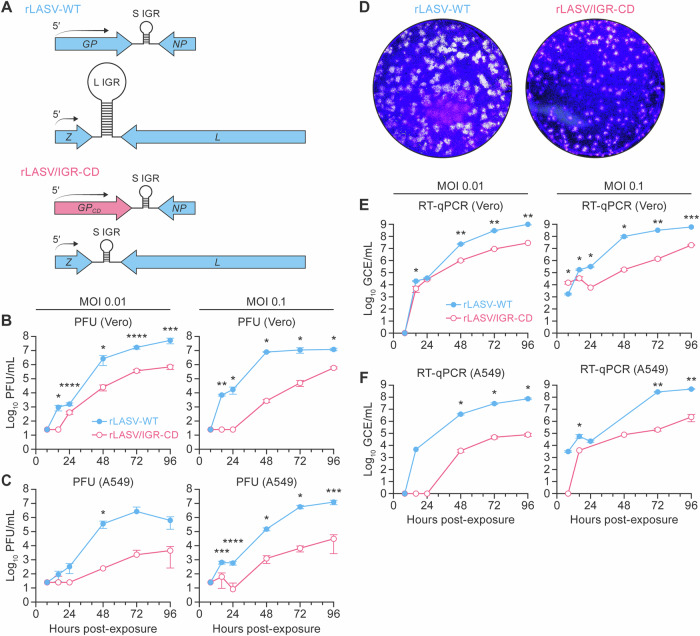
Fig. 1. Generation and characterization of rLASV/IGR-CD in cultured cells.
A Schematic of the wild-type LASV genome used to create the recombinant control Lassa virus (rLASV-WT; top) and the locations of attenuating changes in rLASV/IGR-CD (bottom). B Vero cells or C A549 cells were exposed to rLASV-WT or rLASV/IGR-CD at the indicated MOIs, and supernatants were collected at the indicated time points. Virus titers were measured by plaque assay. D Representative images showing the morphology of plaques caused by rLASV-WT and rLASV/IGR-CD in Vero E6 cells. E Vero cells or F A549 cells were exposed to rLASV-WT or rLASV/IGR-CD at the indicated MOIs, and supernatants were collected at the indicated time points. Viral RNA levels were measured by RT-qPCR. n = 3, error bars represent standard deviation. *p < 0.05, **p < 0.005, ***p < 0.0005, ****p < 0.00005. CD codon-deoptimized; GCE genome copy equivalents; GP glycoprotein gene; GPCD codon-deoptimized glycoprotein gene; IGR intergenic region; L large segment; L large protein gene; LASV Lassa virus; MOI multiplicity of infection; NP nucleoprotein gene; PFU plaque-forming units; rLASV recombinant LASV; RT-qPCR real-time reverse transcription polymerase chain reaction; S small segment; WT wild-type; Z zinc-binding protein gene.
Fig. 2
Fig. 2. Viral protein expression levels and virion morphology of rLASV/IGR-CD in vitro.
A Vero cells or A549 cells were exposed to rLASV-WT or rLASV/IGR-CD and cell lysates were collected at the indicated time points. Western blots were performed on cell lysates with antibodies to LASV NP, LASV GP, or actin beta (loading control). See Supplementary Fig. 4 for uncropped blots. B Resin blocks containing Vero cells infected with rLASV-WT or rLASV/IGR-CD were sectioned and scanned by a transmission electron microscope. Samples contained small quantities of LASV particles measuring 80–140 nm in diameter that were budding from the plasma membranes of infected cells and extracellular mature particles. Shown are two representative images of mature rLASV-WT and rLASV/IGR-CD virus particles in extracellular space of infected Vero cells. CD codon-deoptimized; GP glycoprotein; IGR intergenic region; LASV Lassa virus; MOI multiplicity of infection; NP nucleoprotein; rLASV recombinant LASV; WT wild-type.
Fig. 3
Fig. 3. rLASV/IGR-CD is attenuated in vivo.
A Study design, B Kaplan–Meier survival curve, and CE clinical observations of strain 13 guinea pigs exposed to 105 PFU of rLASV-WT (n = 8) or rLASV/IGR-CD (n = 8). “Mild signs” indicates ruffled fur, increased respiration rate, and slightly reduced activity. “Moderate signs” indicates ruffled fur, partially closed eyes, increased respiration rate with abdominal activity, and significantly reduced activity. “Severe signs” indicates respiratory distress, closed or mostly closed eyes, severe lethargy, and cyanosis. Error bars indicate standard error of the mean. **p < 0.005, ***p < 0.0005, ****p < 0.0001. CD codon-deoptimized; EDTA ethylenediaminetetraacetic acid; IGR intergenic region; LASV Lassa virus; rLASV recombinant LASV; PFU plaque-forming units; WT wild-type.
Fig. 4
Fig. 4. Tissue viral RNA levels, LASV antigen-specific IgG titers, and cytokine gene expression in guinea pigs support in vivo attenuation of rLASV/IGR-CD.
A RT-qPCR and B plaque assays were performed on homogenates from livers, spleens, and kidneys collected at necropsy to determine virus titers, and C anti-LASV IgG ELISA and multiplex cytokine panel analysis containing analytes D CXCL10, E IL22, and F CXCL2 were performed using plasma collected at the indicated time points during the study depicted in Fig. 3. Error bars indicate standard error of the mean. *p < 0.05, **p < 0.005, ***p < 0.0005, ****p < 0.0001. CXCL C-X-C motif chemokine ligand; ELISA enzyme-linked immunosorbent assay; GCE genome copy equivalents; Ig, immunoglobulin; IGR intergenic region; IL, interleukin; LASV Lassa virus; LOD limit of detection; PFU plaque-forming units; rLASV recombinant LASV; Term, Day 42, the terminal day of the study, i.e., time point of euthanasia; WT wild-type.
Fig. 5
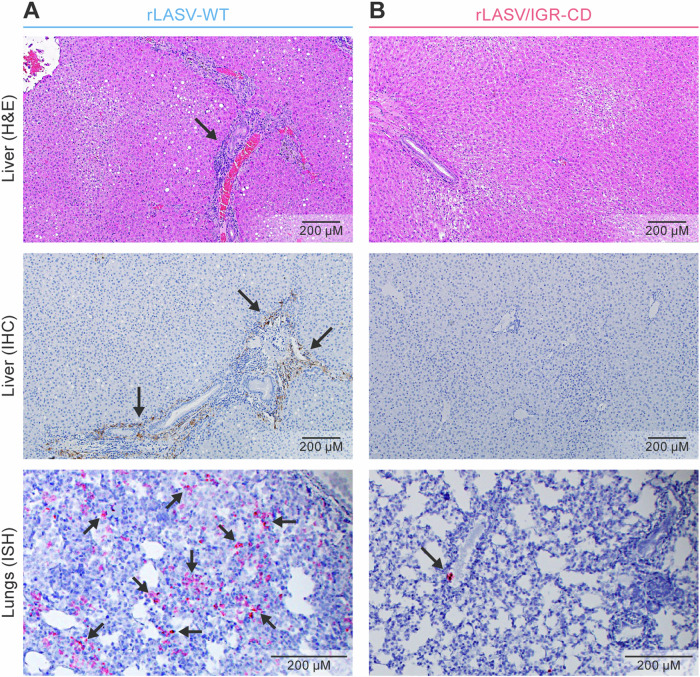
Fig. 5. Histopathology of liver and lung tissues support in vivo attenuation of rLASV/IGR-CD.
Representative images of H&E and IHC staining of liver tissues and ISH staining of lung tissues taken at necropsy during the study depicted in Fig. 3. Black arrows depict liver degradation and single-cell necrosis (A, top), viral antigen (A, middle), and viral RNA in a single cell (A, bottom; B, bottom). CD codon-deoptimized; H&E hematoxylin and eosin; IHC immunohistochemistry; ISH in situ hybridization; LASV Lassa virus; rLASV recombinant LASV; WT wild-type.
Fig. 6
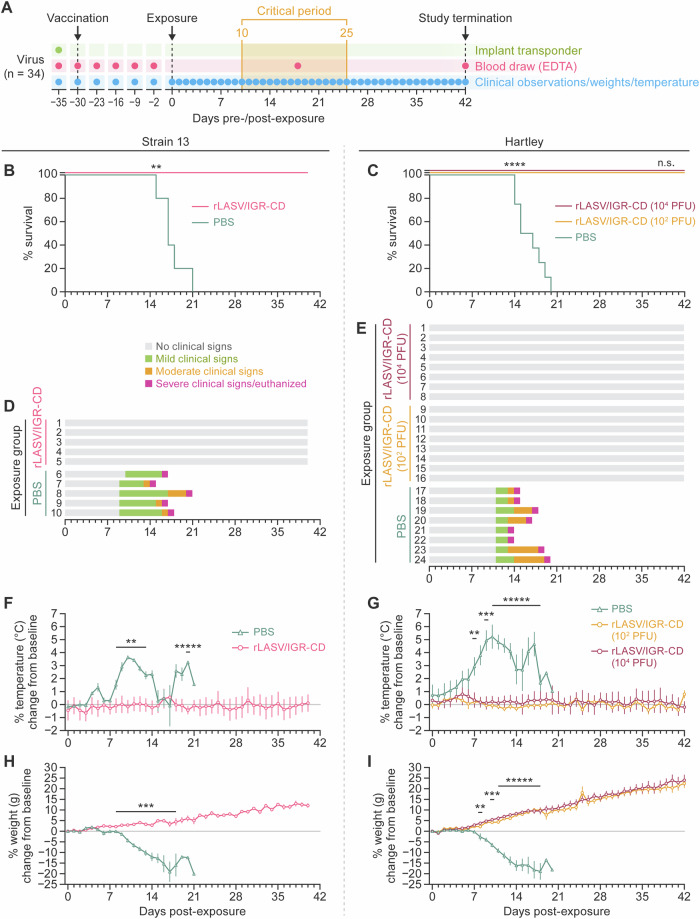
Fig. 6. rLASV/IGR-CD-vaccinated strain 13 and Hartley guinea pigs are protected against LASV-induced disease.
A Study design, BC Kaplan–Meier survival curves, and CI clinical observations of strain 13 (n = 5) and Hartley (n = 8) guinea pigs vaccinated with PBS (mock vaccine) or 105 PFU (strain 13) or 102 PFU or 104 PFU (Hartley) of rLASV/IGR-CD and exposed to 105 PFU of rLASV-WT (strain 13) or 104 PFU of GPA-LASV (Hartley). “Mild signs” indicates ruffled fur, increased respiration rate, and slightly reduced activity. “Moderate signs” indicates ruffled fur, partially closed eyes, increased respiration rate with abdominal activity, and significantly reduced activity. “Severe signs” indicates respiratory distress, closed or mostly closed eyes, severe lethargy, and cyanosis. Error bars indicate standard error of the mean. **p < 0.005, ***p < 0.0005, ****p < 0.00005. CD, codon-deoptimized; EDTA, ethylenediaminetetraacetic acid; GPA-LASV, guinea pig-adapted LASV; IGR, intergenic region; LASV, Lassa virus; rLASV, recombinant LASV; PBS, phosphate-buffered saline; PFU, plaque-forming units; WT, wild-type.
Fig. 7
Fig. 7. Viral RNA levels and histopathological findings in guinea pigs vaccinated with rLASV/IGR-CD and exposed to rLASV-WT.
RT-qPCR assays were performed on homogenates from livers, spleens, and kidneys collected at necropsy to determine virus titers during the study depicted in Fig. 6 in A strain 13 and B Hartley guinea pigs. Representative images of H&E staining of liver issues taken at necropsy during the study depicted in Fig. 6, in which animals were vaccinated with C PBS (strain 13), D PBS (Hartley), E 105 PFU rLASV/IGR-CD (strain 13), F 102 PFU rLASV/IGR-CD, or G 104 PFU rLASV/IGR-CD. Arrows depict liver degradation and single-cell necrosis. *p < 0.05, **p < 0.005, ***p < 0.0005, ****p < 0.00005. CD codon-deoptimized; GCE genome copy equivalents; IGR intergenic region; LASV; Lassa virus; LOD limit of detection; rLASV recombinant LASV; PBS phosphate-buffered saline; PFU plaque-forming units; RT-qPCR real-time reverse transcription polymerase chain reaction; WT wild-type.
Fig. 8
Fig. 8. Evaluation of rLASV/IGR-CD induced immunity in strain 13 guinea pigs.
Cells isolated from spleens were stained with a newly developed flow cytometry panel (gating strategy detailed in Supplemental Fig. 3) and run on a flow cytometer to identify distinct populations of splenic immune cells. Frequencies of live splenic lymphocytes were examined across the groups for A class-switched IgG+ B cells, and total populations of B CD4+ T cells, C CD8+ T cells, and D total B cells. Error bars indicate standard error of the mean. n.s.= p < 0.05 *p < 0.05, ***p < 0.0005. CD codon deoptimized; IgG immunoglobulin G; IGR intergenic region; n.s. not significant; rLAS recombinant Lassa virus; WT wild-type.

References

    1. Buckley, S. M., Casals, J. & Downs, W. G. Isolation and antigenic characterization of Lassa virus. Nature227, 174 (1970). - PubMed
    1. Radoshitzky, S. R. et al. ICTV virus taxonomy profile: Arenaviridae 2023. J Gen Virol104, 001891 (2023). - PMC - PubMed
    1. World Health Organization. R&D Blueprint. Lassa fever. https://www.who.int/teams/blueprint/lassa-fever (2018).
    1. Monath, T. P., Newhouse, V. F., Kemp, G. E., Setzer, H. W. & Cacciapuoti, A. Lassa virus isolation from Mastomys natalensis rodents during an epidemic in Sierra Leone. Science185, 263–265 (1974). - PubMed
    1. Olayemi, A. et al. New hosts of the Lassa virus. Sci Rep6, 25280 (2016). - PMC - PubMed

LinkOut - more resources