


Exploring agro-ecological significance, knowledge gaps, and research priorities in arbuscular mycorrhizal fungi
- PMID: 39552643
- PMCID: PMC11565054
- DOI: 10.3389/fmicb.2024.1491861
Exploring agro-ecological significance, knowledge gaps, and research priorities in arbuscular mycorrhizal fungi
Abstract
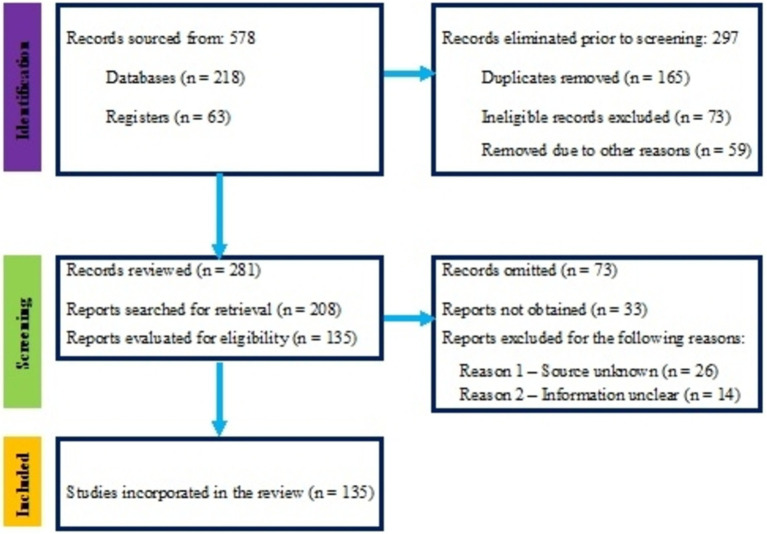
This systematic review examines the global agricultural relevance and practical environmental implications of arbuscular mycorrhizal fungi (AMF) within the phylum Glomeromycota. Following PRISMA guidelines, ensuring a comprehensive and unbiased literature review, a literature search was conducted, focusing on the functional roles of AMF in enhancing crop productivity, nutrient uptake, and soil health. Key findings reveal that AMF contribute significantly to sustainable agriculture by reducing the need for chemical fertilizers and increasing plant resilience to environmental stressors like drought, salinity, or pest resistance. The review highlights the importance of AMF in forming symbiotic relationships with plants, which enhance nutrient absorption and improve soil structure, showcasing long-term benefits such as reduced erosion or improved water retention. However, the current literature lacks in-depth exploration of the taxonomy and evolutionary aspects of AMF, as well as the specific functional roles they play in different agricultural contexts, e.g., understanding evolution could enhance strain selection for specific crops. This review identifies several urgent research gaps, including a need for a more refined understanding of AMF community dynamics under varying land management practices. For example, there are gaps in and a critical evaluation of advanced molecular techniques. Such techniques are essential for studying these interactions. Addressing these gaps will enhance the integration of AMF into sustainable agricultural systems and improve ecosystem management practices across different geographical regions. Future research should prioritize developing precise molecular imaging techniques and optimizing AMF applications for different crops and soil types to maximize their ecological and agricultural benefits. This could be practical through interdisciplinary collaboration (e.g., involving molecular biologists, agronomists, etc.). In conclusion, this review advances the practical application of AMF in agriculture and its contribution to biodiversity conservation in agroecosystems. Integrating these findings into policy frameworks could encourage sustainable farming practices, promote the adoption of AMF inoculants, and foster incentives for environmentally friendly land management strategies.
Systematic review registration: https://www.bmj.com/content/372/bmj.n71.
Keywords: molecular imaging; nutrient uptake; soil health; sustainable agriculture; symbiotic relationships.
Copyright © 2024 Mwampashi, Magubika, Ringo, Theonest, Tryphone, Chilagane and Nassary.
Conflict of interest statement
The authors declare that the research was conducted in the absence of any commercial or financial relationships that could be construed as a potential conflict of interest.
Figures

References
-
- Albracht C., Solbach M. D., Hennecke J., Bassi L., van der Ploeg G. R., Eisenhauer N., et al. (2024). Common soil history is more important than plant history for arbuscular mycorrhizal community assembly in an experimental grassland diversity gradient. Biol. Fertil. Soils 60, 547–562. doi: 10.1007/s00374-024-01821-0 - DOI
-
- Augé R. M. (2001). Water relations, drought and vesicular-arbuscular mycorrhizal symbiosis. Mycorrhiza 11, 3–42. doi: 10.1007/s005720100097 - DOI
-
- Bainard L., Chagnon P., Cade-Menun B., Lamb E., LaForge K., Schellenberg M., et al. (2017). Plant communities and soil properties mediate agricultural land use impacts on arbuscular mycorrhizal fungi in the mixed prairie ecoregion of the north American Great Plains. Agric. Ecosyst. Environ. 249, 187–195. doi: 10.1016/j.agee.2017.08.010 - DOI
Publication types
LinkOut - more resources
Full Text Sources
