


Differential effects of sleep position and sleep stage on the severity of obstructive sleep apnea
- PMID: 39557635
- PMCID: PMC12215218
- DOI: 10.1111/jsr.14379
Differential effects of sleep position and sleep stage on the severity of obstructive sleep apnea
Abstract
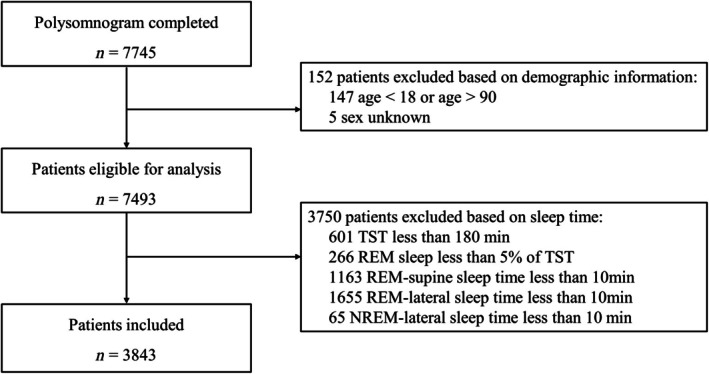
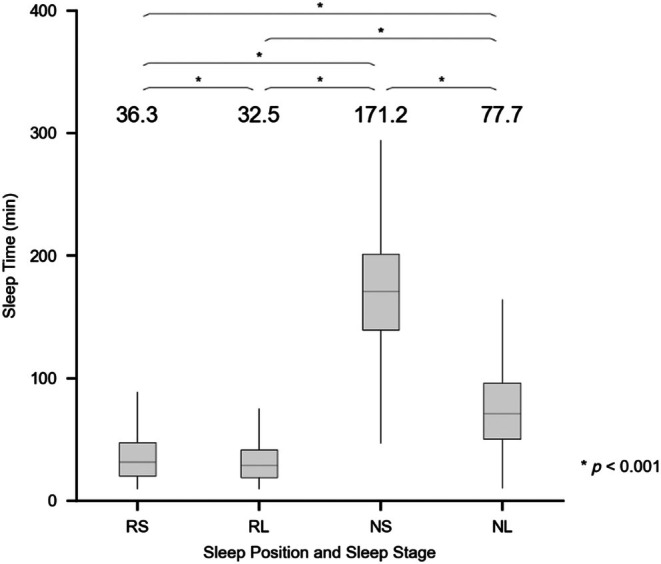
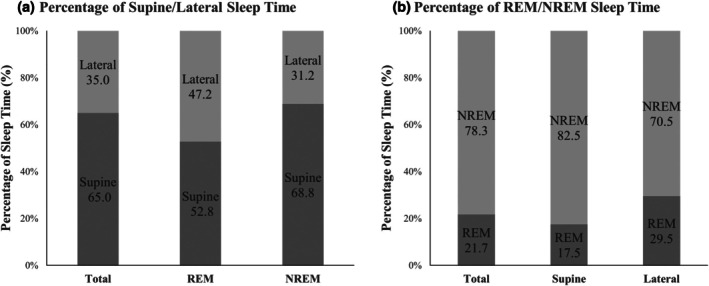
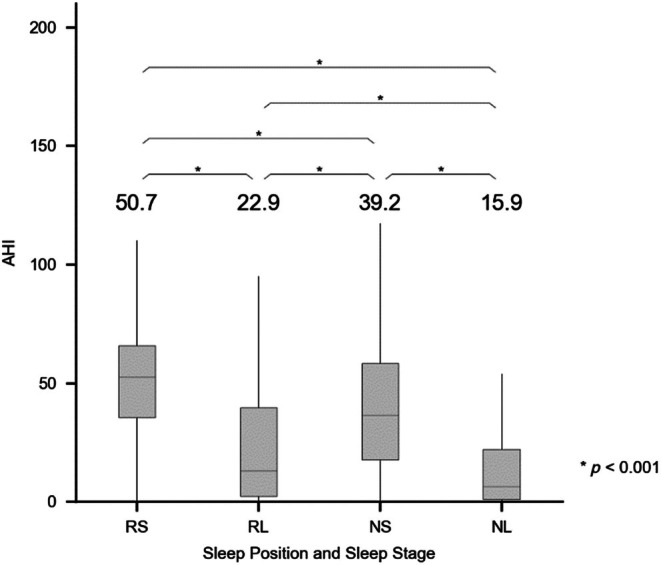
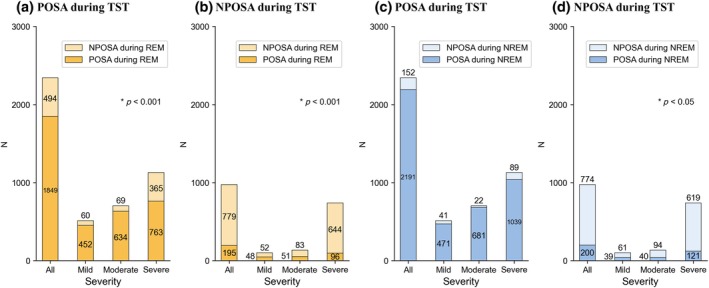
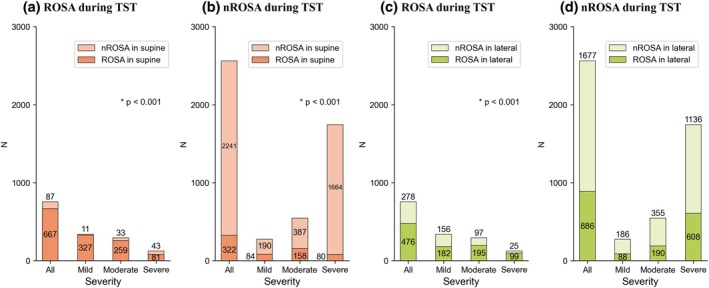
This study compared the effects of sleeping in the supine position and rapid eye movement sleep on the severity of obstructive sleep apnea, and investigated the effect of sleep stage on position-dependent obstructive sleep apnea, and of sleep position on rapid eye movement-dependent obstructive sleep apnea. We analysed epoch-labelled polysomnographic readouts of 3843 patients, and calculated the apnea-hypopnea index for each sleep position and sleep stage. Subgroup analyses were performed to evaluate whether the proportion of position-dependent obstructive sleep apnea patients changed during rapid eye movement and non-rapid eye movement sleep, and whether that of rapid eye movement-dependent obstructive sleep apnea patients changed during supine/lateral sleep. The apnea-hypopnea index was highest in the rapid eye movement-supine position (50.7 ± 22.6 events per hr), followed by non-rapid eye movement-supine, rapid eye movement-lateral and non-rapid eye movement-lateral (39.2 ± 25.3, 22.9 ± 24.4, 15.9 ± 21.9 events per hr, respectively; p < 0.001). Patients with position-dependent obstructive sleep apnea had a higher ratio of rapid eye movement sleep, and those with rapid eye movement-dependent obstructive sleep apnea had a higher ratio of sleep time in the supine position (p < 0.001). During rapid eye movement sleep, position-dependent obstructive sleep apnea was not observed in 21.1% of patients who otherwise had position-dependent obstructive sleep apnea. In the lateral position, 36.9% of patients with rapid eye movement-dependent obstructive sleep apnea did not retain rapid eye movement dependency. Although sleeping in the supine position and rapid eye movement sleep were both associated with more frequent respiratory events, this was the first study to demonstrate that the former had a stronger correlation with obstructive sleep apnea severity. Position dependency in patients with obstructive sleep apnea decreased during rapid eye movement sleep, and worsening of rapid eye movement dependency was alleviated in the lateral position, suggesting potential for personalized obstructive sleep apnea management.
Keywords: apnea; obstructive; rapid eye movement; sleep; sleep apnea; sleep hypopnea; supine position.
© 2024 The Author(s). Journal of Sleep Research published by John Wiley & Sons Ltd on behalf of European Sleep Research Society.
Conflict of interest statement
H.W.S. is a founder of OUaR LaB, Inc., serves on the Board of Directors and as a chief executive officer for OUaR LaB, Inc., and owns OUaR LaB Stock, which are subject to certain restrictions under university policy. And other authors declare no conflicts of interest.
Figures
References
-
- Ahn, H. K. , Kang, Y. J. , Yoon, W. , & Shin, H. W. (2024). Analysing the impact of body position shift on sleep architecture and stage transition: A comprehensive multidimensional study using event‐synchronised polysomnography data. Journal of Sleep Research, 33(4), e14115. 10.1111/jsr.14115 - DOI - PubMed
-
- Chami, H. A. , Baldwin, C. M. , Silverman, A. , Zhang, Y. , Rapoport, D. , Punjabi, N. M. , & Gottlieb, D. J. (2010). Sleepiness, quality of life, and sleep maintenance in REM versus non‐REM sleep‐disordered breathing. American Journal of Respiratory and Critical Care Medicine, 181(9), 997–1002. 10.1164/rccm.200908-1304OC - DOI - PMC - PubMed
MeSH terms
Grants and funding
LinkOut - more resources
Full Text Sources
