


NEDD4L contributes to ferroptosis and cell growth inhibition in esophageal squamous cell carcinoma by facilitating xCT ubiquitination
- PMID: 39557844
- PMCID: PMC11574128
- DOI: 10.1038/s41420-024-02243-5
NEDD4L contributes to ferroptosis and cell growth inhibition in esophageal squamous cell carcinoma by facilitating xCT ubiquitination
Abstract
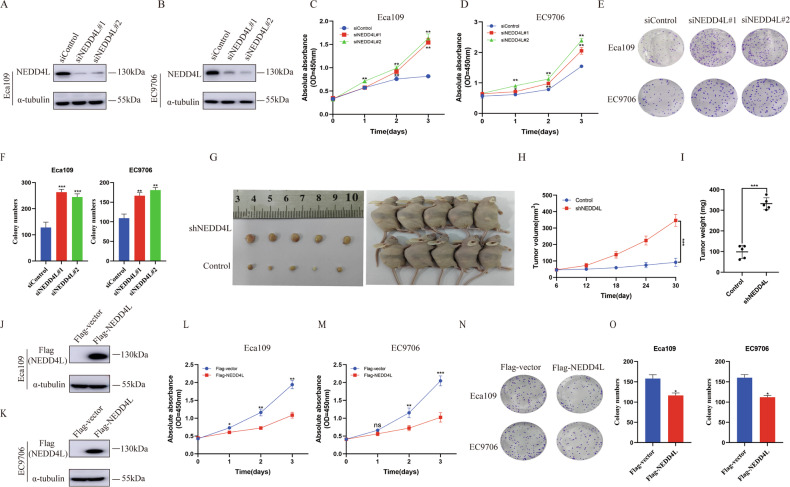
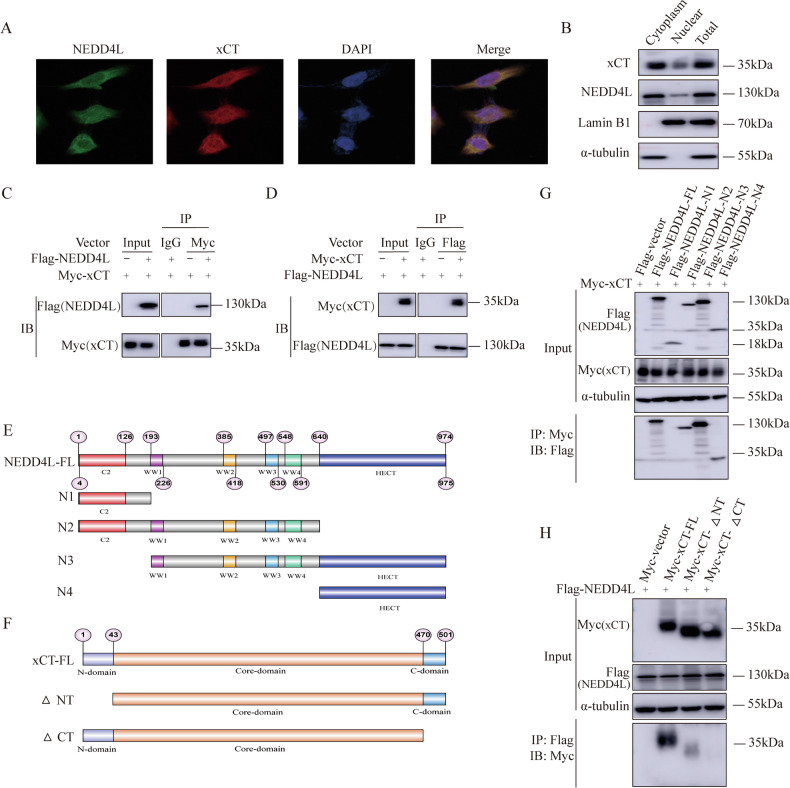
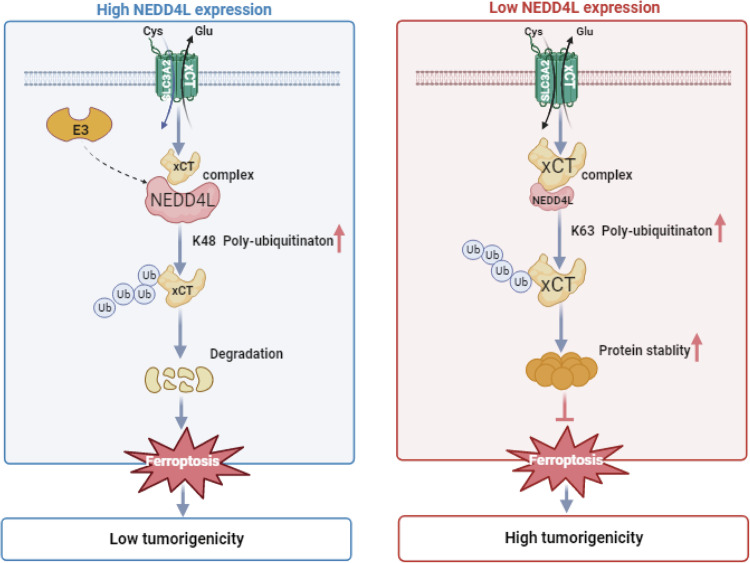
The oncogene xCT plays an indispensable role in tumor growth by protecting cancer cells from oxidative stress and ferroptosis. Emerging evidence indicated xCT function is tightly controlled by posttranslational modifications, especially ubiquitination. However, it still remains unclear what specific regulatory mechanism of xCT by ubiquitin ligases in human cancers. Here, we reported that NEDD4L, an E3 ubiquitin ligases, inhibited esophageal squamous cell carcinoma (ESCC) tumor growth and facilitated ferroptosis by ubiquitination of xCT. NEDD4L expression was declined in ESCC and was associated with tumor invasion, lymph node metastasis and distant metastasis. Silencing NEDD4L triggered ESCC tumor growth. Meanwhile, knock down of NEDD4L prevented the accumulation of ROS, elevated the level of GSH, reduced the content of MDA in ESCC cells, thereby inhibiting ferroptosis. Mechanistically, NEDD4L directly bound to the ∆CT domain of xCT through its WW and HECT domain. More importantly, NEDD4L promoted xCT degradation by facilitating its polyubiquitination in ESCC cells. Collectively, these findings suggest that NEDD4L is crucial in governing the stability of xCT and mediating ferroptosis in ESCC.
© 2024. The Author(s).
Conflict of interest statement
Figures




References
-
- Sung H, Ferlay J, Siegel RL, Laversanne M, Soerjomataram I, Jemal A, et al. Global cancer statistics 2020: GLOBOCAN estimates of incidence and mortality worldwide for 36 cancers in 185 countries. CA Cancer J Clin. 2021;71:209–49. - PubMed
Grants and funding
LinkOut - more resources
Full Text Sources
Molecular Biology Databases
