


Preclinical characterization of the Omicron XBB.1.5-adapted BNT162b2 COVID-19 vaccine
- PMID: 39567521
- PMCID: PMC11579292
- DOI: 10.1038/s41541-024-01013-9
Preclinical characterization of the Omicron XBB.1.5-adapted BNT162b2 COVID-19 vaccine
Abstract
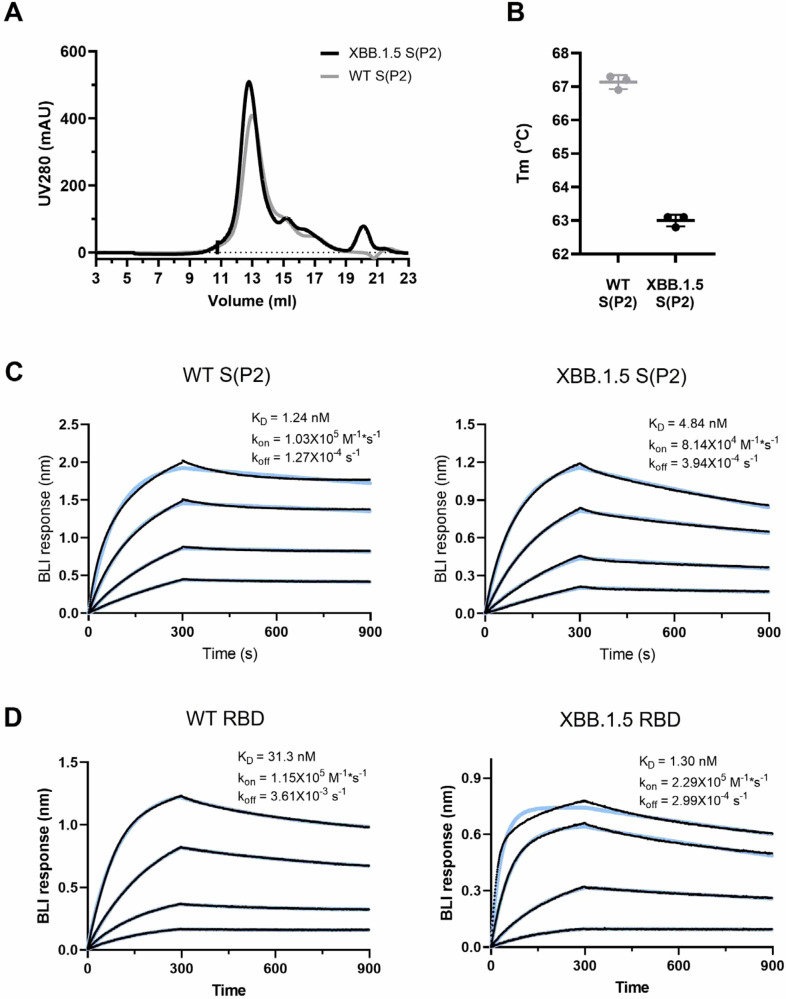
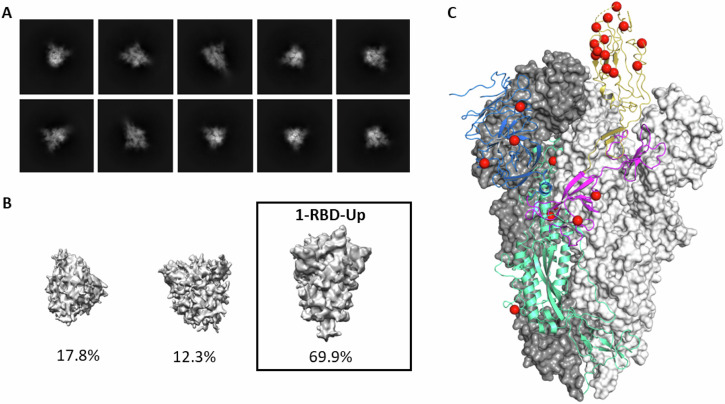
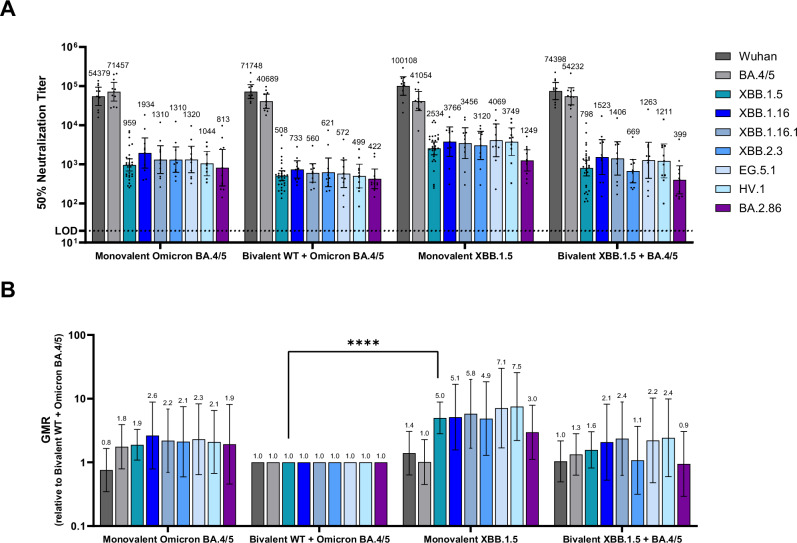
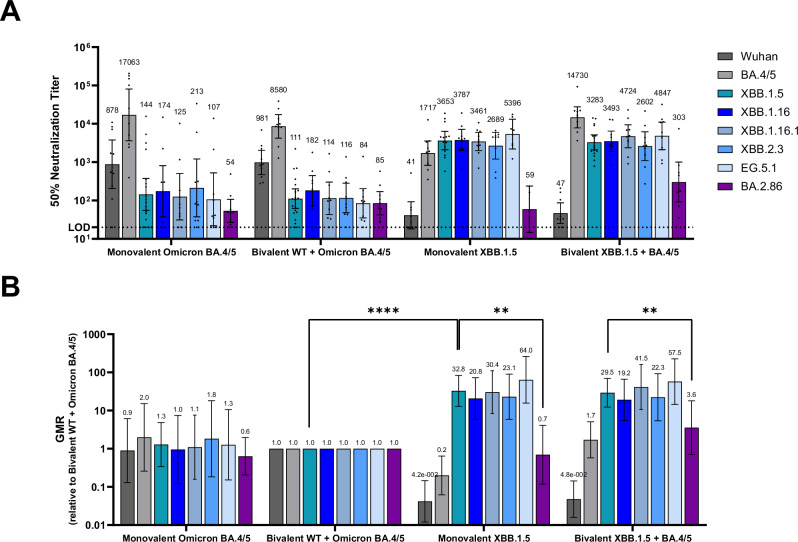
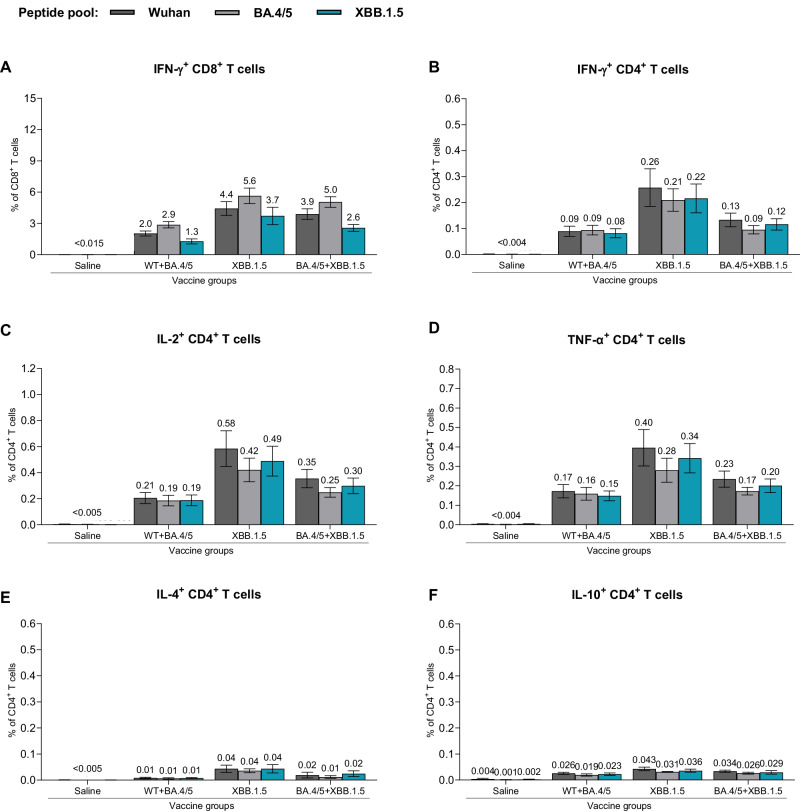
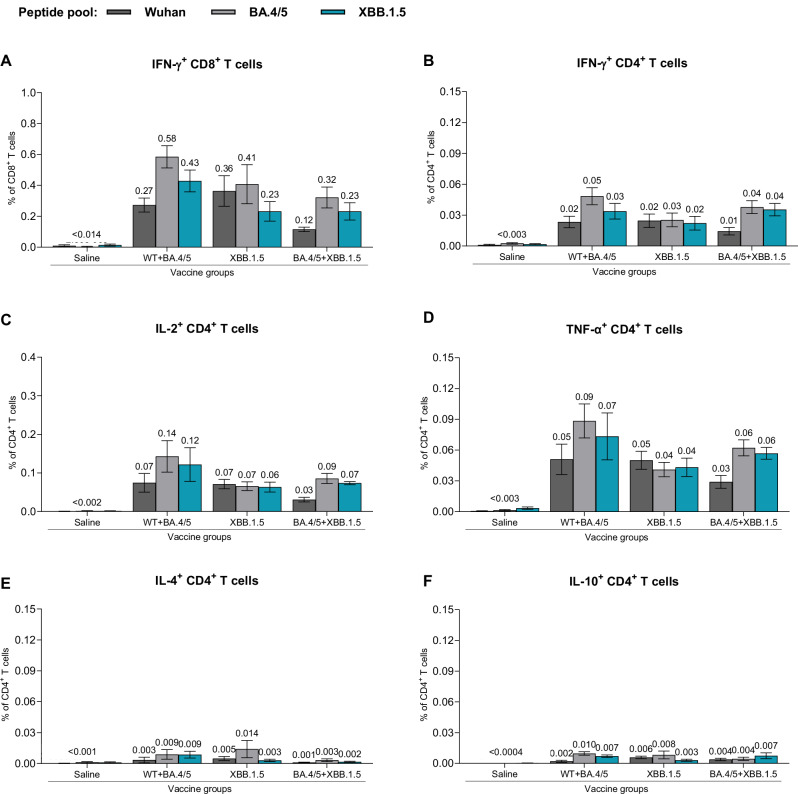
As SARS-CoV-2 evolves, increasing in potential for greater transmissibility and immune escape, updated vaccines are needed to boost adaptive immunity to protect against COVID-19 caused by circulating strains. Here, we report features of the monovalent Omicron XBB.1.5-adapted BNT162b2 vaccine, which contains XBB.1.5-specific sequence changes, relative to the original BNT162b2 backbone, in the encoded prefusion-stabilized SARS-CoV-2 spike protein (S(P2)). Biophysical characterization of Omicron XBB.1.5 S(P2) demonstrated that it maintains a prefusion conformation and adopts a flexible, predominantly open, state, with high affinity for the human ACE-2 receptor. When administered as a 4th dose in BNT162b2-experienced mice, the monovalent Omicron XBB.1.5 vaccine elicited substantially higher serum neutralizing titers against pseudotyped viruses of Omicron XBB.1.5, XBB.1.16, XBB.1.16.1, XBB.2.3, EG.5.1 and HV.1 sublineages and phylogenetically distant BA.2.86 lineage than the bivalent Wild Type + Omicron BA.4/5 vaccine. Similar trends were observed against Omicron XBB sublineage pseudoviruses when the vaccine was administered as a 2-dose series in naive mice. Strong S-specific Th1 CD4+ and IFNγ+ CD8+ T cell responses were also observed. These findings, together with real world performance of the XBB.1.5-adapted vaccine, suggest that preclinical data for the monovalent Omicron XBB.1.5-adapted BNT162b2 was predictive of protective immunity against dominant SARS-CoV-2 strains.
© 2024. The Author(s).
Conflict of interest statement
Competing interests: All authors are current or former employees of Pfizer or BioNTech and may, therefore, be respective shareholders. Pfizer and BioNTech participated in the design, analysis and interpretation of the data as well as the writing of this report and the decision to publish. K.M., Y.C., A.M., H.C., A.V., U.Ş. and K.A.S. are inventors on patents and patent applications related to the COVID-19 vaccine. A.M., A.V. and U.Ş. are inventors on patents and patent applications related to the RNA technology.
Figures
References
-
- W.H.O. Classification of Omicron (B.1.1.529): SARS-CoV-2 Variant of Concern. (World Health Organization, Geneva, Switzerland, 2021).
-
- Link-Gelles, R. et al. Early Estimates of Bivalent mRNA Booster Dose Vaccine Effectiveness in Preventing Symptomatic SARS-CoV-2 Infection Attributable to Omicron BA.5- and XBB/XBB.1.5-Related Sublineages Among Immunocompetent Adults - Increasing Community Access to Testing Program, United States, December 2022-January 2023. MMWR Morb Mortal Wkly Rep.72, 119–124, 10.15585/mmwr.mm7205e1 (2023). - PMC - PubMed
-
- Link-Gelles, R. et al. Effectiveness of Monovalent and Bivalent mRNA Vaccines in Preventing COVID-19-Associated Emergency Department and Urgent Care Encounters Among Children Aged 6 Months-5 Years - VISION Network, United States, July 2022-June 2023. MMWR Morb Mortal Wkly Rep.72, 886–892, 10.15585/mmwr.mm7233a2 (2023). - PMC - PubMed
-
- Tenforde, M. W. et al. Early Estimates of Bivalent mRNA Vaccine Effectiveness in Preventing COVID-19-Associated Emergency Department or Urgent Care Encounters and Hospitalizations Among Immunocompetent Adults - VISION Network, Nine States, September-November 2022. MMWR Morb Mortal Wkly Rep.71, 1637–1646, 10.15585/mmwr.mm7153a1 (2023). - PMC - PubMed
Grants and funding
LinkOut - more resources
Full Text Sources
Research Materials
Miscellaneous
