


Covalent Inhibitors of KEAP1 with Exquisite Selectivity
- PMID: 39572012
- PMCID: PMC11647895
- DOI: 10.1021/acs.jmedchem.4c02019
Covalent Inhibitors of KEAP1 with Exquisite Selectivity
Abstract
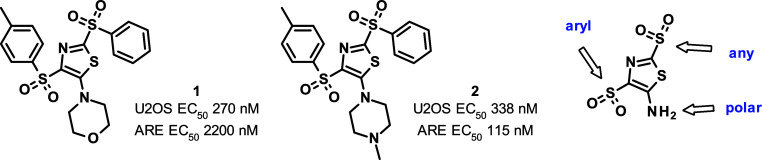
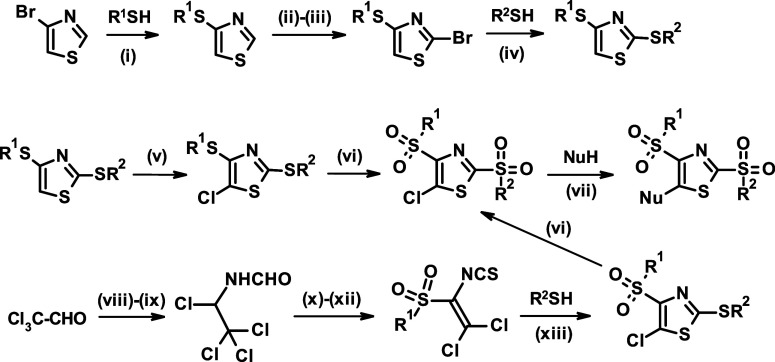
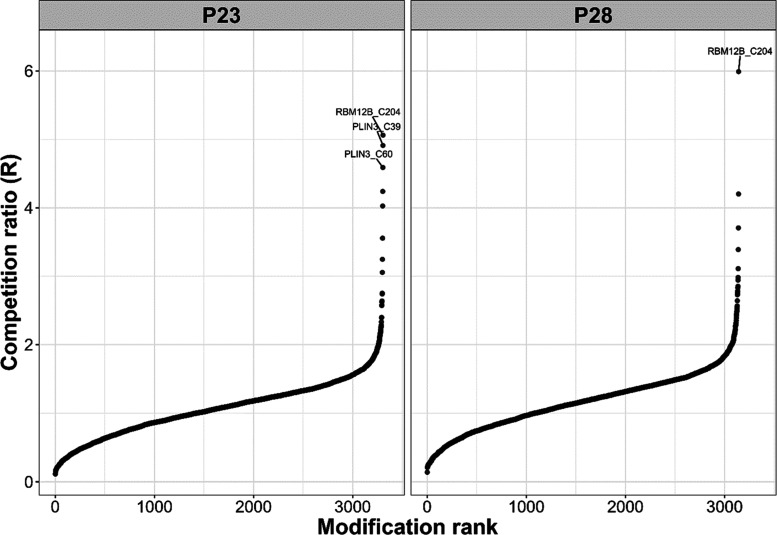
The NRF2-KEAP1 interaction is central for cytoprotection against stresses, giving it high clinical significance. Covalent modification of KEAP1 is an efficient approach, but the covalent inhibitors used in the clinic carry undesired side effects originating in their moderate selectivity. Starting with a phenotypic screen, we identified a new covalent inhibitor chemotype that was optimized to deliver a series of potent and highly selective KEAP1 binders. While the developed compounds showed both cellular and in vivo activity, upregulating antioxidant response element-dependent target genes, they showed no genotoxicity in vitro. The lead compound exhibited broad selectivity in activity-based protein profiling and showed no significant interaction with a panel of commonly studied receptors nor with a broad panel of kinases. The nature of its interaction with KEAP1 and the origin of its selectivity were revealed by X-ray crystallography.
Conflict of interest statement
The authors declare no competing financial interest.
Figures


References
-
- Baird L.; Dinkova-Kostova A. T. The cytoprotective role of the Keap1–Nrf2 pathway. Arch. Toxicol. 2011, 85, 241–272. 10.1007/s00204-011-0674-5. - DOI - PubMed
- Itoh K.; Chiba T.; Takahashi S.; Ishii T.; Igarashi K.; Katoh Y.; Oyake T.; Hayashi N.; Satoh K.; Hatayama I. An Nrf2/small Maf heterodimer mediates the induction of phase II detoxifying enzyme genes through antioxidant response elements. Biochem. Biophys. Res. Commun. 1997, 236, 313–322. 10.1006/bbrc.1997.6943. - DOI - PubMed
- Kensler T. W.; Wakabayashi N.; Biswal S. Cell survival responses to environmental stresses via the Keap1-Nrf2-ARE pathway. Annu. Rev. Pharmacol. Toxicol. 2007, 47, 89–116. 10.1146/annurev.pharmtox.46.120604.141046. - DOI - PubMed
-
- Horie Y.; Suzuki T.; Inoue J.; Iso T.; Wells G.; Moore T. W.; Mizushima T.; Dinkova-Kostova A. T.; Kasai T.; Kamei T.; Koshiba S.; Yamamoto M. Molecular basis for the disruption of Keap1-Nrf2 interaction via Hinge & Latch mechanism. Commun. Biol. 2021, 4, 576.10.1038/s42003-021-02100-6. - DOI - PMC - PubMed
MeSH terms
Substances
LinkOut - more resources
Full Text Sources
