The role of PM2.5 exposure in lung cancer: mechanisms, genetic factors, and clinical implications
- PMID: 39578555
- PMCID: PMC11729863
- DOI: 10.1038/s44321-024-00175-2
The role of PM2.5 exposure in lung cancer: mechanisms, genetic factors, and clinical implications
Abstract
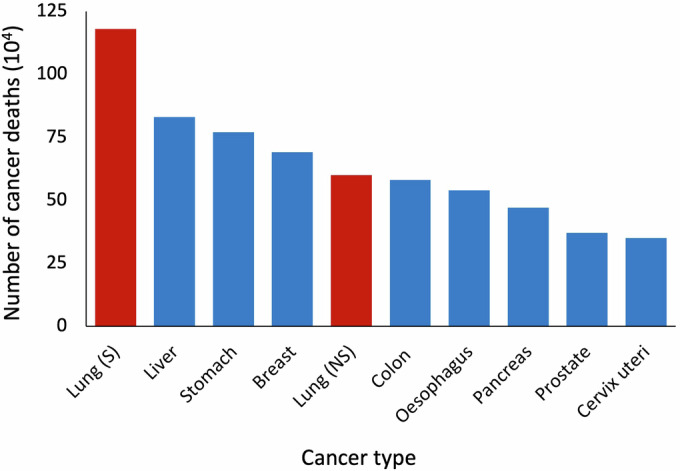
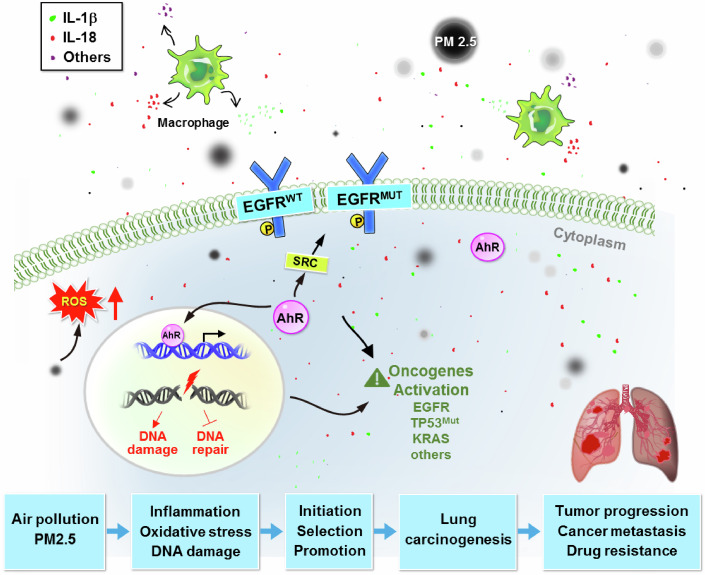
Lung cancer is one of the most critical global health threats, as the second most common cancer and leading cause of cancer deaths globally. While smoking is the primary risk factor, an increasing number of cases occur in nonsmokers, with lung cancer in nonsmokers (LCNS) now recognized as the fifth leading cause of cancer mortality worldwide. Recent evidence identifies air pollution, particularly fine particulate matter (PM2.5), as a significant risk factor in LCNS. PM2.5 can increase oxidative stress and inflammation, induce genetic alterations and activation of oncogenes (including the epidermal growth factor receptor, EGFR), and contribute to lung cancer progression. This review summarizes the current understanding of how exposure to PM2.5 induces lung carcinogenesis and accelerates lung cancer development. It underscores the importance of prevention and early detection while calling for targeted therapies to combat the detrimental effects of air pollution. An integrated approach that combines research, public health policy, and clinical practice is essential to reduce the lung cancer burden and improve outcomes for those affected by PM2.5 exposurrre.
Keywords: DNA Damage; EGFR; Inflammation; Lung Cancer; PM2.5.
© 2024. The Author(s).
Conflict of interest statement
Disclosure and competing interests statement. The authors declare no competing interests.
Figures
References
-
- Berg CD, Schiller JH, Boffetta P, Cai J, Connolly C, Kerpel-Fronius A, Kitts AB, Lam DCL, Mohan A, Myers R et al (2023) Air pollution and lung cancer: a review by international association for the study of lung cancer early detection and screening committee. J Thorac Oncol 18:1277–1289 - PubMed
-
- Chang GC, Chiu CH, Yu CJ, Chang YC, Chang YH, Hsu KH, Wu YC, Chen CY, Hsu HH, Wu MT et al (2024) Low-dose CT screening among never-smokers with or without a family history of lung cancer in Taiwan: a prospective cohort study. Lancet Respir Med 12:141–152 - PubMed
-
- Chen YJ, Roumeliotis TI, Chang YH, Chen CT, Han CL, Lin MH, Chen HW, Chang GC, Chang YL, Wu CT et al (2020) Proteogenomics of non-smoking lung cancer in East Asia delineates molecular signatures of pathogenesis and progression. Cell 182:226–244.e217 - PubMed
Publication types
MeSH terms
Substances
Grants and funding
- CMRPF1N0041/Chang Gung Memorial Hospital, Linkou (Linkou Chang Gung Memorial Hospital)
- CMRPF1N0042/Chang Gung Memorial Hospital, Linkou (Linkou Chang Gung Memorial Hospital)
- NSTC 112-2320-B-255-009-MY3/National Science and Technology Council (NSTC)
- NSTC 113-2314-B-002-003-/National Science and Technology Council (NSTC)
LinkOut - more resources
Full Text Sources
Medical
Research Materials
Miscellaneous