


Insights into the virome of Hyalomma marginatum in the Danube Delta: a major vector of Crimean-Congo hemorrhagic fever virus in Eastern Europe
- PMID: 39578881
- PMCID: PMC11585161
- DOI: 10.1186/s13071-024-06557-2
Insights into the virome of Hyalomma marginatum in the Danube Delta: a major vector of Crimean-Congo hemorrhagic fever virus in Eastern Europe
Abstract
Background: Ticks are significant vectors of pathogens, including viruses, bacteria, and protozoa. With approximately 900 tick species worldwide, many are expanding their geographical range due to changing socioeconomic and climate factors. The Danube Delta, one of Europe's largest wetlands, is an ecosystem that, despite its ecological importance, remains understudied concerning the risk of introducing new tick-borne viruses. This region serves as a critical habitat for migratory birds, which can carry ticks over long distances, potentially introducing exotic tick species and their pathogens into the local ecosystem. Hyalomma marginatum ticks, the primary vector of Crimean-Congo hemorrhagic fever virus (CCHFV), are of particular concern due to their expanding presence in Europe and potential to spread other arboviruses. In addition to being the primary vector for CCHFV, Hyalomma sp. ticks are capable of transmitting other pathogens of medical and veterinary importance, including Dugbe virus, West Nile virus, African horse sickness virus, and Kyasanur forest disease virus. Therefore, it is essential to monitor the presence of Hyalomma sp. ticks while simultaneously surveilling arbovirus circulation in tick populations to mitigate the risk of arboviral outbreaks.
Methods: In this work, we used an RNA sequencing technique to analyze the virome of H. marginatum ticks collected from the Danube Delta Biosphere Reserve, Romania, one of the major bird migration hubs from Africa to Europe.
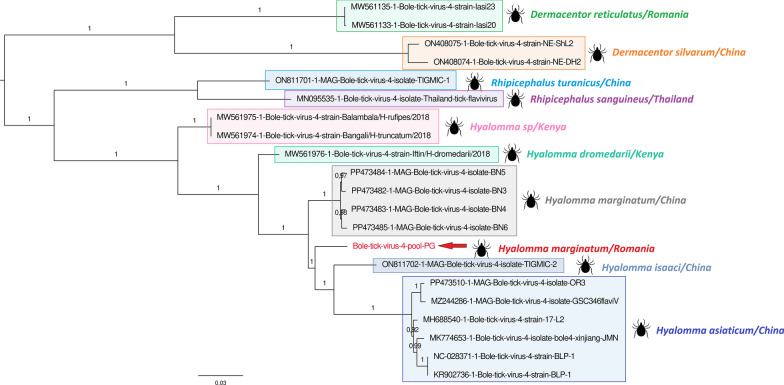
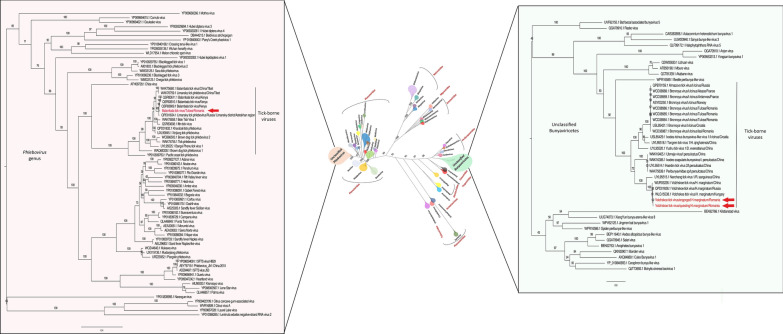
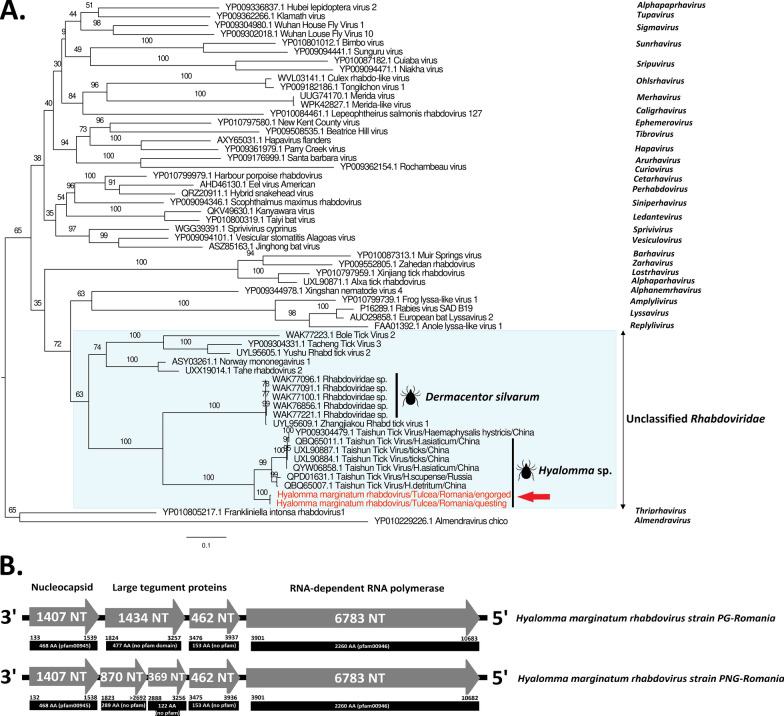
Results: Among the viral taxa detected in H. marginatum ticks, sequences belonging to Volzhskoe tick virus (VTV), Balambala tick virus (BMTV) and Bole tick virus 4 (BTV4) were identified. In addition, we report the first identification of a novel Rhabdoviridae-related virus, Hyalomma marginatum rhabdovirus (HMRV). No CCHFV or any CCHFV-related nairovirus were detected in this study.
Conclusions: To summarize, detecting new viruses is essential for monitoring potential viral outbreaks. Our research expands the understanding of virus diversity in Eastern Europe, including the identification of novel viruses. This insight is crucial for monitoring viruses that may pose risks to both animal and human health, such as CCHFV.
Keywords: Hyalomma marginatum; Arboviruses; Romania; Surveillance; Ticks; Virome.
© 2024. The Author(s).
Conflict of interest statement
Declarations. Ethics approval and consent to participate: Not applicable. Consent for publication: Not applicable. Competing interests: The authors declare no competing interests.
Figures
References
-
- Bratuleanu BE, Temmam S, Chretien D, Regnault B, Perot P, Bouchier C, et al. The virome of Rhipicephalus, Dermacentor and Haemaphysalis ticks from Eastern Romania includes novel viruses with potential relevance for public health. Transbound Emerg Dis. 2022;69:1387–403. - PubMed
MeSH terms
Grants and funding
LinkOut - more resources
Full Text Sources
