


The Impact of Digital Devices on Children's Health: A Systematic Literature Review
- PMID: 39584889
- PMCID: PMC11587142
- DOI: 10.3390/jfmk9040236
The Impact of Digital Devices on Children's Health: A Systematic Literature Review
Abstract
Background: The impact of prolonged digital device exposure on physical and mental health in children has been widely investigated by the scientific community. Additionally, the lockdown periods due to the COVID-19 pandemic further exposed children to screen time for e-learning activities. The aim of this systematic review (PROSPERO Registration: CRD42022315596) was to evaluate the effect of digital device exposure on children's health. The impact of the COVID-19 pandemic was additionally explored to verify the further exposure of children due to the e-learning environment.
Methods: Available online databases (PubMed, Google Scholar, Semantic Scholar, BASE, Scopus, Web of Science, and SPORTDiscus) were searched for study selection. The PICO model was followed by including a target population of children aged 2 to 12 years, exposed or not to any type of digital devices, while evaluating changes in both physical and mental health outcomes. The quality assessment was conducted by using the Joanna Briggs Institute (JBI) Critical Appraisal Tool. Synthesis without meta-analysis (SWiM) guidelines were followed to provide data synthesis.
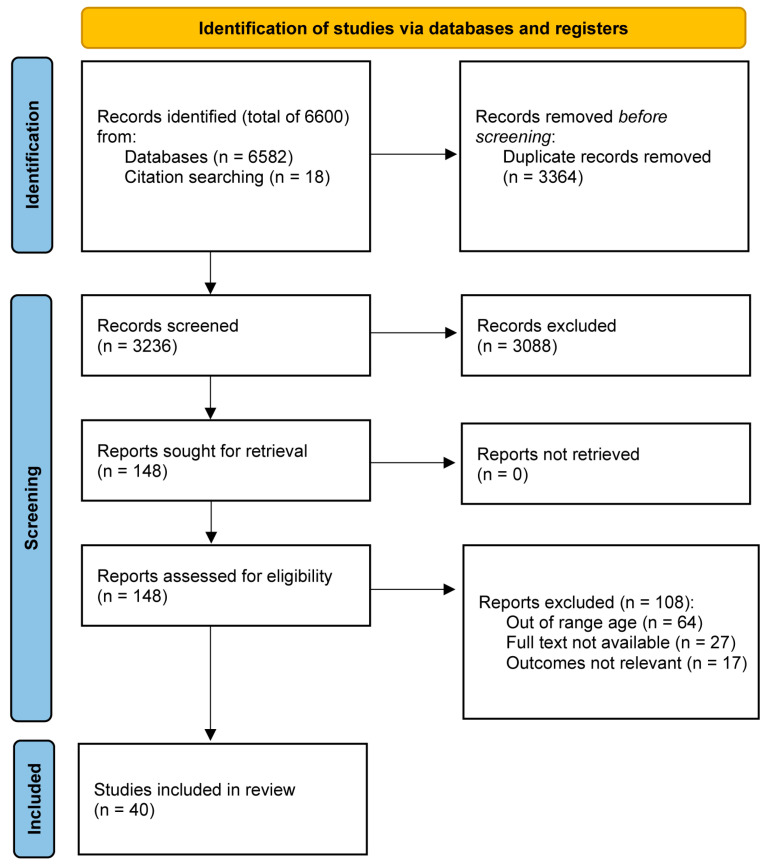
Results: Forty studies with a total sample of 75,540 children were included in this systematic review. The study design was mainly cross-sectional (n = 28) and of moderate quality (n = 33). Overall, the quality score was reduced due to recall, selection, and detection biases; blinding procedures influenced the quality score of controlled trials, and outcome validity reduced the quality score of cohort studies. Digital device exposure affected physical activity engagement and adiposity parameters; sleep and behavioral problems emerged in children overexposed to digital devices. Ocular conditions were also reported and associated with higher screen exposure. Home confinement during COVID-19 further increased digital device exposure with additional negative effects.
Conclusions: The prolonged use of digital devices has a significant negative impact on children aged 2 to 12, leading to decreased physical activity, sleep disturbances, behavioral issues, lower academic performance, socioemotional challenges, and eye strain, particularly following extended online learning during lockdowns.
Keywords: body composition; coronavirus; physical activity; screen time; sleep disturbances.
Conflict of interest statement
The authors declare no conflicts of interest.
Figures

 = no/unclear, 0 point;
  = yes, 1 point. Q1: Was true randomization used for assignment of participants to treatment groups? Q2: Was allocation to treatment groups concealed? Q3: Were treatment groups similar at the baseline? Q4: Were participants blind to treatment assignment? Q5: Were those delivering treatment blind to treatment assignment? Q6: Were outcomes assessors blind to treatment assignment? Q7: Were treatment groups treated identically other than the intervention of interest? Q8: Was follow-up completed, and if not, were differences between groups in terms of their follow-up adequately described and analyzed? Q9: Were participants analyzed in the groups to which they were randomized? Q10: Were outcomes measured in the same way for treatment groups? Q11: Were outcomes measured in a reliable way? Q12: Was appropriate statistical analysis used? Q13: Was the trial design appropriate, and any deviations from the standard RCT design (individual randomization, parallel groups) accounted for in the conduct and analysis of the trial?
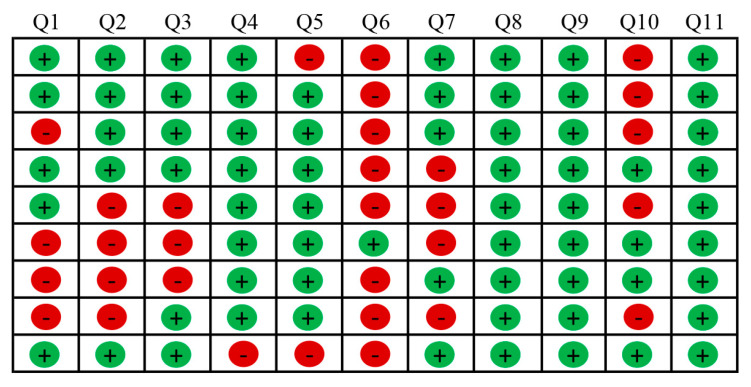 = no/unclear, 0 point; = yes, 1 point. Q1: Were the two groups similar and recruited from the same population? Q2: Were the exposures measured similarly to assign people to both exposed and unexposed groups? Q3: Was the exposure measured in a valid and reliable way? Q4: Were confounding factors identified? Q5: Were strategies to deal with confounding factors stated? Q6: Were the groups/participants free of the outcome at the start of the study (or at the moment of exposure)? Q7: Were the outcomes measured in a valid and reliable way? Q8: Was the follow-up time reported and sufficient to be long enough for outcomes to occur? Q9: Was follow-up complete, and if not, were the reasons to loss to follow-up described and explored? Q10: Were strategies to address incomplete follow-up utilized? Q11: Was appropriate statistical analysis used?
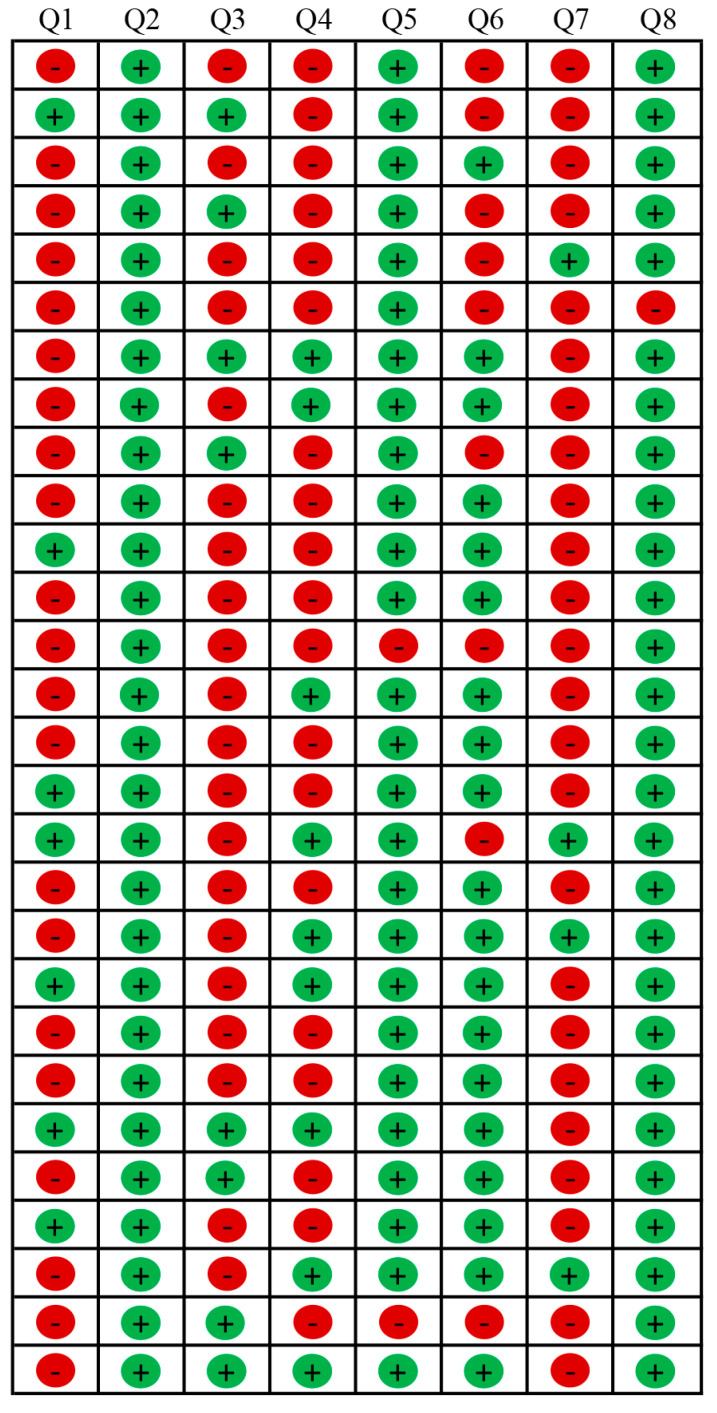 = no/unclear, 0 point; = yes, 1 point. Q1: Were the criteria for inclusion in the sample clearly defined? Q2: Were the study subjects and the setting described in detail? Q3: Was the exposure measured in a valid and reliable way? Q4: Were objective, standard criteria used for measurement of the condition? Q5: Were confounding factors identified? Q6: Were strategies to deal with confounding factors stated? Q7: Were the outcomes measured in a valid and reliable way? Q8: Was appropriate statistical analysis used?
References
-
- Henne A., Möhrke P., Huwer J., Thoms L.-J. Finally digital natives? Changes in media use among science students during the COVID-19 pandemic. Educ. Sci. 2024;14:555. doi: 10.3390/educsci14060555. - DOI
Publication types
LinkOut - more resources
Full Text Sources
