. 2024 Nov 25;24(1):1447.
doi: 10.1186/s12885-024-13205-6.

ILF2 protein is a promising serum biomarker for early detection of gastric cancer

Affiliations

ILF2 protein is a promising serum biomarker for early detection of gastric cancer

Shao-Song Liu et al. BMC Cancer. .

Abstract

Background: Our previous small-sample study indicated that serum levels of interleukin enhancer binding factor 2 (ILF2) may have the potential for gastric cancer (GC) detection. The present study was conducted to further validate the diagnostic value of serum ILF2 protein for GC.

Methods: Serum specimens and clinical data were collected from patients with GC (n = 99) or benign gastric disease (BGD) (n = 49) and healthy controls (HC) (n = 51). Serum ILF2 levels were measured using enzyme-linked immunosorbent assay. The diagnostic performance of ILF2 was evaluated using the area under the receiver operating characteristic curve (AUC). The independence and synergy of ILF2 in GC diagnosis were analyzed by modeling with conventional blood indicators.

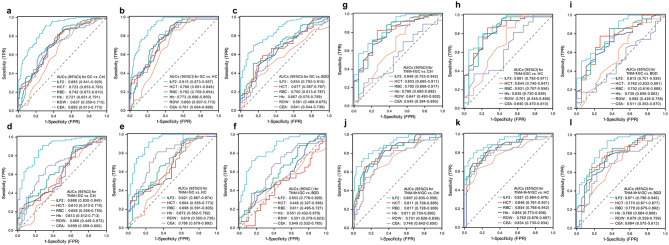
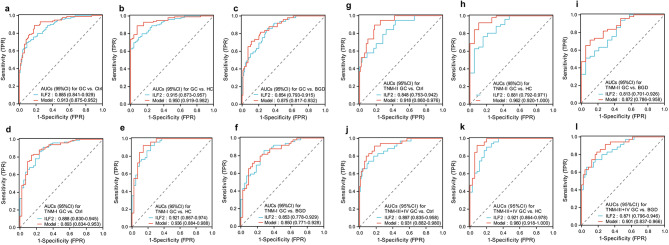
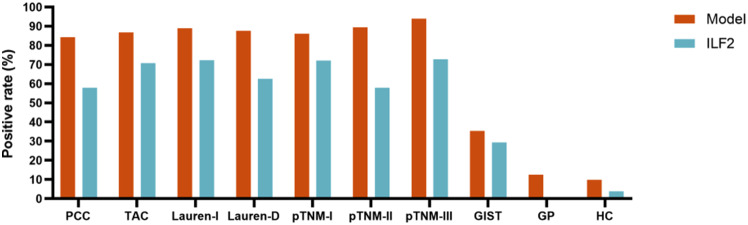
Results: The median serum ILF2 level was higher in the GC group (227.8ng/mL) than in the BGD group (72.0ng/mL) and the HC group (56.8ng/mL) (p < 0.001), and no significant difference across GC subgroups. The AUCs of ILF2 were 0.915 (95%CI 0.873-0.957) for GC vs. HC, 0.854 (95%CI 0.793-0.915) for GC vs. BGD, 0.885 (95%CI 0.841-0.929) for GC vs. BGD + HC, and 0.888 (95% CI 0.830-0.945) for TNM I stage GC vs. BGD + HC, outperforming conventional blood indicators (corresponding AUCs ranging from 0.641 to 0.782). ILF2 was independent of and synergistic with conventional blood indicators in GC diagnosis, and a simple diagnostic model based on ILF2 and red blood cell count improved the diagnostic performance, with positive rates of approximately 90% in various subgroups of GC.

Conclusions: Serum ILF2 protein is a novel and potential serum biomarker for the detection of GC, especially for early GC.

Keywords: Early diagnosis; Gastric cancer; ILF2; Serum biomarker.


Conflict of interest statement

Declarations. Ethics approval and consent to participate: This research was approved by the Ethics Committee of The First Affiliated Hospital of Nanchang University. All examinations in humans were conducted according to the Declaration of Helsinki and its amendments. All procedures performed in studies involving human participants were approved by the Ethics Committee of The First Affiliated Hospital of Nanchang University. All methods were carried out in accordance with relevant guidelines and regulations. The Ethics Committee of the First Affiliated Hospital of Nanchang University waived the requirement for patient informed consent because the assay for ILF2 used previously collected frozen leftover serum specimens from biochemical assays, not specifically drawn blood specimens. Consent for publication: Not applicable. Competing interests: The authors declare no competing interests.

Figures
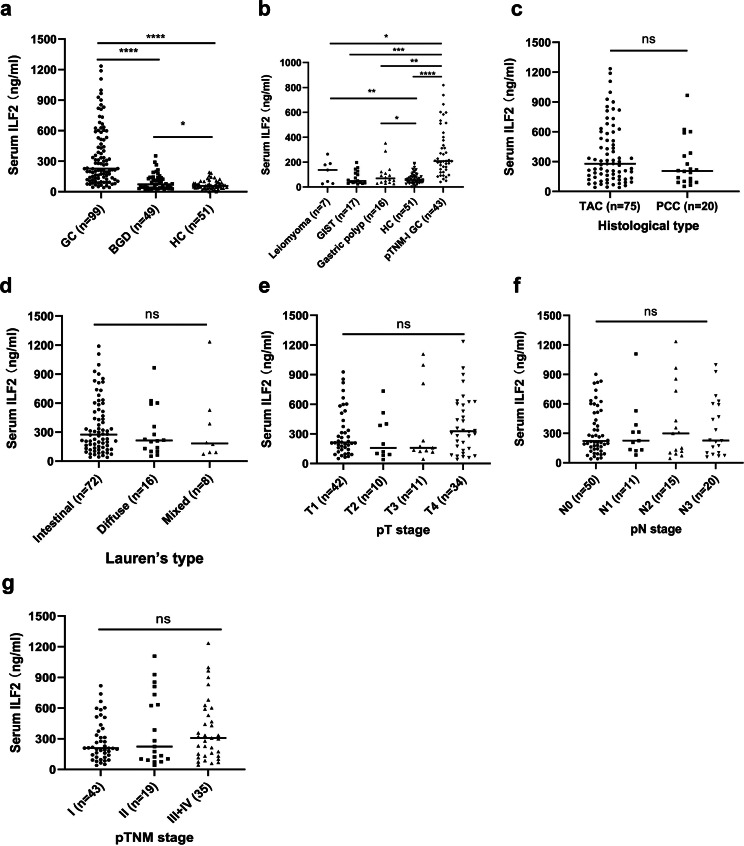
Fig. 1
Fig. 1
Serum ILF2 protein levels in different groups of subjects and subgroups of gastric cancer. a: ILF2 levels in three groups of subjects; b: ILF2 levels in different types of BGD and their comparisons with early stage GC and HC groups; c-g ILF2 levels in various subgroups of gastric cancer. In the subgroup analysis, the following subgroups were not shown due to small sample size: chronic gastritis (n = 4), ectopic pancreas (n = 3) and gastric ulcer (n = 2) for BGD (b), and MAC (n = 3) and PAC (n = 1) for histological type (c); there were missing samples in the following subgroups: 3 cases for Lauren’s type (d), 2 cases for pT stage (e), 3 cases for pN stage (f), and 2 cases for pTNM stage (g). ILF2, interleukin enhancer-binding factor 2; GC, gastric cancer; BGD, benign gastric disease; HC, healthy control; GIST, gastrointestinal stromal tumor; TAC, tubular adenocarcinoma; PCC, poorly cohesive carcinoma; pT, pathological T; pN, pathological N; pTNM, pathological TNM. *p < 0.05; **** p < 0.0001; ns, no significance
Fig. 2
Fig. 2
Receiver operating characteristic (ROC) curves of serum ILF2 protein and significant blood laboratory indicators for the diagnosis of GC. a-c: Total GC group vs. control, HC and BGD groups; d-f: TNM-I GC subgroup vs. control, HC and BGD groups; g-i: TNM-II GC subgroup vs. control, HC and BGD groups; j-l: TNM-III + IV GC subgroups vs. control, HC and BGD groups. GC, gastric cancer; BGD, benign gastric disease; HC, healthy control; AUC, area under the curve; Ctrl, control (BGD + HC). ILF2, interleukin enhanced-binding factor 2; HCT, hematocrit; RBC, red blood cell; Hb, hemoglobin; RDW, red blood cell distribution width (coefficient of variation); CEA, carcinoembryonic antigen
Fig. 3
Fig. 3
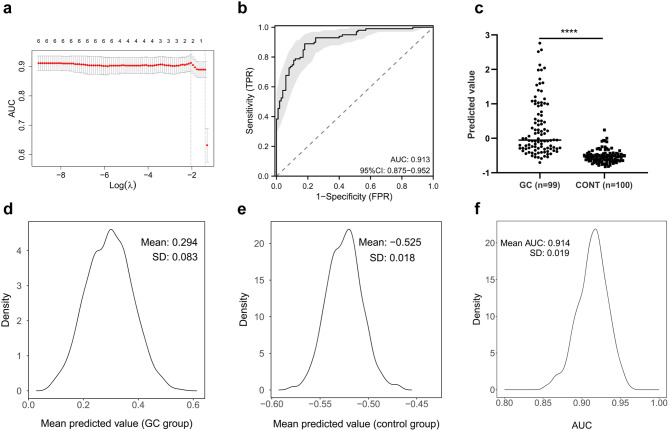
Variable selection and internal validation of the model. a: Variable selection using the least absolute shrinkage and selection operator logistic regression and 10-fold cross-validation; b: The receiver operating characteristic curve of the model; c: Predicted values of the model for the GC and control (BGD + HC) groups; d, e: The distribution of mean predicted values of bootstrapped samples in the GC and control groups; f: The distribution of AUC values of bootstrapped samples. AUC, area under the curve; GC, gastric cancer; CONT, control; BGD, benign gastric disease; HC, health control; **** p < 0.0001
Fig. 4
Fig. 4
Receiver operating characteristic (ROC) curves of serum ILF2 protein and the model for the diagnosis of GC. a-c: Total GC group vs. control, HC and BGD groups; d-f: TNM-I GC subgroup vs. control, HC and BGD groups; g-i: TNM-II GC subgroup vs. control, HC and BGD groups; j-l: TNM-III + IV GC subgroup vs. control, HC and BGD groups. AUC, area under the curve; Ctrl, control (BGD + HC); GC, gastric cancer; BGD, benign gastric disease; HC, healthy control; ILF2, interleukin enhancer-binding factor 2
Fig. 5
Fig. 5
Positive rates of the model and ILF2 protein in the GC and BGD subgroups and the HC group (only subgroups with more than 15 cases are shown). ILF2, interleukin enhancer binding factor 2; PCC, poorly cohesive carcinoma; TAC, tubular adenocarcinoma; Lauren-I, Lauren intestinal type; Lauren-D, Lauren diffuse type; GIST, gastrointestinal stromal tumor; GP, gastric polyp; HC, healthy control

References

    1. Sung H, Ferlay J, Siegel RL, Laversanne M, Soerjomataram I, Jemal A, et al. Global Cancer statistics 2020: GLOBOCAN estimates of incidence and Mortality Worldwide for 36 cancers in 185 countries. CA-CANCER J CLIN. 2021;2021/5(1):209–49. - PubMed
    1. Zhou J, Zheng R, Zhang S, Chen R, Wang S, Sun K et al. Gastric and esophageal cancer in China 2000 to 2030: Recent trends and short-term predictions of the future burden. CANCER MED-US. 2022 2022/4/1;11(8):1902-12. - PMC - PubMed
    1. Xia JY, Aadam AA. Advances in screening and detection of gastric cancer. J SURG ONCOL. 2022;2022/6(1):1104–9. - PMC - PubMed
    1. Dooley CP, Larson AW, Stace NH, Renner IG, Valenzuela JE, Eliasoph J et al. Double-contrast barium meal and upper gastrointestinal endoscopy. A comparative study. ANN INTERN MED. 1984 1984/10/1;101(4):538 – 45. - PubMed
    1. Xu Y, Zhang P, Zhang K, Huang C. The application of CA72-4 in the diagnosis, prognosis, and treatment of gastric cancer. BBA-REV CANCER. 2021;1876(2):188634. 2021/12/1. - PubMed

LinkOut - more resources