


Bacterial Cellulose-Silk Hydrogel Biosynthesized by Using Coconut Skim Milk as Culture Medium for Biomedical Applications
- PMID: 39590070
- PMCID: PMC11593934
- DOI: 10.3390/gels10110714
Bacterial Cellulose-Silk Hydrogel Biosynthesized by Using Coconut Skim Milk as Culture Medium for Biomedical Applications
Abstract
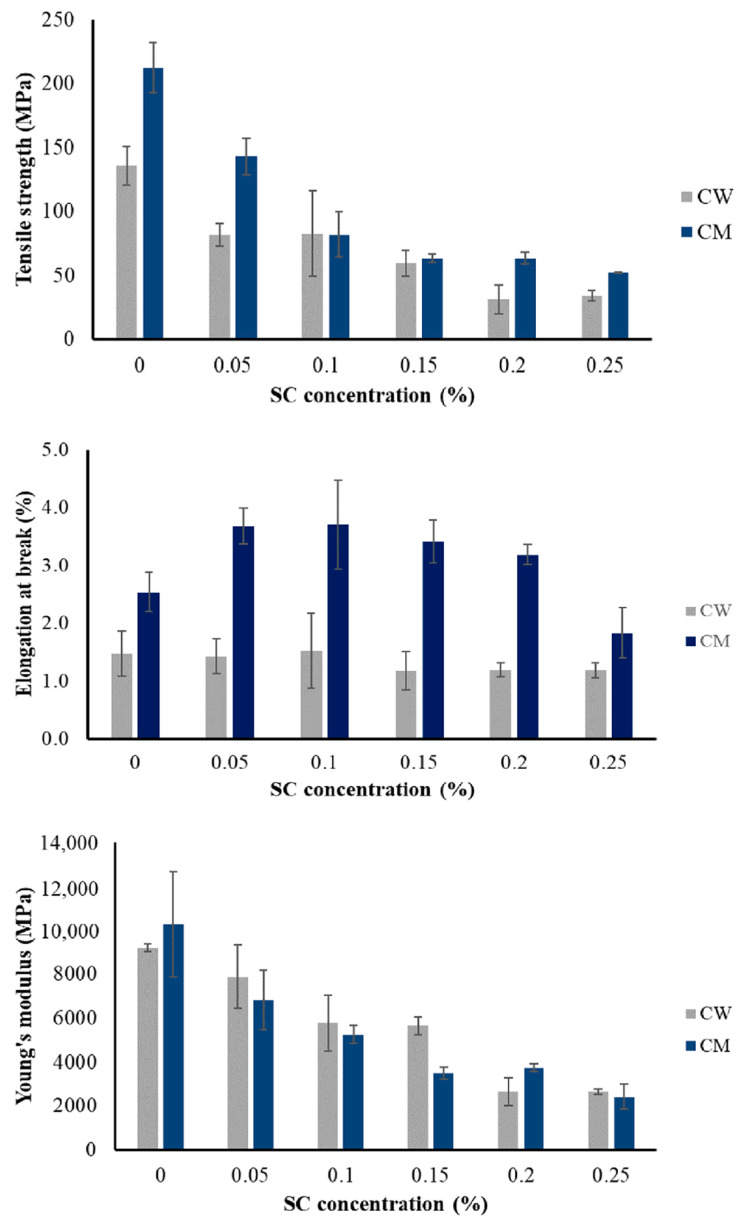
In this study, hydrogel films of biocomposite comprising bacterial cellulose (BC) and silk (S) were successfully fabricated through a simple, facile, and cost-effective method via biosynthesis by Acetobacter xylinum in a culture medium of coconut skim milk/mature coconut water supplemented with the powders of thin-shell silk cocoon (SC). Coconut skim milk/mature coconut water and SC are the main byproducts of coconut oil and silk textile industries, respectively. The S/BC films contain protein, carbohydrate, fat, and minerals and possess a number of properties beneficial to wound healing and tissue engineering, including nontoxicity, biocompatibility, appropriate mechanical properties, flexibility, and high water absorption capacity. It was demonstrated that silk could fill into a porous structure and cover fibers of the BC matrix with very good integration. In addition, components (fat, protein, etc.) in coconut skim milk could be well incorporated into the hydrogel, resulting in a more elastic structure and higher tensile strength of films. The tensile strength and the elongation at break of BC film from coconut skim milk (BCM) were 212.4 MPa and 2.54%, respectively, which were significantly higher than BC film from mature coconut water (BCW). A more elastic structure and relatively higher tensile strength of S/BCM compared with S/BCW were observed. The films of S/BCM and S/BCW showed very high water uptake ability in the range of 400-500%. The presence of silk in the films also significantly enhanced the adhesion, proliferation, and cell-to-cell interaction of Vero and HaCat cells. According to multiple improved properties, S/BC hydrogel films are high-potential candidates for application as biomaterials for wound dressing and tissue engineering.
Keywords: bacterial cellulose; biopolymer; coconut skim milk; silk; tissue engineering; wound dressing.
Conflict of interest statement
The authors declare no conflicts of interest.
Figures




References
-
- Barud H.O., Barud H.d.S., Cavicchioli M., do Amaral T.S., de Oliveira Junior O.B., Santos D.M., Petersen A.L.d.O.A., Celes F., Borges V.M., de Oliveira C.I. Preparation and characterization of a bacterial cellulose/silk fibroin sponge scaffold for tissue regeneration. Carbohydr. Polym. 2015;128:41–51. doi: 10.1016/j.carbpol.2015.04.007. - DOI - PubMed
-
- Ullah S., Hussain Z., Ullah I., Wang L., Mehmood S., Liu Y., Mansoorianfar M., Liu X., Ma F., Pei R. Mussel bioinspired, silver-coated and insulin-loaded mesoporous polydopamine nanoparticles reinforced hyaluronate-based fibrous hydrogel for potential diabetic wound healing. Int. J. Biol. Macromol. 2023;247:125738. doi: 10.1016/j.ijbiomac.2023.125738. - DOI - PubMed
Grants and funding
LinkOut - more resources
Full Text Sources
Research Materials
