. 2024 Nov 20;11(11):374.
doi: 10.3390/jcdd11110374.

Different Proteins as Biomarkers for Sac Shrinkage After Endovascular Aortic Repair of Abdominal Aortic Aneurysms

Affiliations

Different Proteins as Biomarkers for Sac Shrinkage After Endovascular Aortic Repair of Abdominal Aortic Aneurysms

Alexander Zimmermann et al. J Cardiovasc Dev Dis. .

Abstract

Background: This study aims to identify circulating biomarkers by using proteomic analysis associated with sac shrinkage or expansion in patients undergoing endovascular aneurysm repair (EVAR) for abdominal aortic aneurysms (AAAs).

Methods: Plasma samples were analysed from 32 patients treated with EVAR between 10/2009 and 10/2020. Patients were divided into two groups based on postoperative sac behaviour: sac shrinkage (≥5 mm reduction) and no shrinkage (stabilisation or expansion). Proteomic analysis was performed using high-resolution liquid chromatography-tandem mass spectrometry (LC-MS/MS), with abundant protein depletion to enhance the detection of low-abundant proteins.

Results: Of the 32 patients, 20 exhibited sac shrinkage, and 12 showed no shrinkage. Proteomic analysis identified 632 proteins, with significant differential abundance observed after adjusting for relevant clinical parameters. Notably, neurogranin (NRGN) levels were significantly associated with hypertension and smoking, while casein alpha S1 (CSN1S1) levels varied with statin use. Differentially abundant proteins related to aortic diameter included calpastatin, SCUBE3, and ubiquitin-conjugating enzyme E2, among others.

Conclusions: Proteomic profiling revealed distinct biomarker patterns associated with sac behaviour in EVAR-treated AAA patients. These findings suggest potential therapeutic targets for enhancing EVAR outcomes and underscore the need for further investigation into the biological mechanisms underlying aneurysm sac shrinkage and stability.

Keywords: SCUBE3; aneurysm diameter; calpastatin; casein alpha S1; endovascular aneurysm repair; neurogranin; proteomics; ubiquitin-conjugating enzyme E2.


Conflict of interest statement

The authors declare no conflicts of interest.

Figures
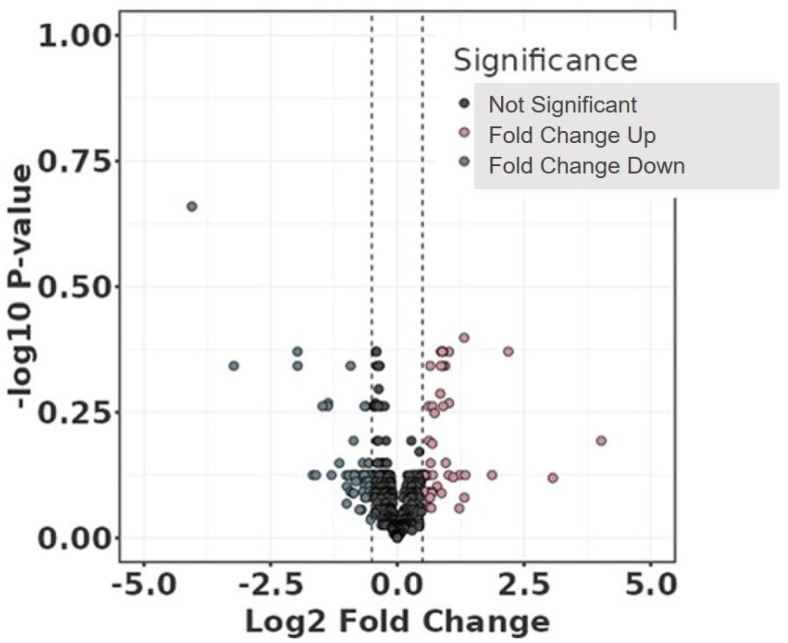
Figure 1
Figure 1
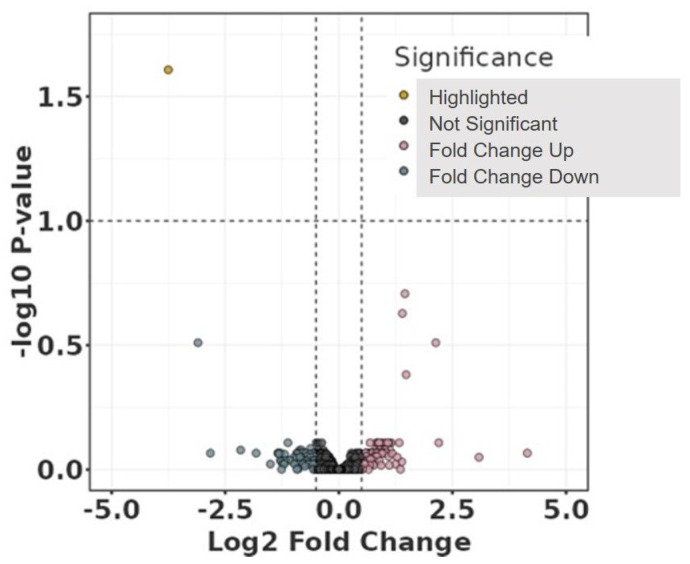
Volcano plot comparing study groups with (Sh) and without (I) shrinkage without any adjustment. The plot shows −log10 transformed the false discovery rate as a function of the difference between groups. The broken lines show 0.5 log2 fold change.
Figure 2
Figure 2
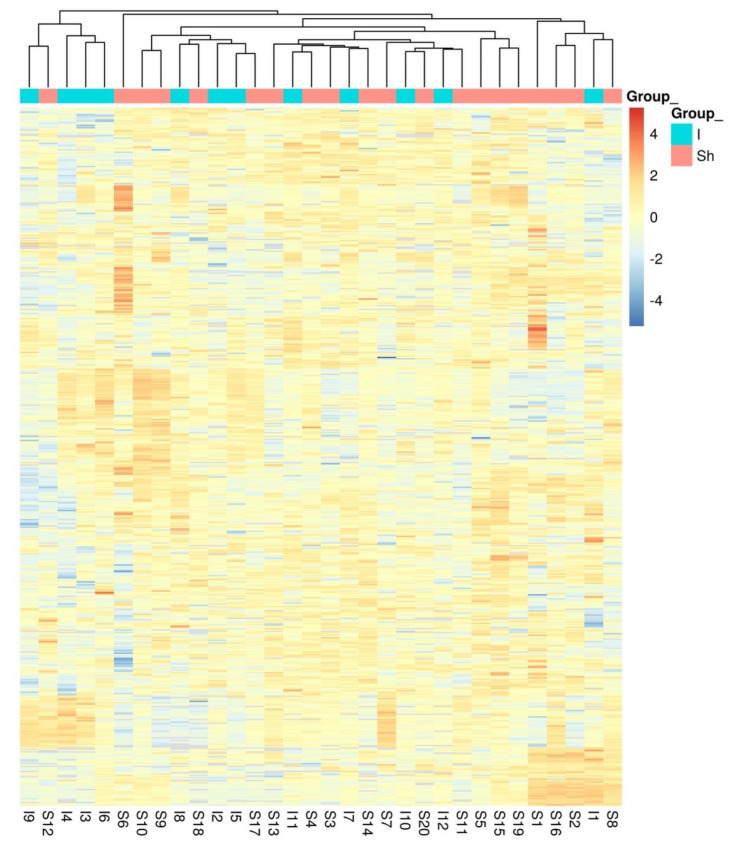
Protein abundance heatmap (rows indicate proteins; columns indicate samples) showing the row scaled log2 transformed protein abundance value. Co−clustering (hierarchical complete linkage, Euclidean distance) of samples and proteins was used. Study groups with (Sh) and without (I) shrinkage.
Figure 3
Figure 3
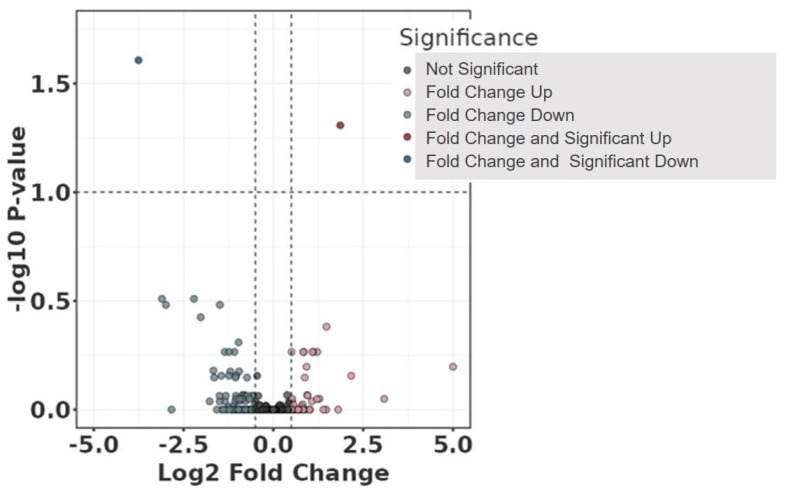
Volcano plot comparing study groups with (Sh) and without (I) shrinkage adjusted for clinical parameter hypertension, cardiovascular disease, or smoking. The plot shows the −log10 transformed false discovery rate as a function of the difference between the groups. The broken lines show the 0.5 long2 fold change.
Figure 4
Figure 4
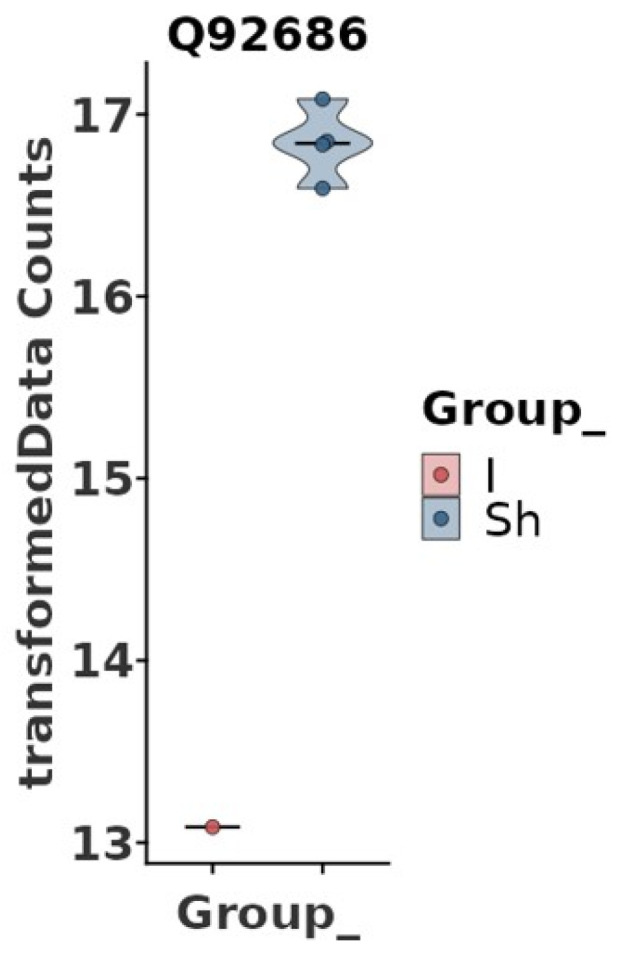
Violin box plot comparing study groups with (Sh) and without (I) shrinkage adjusted for clinical parameter hypertension, cardiovascular disease, or smoking. The abundance of neurogranin (NRGN) was significantly higher in the shrinkage group compared to the idem group (false discovery rate < 0.1).
Figure 5
Figure 5
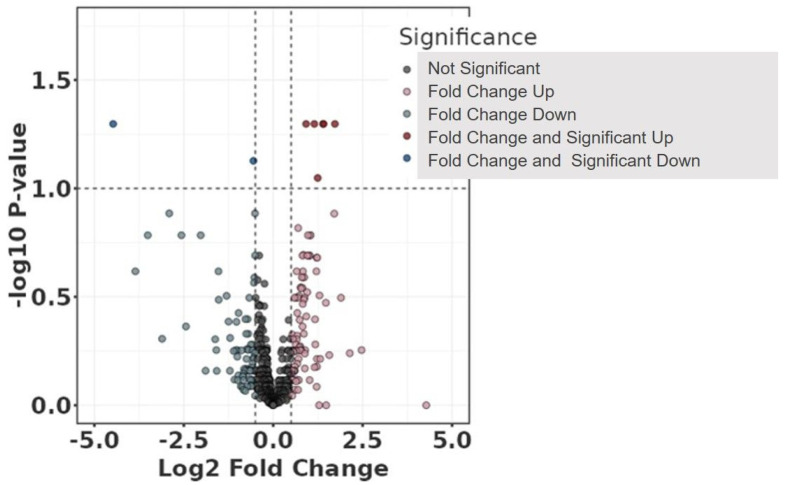
Volcano plot comparing study group with (Sh) and without (I) shrinkage adjusted for the clinical parameter statin. The plot shows the −log10 transformed false discovery rate as a function of the difference between groups. The broken lines show the 0.5 long2 fold change.
Figure 6
Figure 6
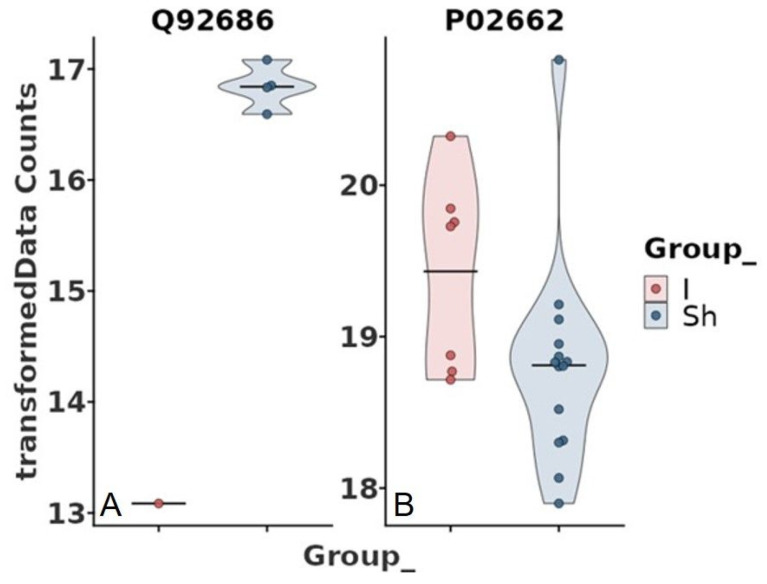
Violin box plots comparing study groups with (Sh) and without (I) shrinkage adjusted for the clinical parameter statin. (A) neurogranin (NRGN); (B) casein alpha S1 (CSN1S1), false discovery rate < 0.1.
Figure 7
Figure 7
Volcano plot comparing study group with (Sh) and without (I) shrinkage adjusted for the clinical parameter diameter. The plot shows the −log10 transformed false discovery rate as a function of the difference between the groups. The broken lines show the 0.5 log2 fold change.
Figure 8
Figure 8
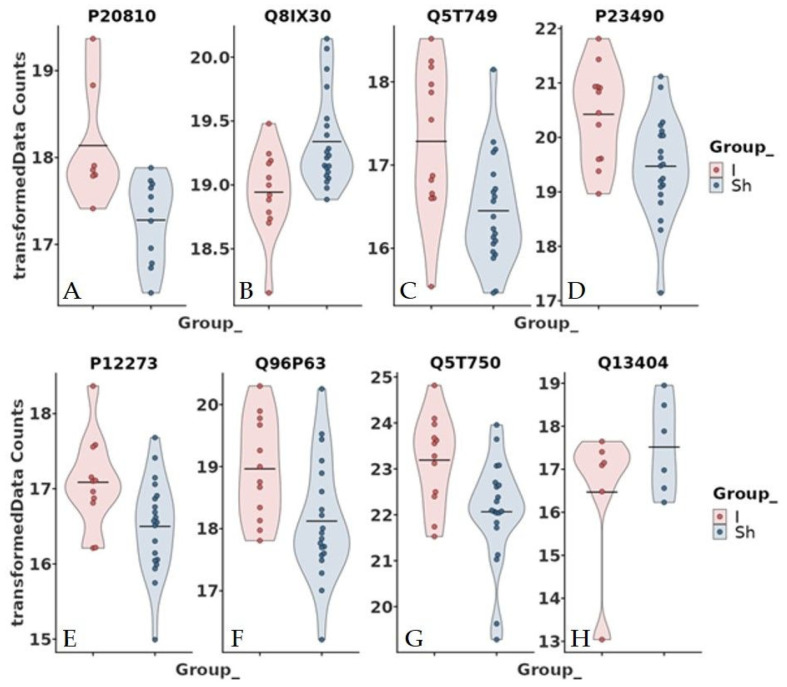
Violin box plots comparing study groups with (Sh) and without (I) shrinkage adjusted for the clinical parameter diameter. (A) calpastatin, (B) SCUBE3, (C) keratinocyte proline-rich protein (KPRP), (D) loricrin, (E) prolactin-inducible protein (PIP), (F) SERPINB12, (G) skin-specific protein 32 (C1orf68), and (H) ubiquitin-conjugating enzyme E2 (UBE2); false discovery rate < 0.1.
Figure 9
Figure 9
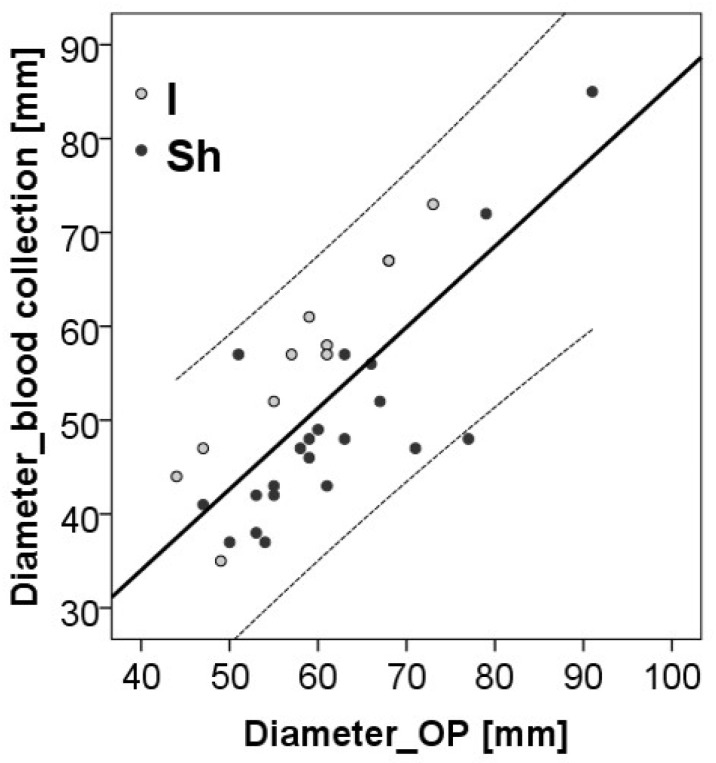
Correlation analysis of aortic sac diameter at the time point of the endovascular intervention and the time point of blood collection. The Spearman correlation coefficient was r = 0.701, p < 0.001. Study groups with (Sh) and without (I) shrinkage. OP: time point of EVAR.

References

    1. Meuli L., Menges A.-L., Steigmiller K., Kuehnl A., Reutersberg B., Held U., Zimmermann A. Hospital Incidence and Mortality of Patients Treated for Abdominal Aortic Aneurysms in Switzerland—A Secondary Analysis of Swiss DRG Statistics Data. Swiss Med. Wkly. 2022;152:w30191. doi: 10.4414/SMW.2022.w30191. - DOI - PubMed
    1. Lederle F.A., Freischlag J.A., Kyriakides T.C., Matsumura J.S., Padberg F.T.J., Kohler T.R., Kougias P., Jean-Claude J.M., Cikrit D.F., Swanson K.M. Long-Term Comparison of Endovascular and Open Repair of Abdominal Aortic Aneurysm. N. Engl. J. Med. 2012;367:1988–1997. doi: 10.1056/NEJMoa1207481. - DOI - PubMed
    1. Bastos Gonçalves F., Baderkhan H., Verhagen H.J.M., Wanhainen A., Björck M., Stolker R.J., Hoeks S.E., Mani K. Early Sac Shrinkage Predicts a Low Risk of Late Complications after Endovascular Aortic Aneurysm Repair. Br. J. Surg. 2014;101:802–810. doi: 10.1002/bjs.9516. - DOI - PMC - PubMed
    1. O’Donnell T.F.X., Deery S.E., Boitano L.T., Siracuse J.J., Schermerhorn M.L., Scali S.T., Schanzer A., Lancaster R.T., Patel V.I. Aneurysm Sac Failure to Regress after Endovascular Aneurysm Repair Is Associated with Lower Long-Term Survival. J. Vasc. Surg. 2019;69:414–422. doi: 10.1016/j.jvs.2018.04.050. - DOI - PubMed
    1. Lalys F., Daoudal A., Gindre J., Göksu C., Lucas A., Kaladji A. Influencing Factors of Sac Shrinkage after Endovascular Aneurysm Repair. J. Vasc. Surg. 2017;65:1830–1838. doi: 10.1016/j.jvs.2016.12.131. - DOI - PubMed

LinkOut - more resources