


A Review of Factors Affecting Radiation Dose and Image Quality in Coronary CTA Performed with Wide-Detector CT
- PMID: 39590936
- PMCID: PMC11598146
- DOI: 10.3390/tomography10110127
A Review of Factors Affecting Radiation Dose and Image Quality in Coronary CTA Performed with Wide-Detector CT
Abstract
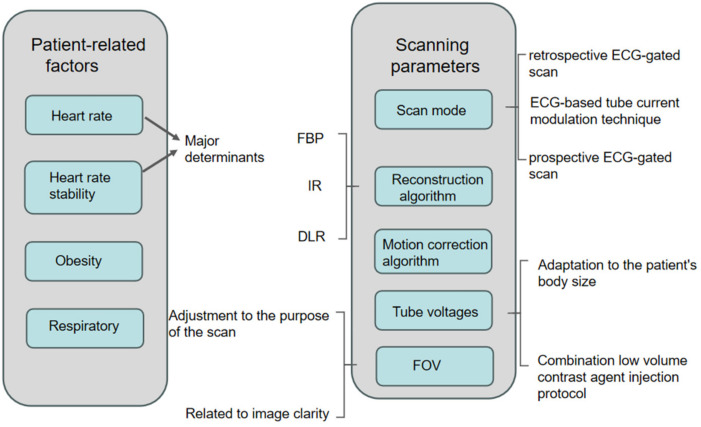
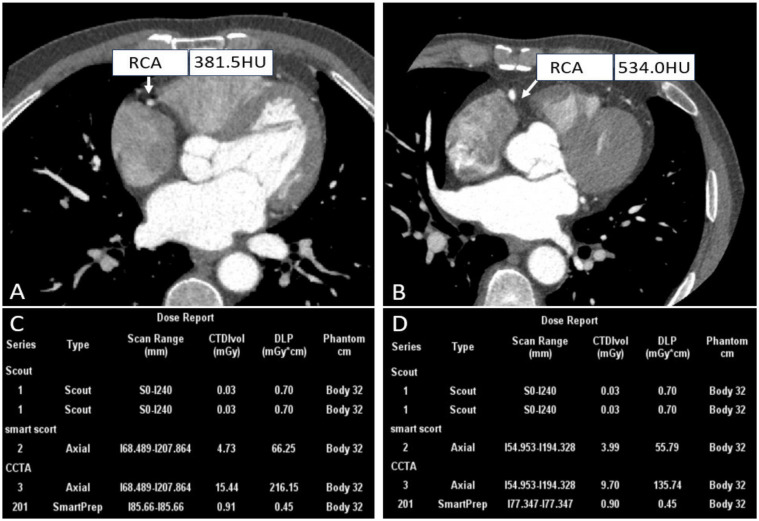
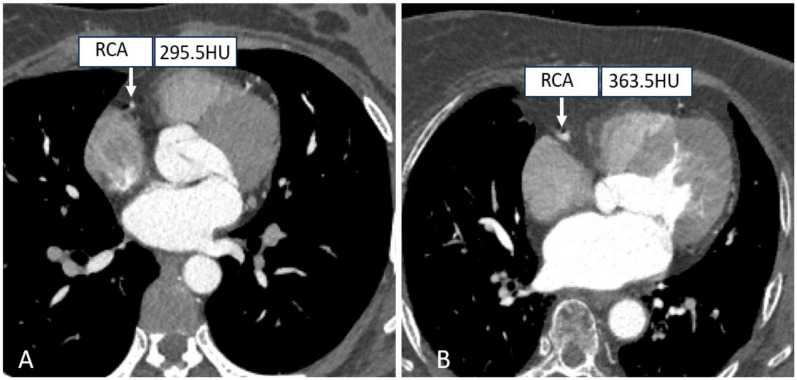
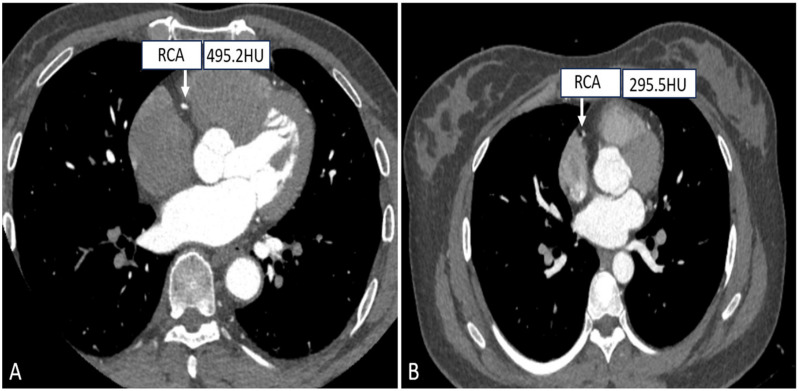
Compared with traditional invasive coronary angiography (ICA), coronary CT angiography (CCTA) has the advantages of being rapid, economical, and minimally invasive. The wide-detector CT, with its superior temporal resolution and robust three-dimensional reconstruction technology, thus enables CCTA in patients with high heart rates and arrhythmias, leading to a high potential for clinical application. This paper systematically summarizes wide-detector CT hardware configurations of various vendors routinely used for CCTA examinations and reviews the effects of patient heart rate and heart rate variability, scanning modality, reconstruction algorithms, tube voltage, and scanning field of view on image quality and radiation dose. In addition, novel technologies in the field of CT applied to CCTA examinations are also presented. Since this examination has a diagnostic accuracy that is highly consistent with ICA, it can be further used as a routine examination tool for coronary artery disease in clinical practice.
Keywords: coronary computed tomography angiography; image quality; radiation dose; wide-detector CT.
Conflict of interest statement
The authors have no conflicts of interest to declare.
Figures
References
-
- Varadaraj G., Chowdhary G.S., Ananthakrishnan R., Jacob M.J., Mukherjee P. Diagnostic accuracy of stress myocardial perfusion imaging in diagnosing stable ischemic heart disease. J. Assoc. Physicians India. 2018;66:40–44. - PubMed
Publication types
MeSH terms
Grants and funding
LinkOut - more resources
Full Text Sources
Medical
Miscellaneous
