


Therapeutic Potential of Bee and Wasp Venom in Anti-Arthritic Treatment: A Review
- PMID: 39591207
- PMCID: PMC11598298
- DOI: 10.3390/toxins16110452
Therapeutic Potential of Bee and Wasp Venom in Anti-Arthritic Treatment: A Review
Abstract
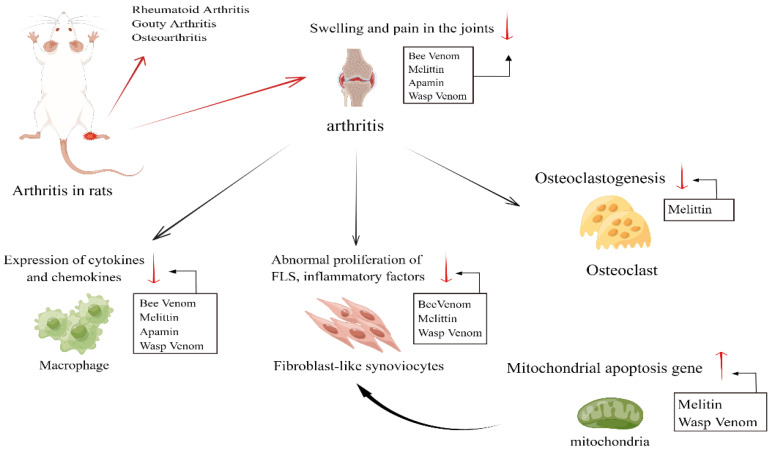
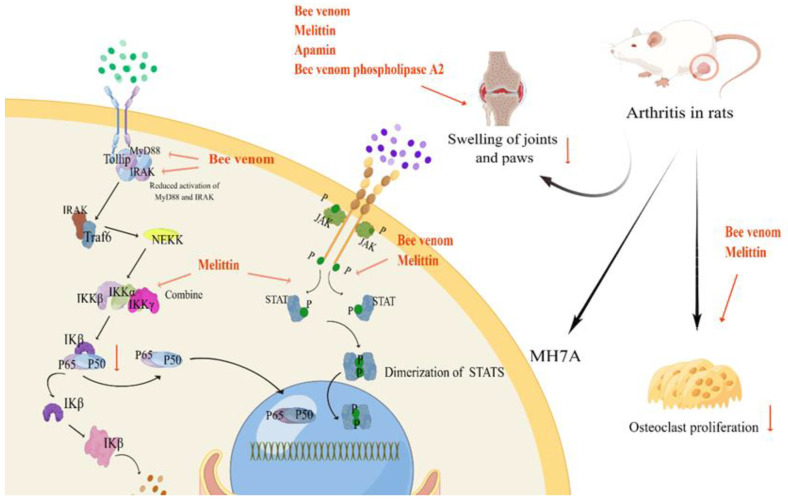
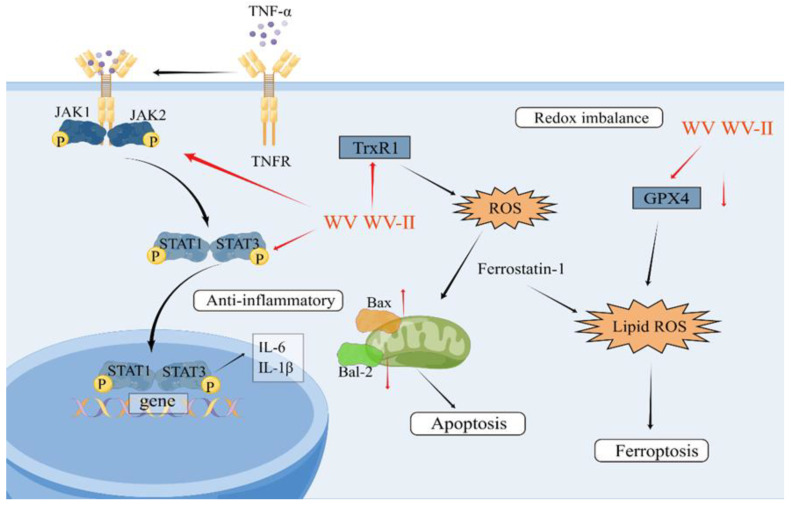
Arthritis has a high global prevalence. During the early ancient human era, bee (Apis) venom therapy was employed in Egypt, Greece, and China to alleviate ailments such as arthritis and neuralgia. In addition, bee venom has long been used as a traditional medicine for immune-related diseases in Korea. Wasp (Vespa) venom is a folk medicine of the Jingpo people in Yunnan, China, and has been widely used to treat rheumatoid arthritis. In spite of this, the underlying mechanisms of bee and wasp venoms for the treatment of arthritis are yet to be fully understood. In recent years, researchers have investigated the potential anti-arthritic properties of bee and wasp venoms. Studies have shown that both bee and wasp venom can improve swelling, pain, and inflammation caused by arthritis. The difference is that bee venom reduces arthritis damage to bone and cartilage by inhibiting the IRAK2/TAK1/NF-κB signaling pathway, NF-κB signaling pathway, and JAK/STAT signaling pathway, as well as decreasing osteoclastogenesis by inhibiting the RANKL/RANK signaling pathway. Wasp venom, on the other hand, regulates synovial cell apoptosis via the Bax/Bcl-2 signaling pathway, inhibits the JAK/STAT signaling pathway to reduce inflammation production, and also ameliorates joint inflammation by regulating redox balance and iron death in synovial cells. This review provides a detailed overview of the various types of arthritis and their current therapeutic approaches; additionally, it comprehensively analyzes the therapeutic properties of bee venom, wasp venom, or venom components used as anti-arthritic drugs and explores their mechanisms of action in anti-arthritic therapy.
Keywords: arthritis; bee venom; component; mechanism; wasp venom.
Conflict of interest statement
The authors affirm that they have no known competing financial interests or personal relationships that could be perceived as exerting any influence on the findings presented in this paper.
Figures
References
Publication types
MeSH terms
Substances
Grants and funding
LinkOut - more resources
Full Text Sources
Research Materials
Miscellaneous
