


Multisystem Inflammatory Syndrome in Children (MIS-C) in a Lithuanian Paediatric Tertiary Care Center
- PMID: 39596959
- PMCID: PMC11596454
- DOI: 10.3390/medicina60111774
Multisystem Inflammatory Syndrome in Children (MIS-C) in a Lithuanian Paediatric Tertiary Care Center
Abstract
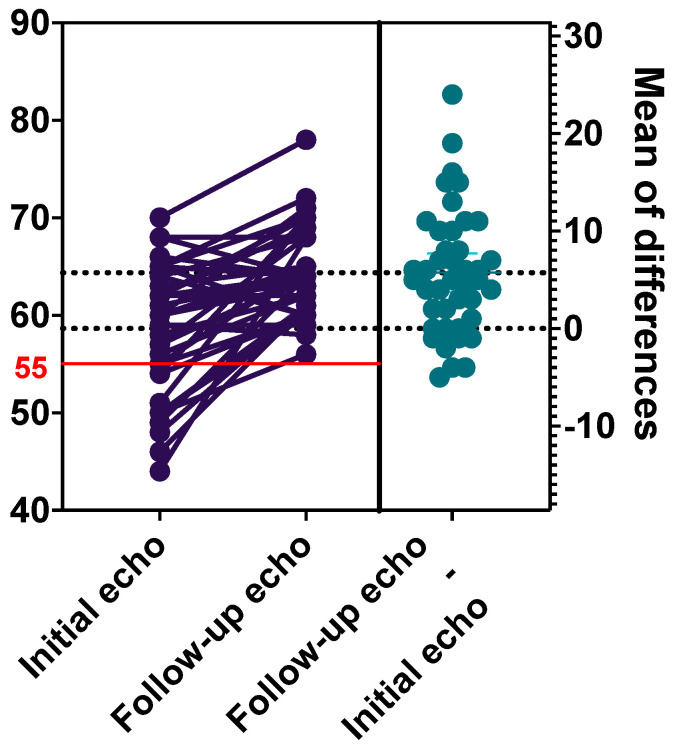
Background and Objectives: Due to its link with the SARS-CoV-2, Multisystem Inflammatory Syndrome in Children (MIS-C) gained global attention as a serious condition that requires hospital care. Our study aimed to present the clinical and laboratory characteristics of MIS-C patients by age group and intensive care unit (ICU) admission status and assess early echocardiographic changes. Materials and Methods: A single-center partly retrospective, partly prospective observational cohort study was performed from December 2020 to June 2024. The study included 42 patients aged between 1 month and 18 years who were diagnosed with MIS-C and gave informed consent. Results: The median age was 6.5 years (IQR 2.0-9.3). The predominant symptoms were cardiovascular (88.1%), mucocutaneous (85.7%) and gastrointestinal (76.2%). Five children (11.9%) developed shock. About two-thirds of patients (66.7%) were admitted to the ICU. Adolescents (≥12 years) were less likely to exhibit mucocutaneous or cardiovascular symptoms and thus less frequently having Kawasaki-like disease symptoms compared with other age groups (<5 years or 5-11 years). Lymphopenia was more common among patients aged 5 years and older. Adolescents had higher procalcitonin (PCT) and a lower estimated glomerular filtration rate. Troponin I and B-type natriuretic peptide (BNP) levels were higher in children aged 5-11 years, while ferritin levels were lower among the youngest (<5 years). Patients treated at the ICU were more likely to have cardiovascular and respiratory symptoms, as well as a history of symptomatic COVID-19, higher C-reactive protein (CRP), PCT, BNP and lower albumin levels. Echocardiographic abnormalities were found in 71.4% of cases. During hospitalization, left ventricular ejection fraction values increased significantly (p < 0.001) over 12 (IQR 9.0-14.0) days. Conclusions: Symptoms and laboratory markers of MIS-C vary according to age. Higher CRP, PCT, BNP and hypoalbuminemia are predictors of MIS-C severity. Cardiovascular involvement is common and might be severe, but rapid resolution is encouraging.
Keywords: MIS-C; cardiac involvement; echocardiography; intensive care unit (ICU); severity.
Conflict of interest statement
The authors declare no conflicts of interest.
Figures
References
-
- Centers for Disease Control and Prevention (CDC) COVID Data Tracker. [(accessed on 22 August 2024)]; Available online: https://covid.cdc.gov/covid-data-tracker.
-
- Molloy M.J., Auger K.A., Hall M., Shah S.S., Schondelmeyer A.C., Parikh K., Kazmier K.M., Katragadda H., Jacob S.A., Jerardi K.E., et al. Epidemiology and Severity of Illness of MIS-C and Kawasaki Disease During the COVID-19 Pandemic. Pediatrics. 2023;152:e2023062101. doi: 10.1542/peds.2023-062101. - DOI - PMC - PubMed
-
- Higienos Instituto Duomenys, Paskaičiuoti iš Privalomojo Sveikatos Draudimo Informacinės Sistemos. [(accessed on 16 August 2024)]. Available online: https://stat.hi.lt/
-
- World Health Organization (WHO) Multisystem Inflammatory Syndrome in Children and Adolescents Temporally Related to COVID-19. [(accessed on 26 August 2024)]. Available online: https://www.who.int/news-room/commentaries/detail/multisystem-inflammato....
Publication types
MeSH terms
Substances
Supplementary concepts
LinkOut - more resources
Full Text Sources
Medical
Research Materials
Miscellaneous
