


High-Risk Biliary Anastomosis During Robotic Pancreaticoduodenectomy: Initial Experience with Biodegradable Biliary Stent
- PMID: 39596983
- PMCID: PMC11596700
- DOI: 10.3390/medicina60111798
High-Risk Biliary Anastomosis During Robotic Pancreaticoduodenectomy: Initial Experience with Biodegradable Biliary Stent
Abstract
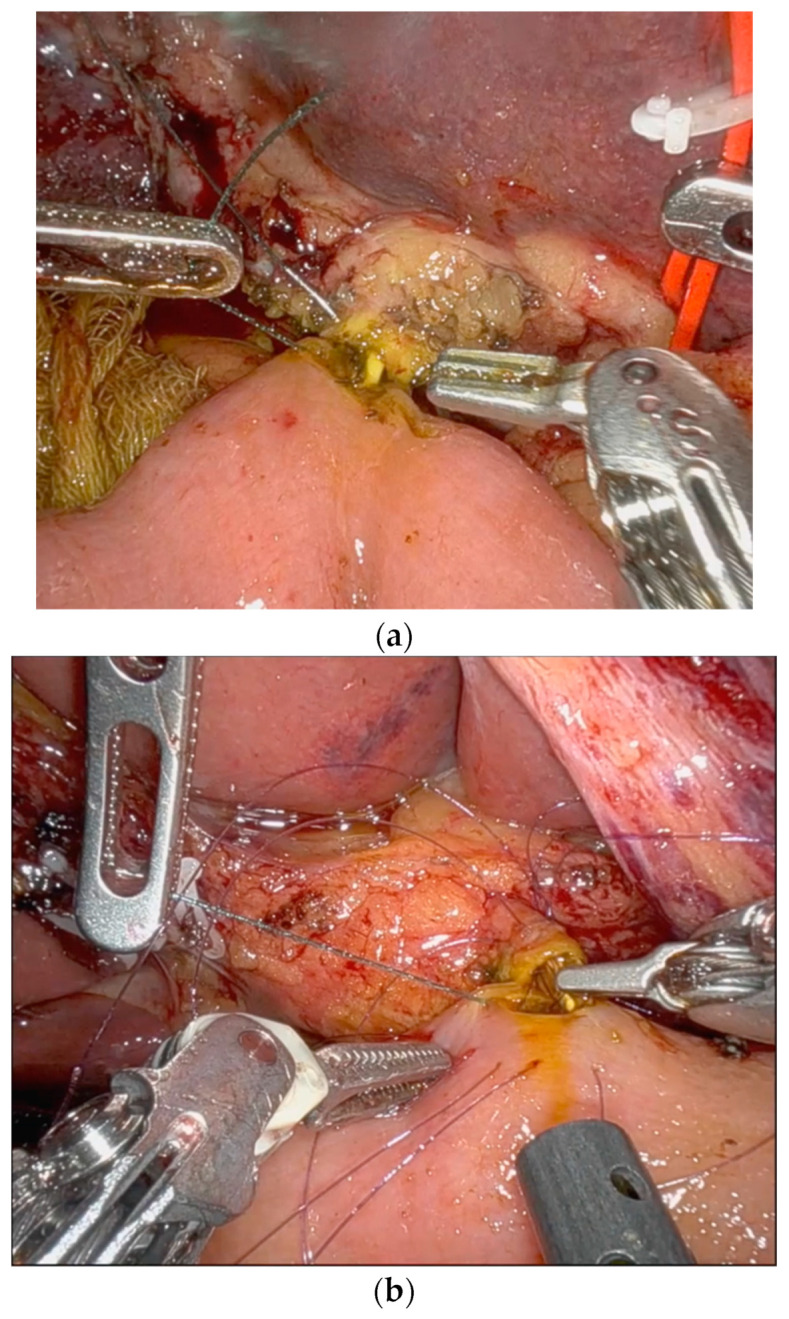
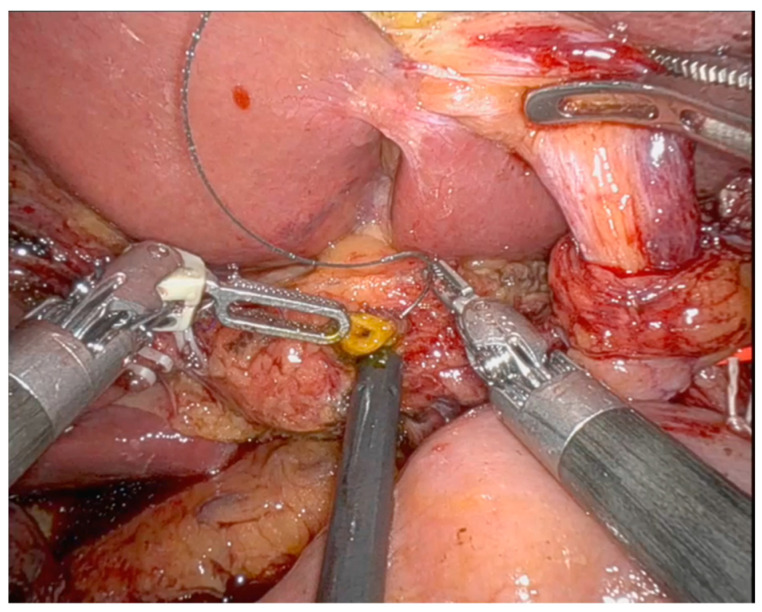
Background and Objectives: Biliary fistulas (BFs) occur in approximately 3-8% of patients undergoing pancreaticoduodenectomy (PD), and the bile duct diameter ≤ 5 mm is the most important risk factor. The aim of this study was to evaluate the efficacy of biodegradable biliary stents (BSs) in reducing complications in patients undergoing robotic pancreaticoduodenectomy (RPD) with a bile duct diameter of ≤5 mm. Materials and Methods: A retrospective single-centre observational study was conducted. Patients undergoing RPD after the completion of the robotic biliary anastomosis learning curve were included in this study. Only patients with a bile duct diameter ≤ 5 mm were included in the analysis. A prospectively held database was used. The intraoperative time for biliary anastomosis was extracted from surgical videos. Results: Of 30 patients, 20 received no biliary stent (nBS) and 10 received a biodegradable stent (BS). The decision to use a stent was based on product availability. The median operative time for biliary anastomosis was significantly shorter in the BS group compared to the nBS group, at 15 min versus 24 min (p < 0.001). Three patients in the nBS group developed a BF, whereas none were observed in the BS group. No stent migration was observed in any of the patients. Conclusions: The use of biodegradable biliary stents in high-risk biliary anastomosis in RPD appears to effectively reduce the incidence of BFs and may serve as a viable strategy to mitigate early biliary complications. The use of biodegradable stents facilitates a faster and easier biliary anastomosis. These findings suggest a potential benefit of using biodegradable stents in complex biliary reconstruction. However, larger studies are needed to confirm these results.
Keywords: biliary fistula; biodegradable stents; robotic pancreaticoduodenectomy.
Conflict of interest statement
The authors declare no conflicts of interest.
Figures
References
-
- Khachfe H.H., Nassour I., Hammad A.Y.M., Hodges J.C.M., AlMasri S., Liu H., Desilva A.B., Kraftician J.B., Lee K.K., Pitt H.A., et al. Robotic Pancreaticoduodenectomy: Increased Adoption and Improved Outcomes: Is Laparoscopy Still Justified? Ann. Surg. 2023;278:e563–e569. doi: 10.1097/SLA.0000000000005687. - DOI - PMC - PubMed
Publication types
MeSH terms
LinkOut - more resources
Full Text Sources
Research Materials
Miscellaneous
