


18F-NaF uptake in skull-base bone as a predictor of treatment response in advanced nasopharyngeal carcinoma
- PMID: 39604456
- PMCID: PMC11603326
- DOI: 10.1038/s41598-024-81350-w
18F-NaF uptake in skull-base bone as a predictor of treatment response in advanced nasopharyngeal carcinoma
Abstract
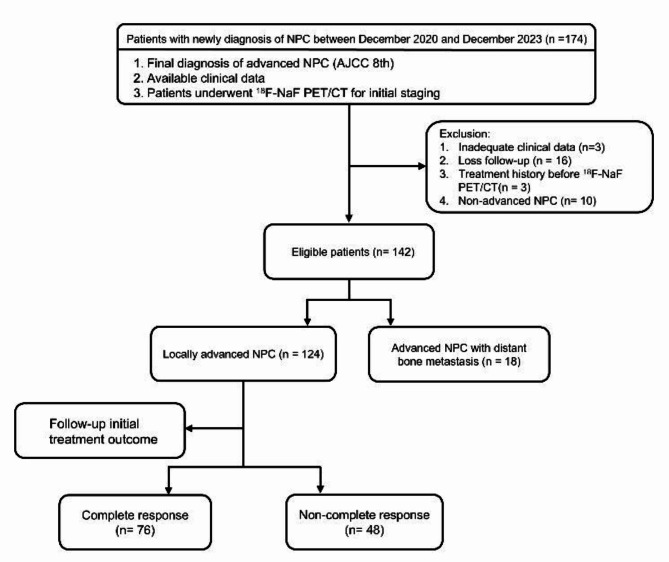
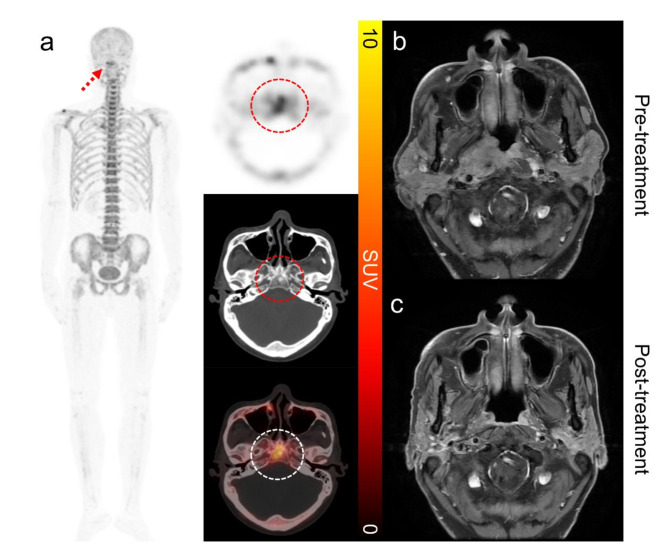
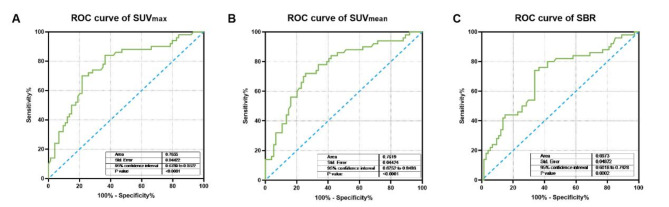
This study investigates the utility of 18F-sodium fluoride (18F-NaF) positron emission tomography/computed tomography (PET/CT) in assessing skull-base bone invasion (SBBI) and predicting treatment response in advanced nasopharyngeal carcinoma (NPC). A retrospective analysis was conducted on 142 patients with newly diagnosed advanced NPC who underwent 18F-NaF PET/CT for initial staging from December 2020 to December 2023. 18F-NaF PET/CT scans were analyzed for uptake values at the skull-base bone, and these were correlated with treatment outcomes of primary tumor using the Response Evaluation Criteria in Solid Tumors (RECIST) 1.1. Statistical analyses involved Mann-Whitney U tests for group comparisons and logistic regression for evaluating risk factors. Higher 18F-NaF uptake at the skull-base bone was significantly associated with advanced T stages (p < 0.0001) and the presence of bone metastases (p = 0.01). Patients exhibiting complete response (CR) to treatment had significantly lower skull-base 18F-NaF uptake compared to those with non-CR (p < 0.001). Receiver operating characteristic (ROC) analysis identified an SUVmax > 10.0 and SUVmean > 5.2 as predictive of non-CR, with AUC values of 0.77 and 0.76, respectively. Univariate and multivariable analysis confirmed SUVmax as a significant predictor of treatment response (OR = 7.03, 95% CI: 1.97-25.13, p < 0.05). Elevated 18F-NaF uptake at the skull-base bone is predictive of poorer treatment outcomes, highlighting its potential as a prognostic biomarker in advanced NPC. This study demonstrates that 18F-NaF PET/CT is a valuable imaging modality for evaluating SBBI in NPC, offering metabolic information that complements the anatomical findings from MRI.
Keywords: 18F-NaF; Nasopharyngeal carcinoma; PET/CT; Skull-base bone invasion; Treatment response.
© 2024. The Author(s).
Conflict of interest statement
Competing interests: The authors declare no competing interests. Ethical approval and consent to participate: This retrospective study received ethical clearance and the requirement to obtain informed consent was waived by the institutional review boards of Affiliated Hospital of Guilin Medical University (ID: 2023QTLL-16). The study protocol adheres to the tenets of the 1964 Declaration of Helsinki.
Figures


References
-
- Bray, F. et al. Global cancer statistics 2022: GLOBOCAN estimates of incidence and mortality worldwide for 36 cancers in 185 countries. CA Cancer J. Clin.74, 229–263 (2024). - PubMed
-
- Lee, A. W., Ma, B. B., Ng, W. T. & Chan, A. T. Management of nasopharyngeal Carcinoma: Current practice and future perspective. J. Clin. Oncol.33, 3356–3364 (2015). - PubMed
-
- Wu, Z. et al. Characteristics of local extension based on tumor distribution in nasopharyngeal carcinoma and proposed clinical target volume delineation. Radiother. Oncol.183, 109595 (2023). - PubMed
MeSH terms
Substances
Grants and funding
LinkOut - more resources
Full Text Sources
