


Early onset metastatic colorectal cancer patients as a distinctive clinical and molecular phenomenon
- PMID: 39604610
- PMCID: PMC11756416
- DOI: 10.1038/s41416-024-02902-5
Early onset metastatic colorectal cancer patients as a distinctive clinical and molecular phenomenon
Abstract
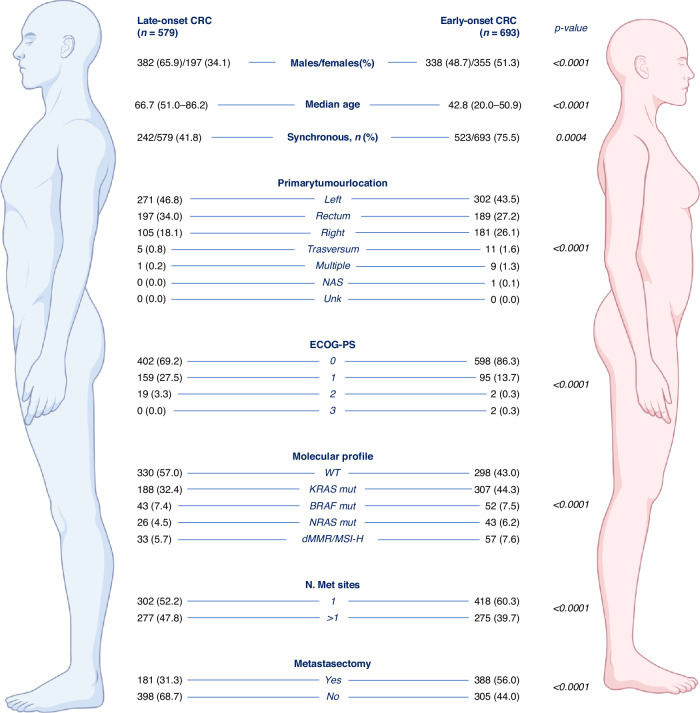
Background: Despite a reduction of both incidence and mortality from CRC, recent studies have shown an increase in the incidence of early-onset CRC (EO-CRC). Data on this setting are limited. The aim of our study was to evaluate the clinical and molecular profiles of metastatic EO-CRC patients in order to identify differences compared to a late-onset CRC (LO-CRC) control group.
Methods: We retrospectively collected data from 1272 metastatic colorectal cancers from 5 different Italian Institutions. The main objective was to the evaluate clinical outcome for EO-CRC patients in comparison to patients included in the control group.
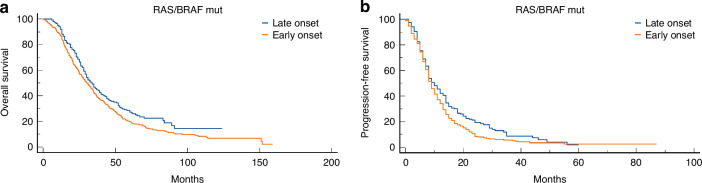
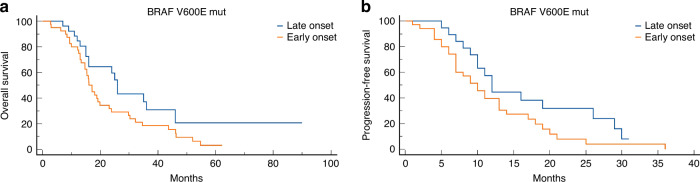
Results: In the overall population, mOS was 34,7 in EO-CRC pts vs 43,0 months (mo) (p < 0,0001). In the RAS/BRAF mutated subgroup mOS in EO-CRC pts was 30,3 vs 34,0 mo (p = 0,0156). In RAS/BRAF wild-type EO-CRC mOS was 43,0 vs 50,0 mo (p = 0,0290). mPFS was 11,0 in EO-CRC pts vs 14,0 mo (p < 0,0001).
Conclusion: Findings indicate a general worse prognosis for patients with early-onset colorectal cancer compared to late-onset patients. Interestingly this seems to occur regardless of the molecular status. These observations might have a considerable impact on clinical practice and research.
© 2024. The Author(s), under exclusive licence to Springer Nature Limited.
Conflict of interest statement
Competing interests: The authors declare no competing interests. Ethics approval and consent to participate: Ethics Committee approval was obtained for the study (Protocol number 2020/10912 – code: EMIBIOCCOR) from Cagliari Indipendent Ethics Committee and written informed consent was obtained from all participants for their tissues to be utilized for this work. This study was performed in accordance with the study protocol, the ethical principles stated in the Declaration of Helsinki as well as those indicated in the International Conference on Harmonization (ICH) Note for Guidance on Good Clinical Practice (GCP; ICH E6, 1995), and all applicable regulatory requirements.
Figures


References
Publication types
MeSH terms
Substances
LinkOut - more resources
Full Text Sources
Medical
Research Materials
