


Australian general practice registrars' billing patterns: a cross-sectional analysis from the Registrars Clinical Encounters in Training (ReCEnT) study
- PMID: 39604952
- PMCID: PMC11603984
- DOI: 10.1186/s12913-024-11834-y
Australian general practice registrars' billing patterns: a cross-sectional analysis from the Registrars Clinical Encounters in Training (ReCEnT) study
Abstract
Background: In Australia, a government insurance scheme (Medicare) pays set rebates for a range of distinct general practitioner (GP) services. GPs may 'bulk-bill' and accept the Medicare rebate fee directly, or 'privately-bill' by charging the patient a higher fee that is partially reimbursed by Medicare. The billing behaviour of Australian GP registrars (trainees) and their decision to bulk- or privately-bill patients is an evidence gap. This study aimed to establish the prevalence and associations of registrars' bulk-billing versus private-billing.
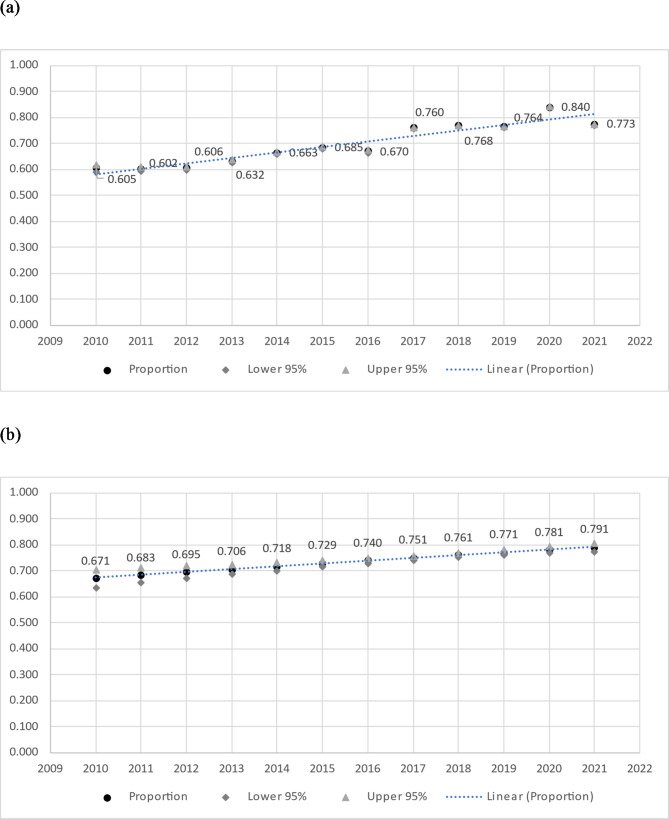
Methods: A cross-sectional analysis of data from the ReCEnT study, 2010-2021. The primary analysis used univariable and multivariable logistic regression, with the outcome factor being whether a consultation was bulk-billed versus privately-billed. The primary analysis excluded practices that universally bulk-bill or universally privately-bill all patients. A secondary analysis included all practices regardless of billing policy to provide an overall perspective of billing across the breadth of GP vocational training.
Results: For the primary analysis, 3,086 GP registrars recorded details of 316,141 consultations. Bulk-billing accounted for 61.8%, [95% CI:61.6%, 62.0%] of consultations. Significant positive associations of bulk-billing included: younger and older patient age (compared to patients aged 15-34 years, aOR 5.45; CI: [5.06, 5.87] for patients aged 0-14 years, aOR 2.36; 95% CI: [2.24, 2.49] for patients aged 65-74 years, and aOR 4.48; CI: [4.13, 4.85] for 75 years-and-older). Significant negative associations of bulk-billing included patients new to the practice (aOR 0.39; CI: [0.37, 0.41]) and patients new to the registrar (aOR 0.56; CI: [0.55, 0.58]), compared to existing patients of the registrar and practice; and practices with lesser socio-economic disadvantage (aOR 0.91; CI: [0.89, 0.93] per decile decrease in socioeconomic disadvantage). Bulk-billed consultations were positively associated with arranging patient follow-up (with the registrar aOR 1.06; CI: [1.03, 1.09]; or with another GP in the practice aOR 1.40; CI: [1.33, 1.46]).
Conclusions: Registrar billing decisions may, in part, reflect government bulk-billing incentives but our findings suggest other factors may contribute, including the provision of affordable care recognising patient need (children and elderly, and those living in areas of greater socioeconomic disadvantage) and continuity of care. Further research is needed to better understand how, and why, registrars make billing decisions.
Keywords: Education; Fees; General practice; Graduate; Medical.
© 2024. The Author(s).
Conflict of interest statement
Declarations. Ethics approval and consent to participate: This study has ethics approval from the University of Newcastle Human Research Ethics Committee Reference H-2009-0323. Participants provided written informed consent to data being used for research purposes (participants were informed via a Participant Information Statement, with the participants also receiving a live information session on the study). Consent for publication: Not applicable. Competing interests: The authors declare no competing interests.
Figures
References
-
- Royal Australian College of General Practitioners. General practice health of the nation 2023 - executive summary. 2023. https://www.racgp.org.au/general-practice-health-of-the-nation-2023/exec.... Cited 2024 Oct 2.
-
- Royal Australian College of General Practitioners. Medicare East Melbourne: RACGP. 2022. https://www.racgp.org.au/information-for-patients/medicare-and-records/m.... Cited 2022 May 26.
-
- Australian Government Department of Health and Aged Care. Bulk billing incentives Canberra: DHAC; https://www.health.gov.au/sites/default/files/documents/2019/12/bulk-bil.... Cited 2023 Jun 1.
MeSH terms
LinkOut - more resources
Full Text Sources
Miscellaneous
