This is a preprint.
Multi-ancestry GWAS of severe pregnancy nausea and vomiting identifies risk loci associated with appetite, insulin signaling, and brain plasticity
- PMID: 39606329
- PMCID: PMC11601681
- DOI: 10.1101/2024.11.19.24317559
Multi-ancestry GWAS of severe pregnancy nausea and vomiting identifies risk loci associated with appetite, insulin signaling, and brain plasticity
Abstract
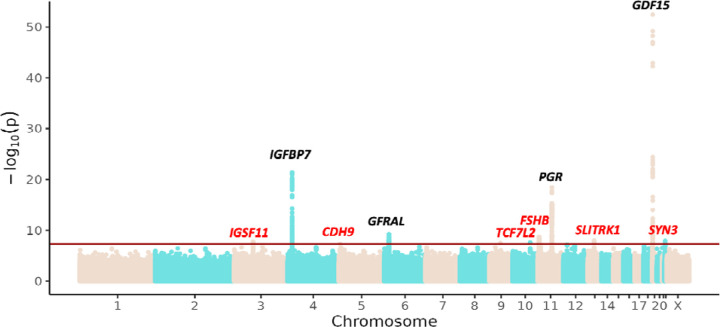
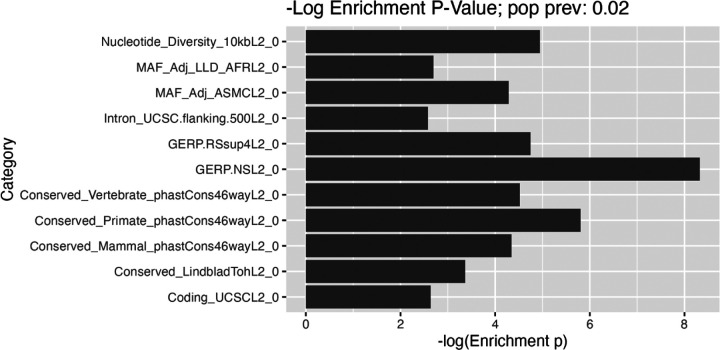
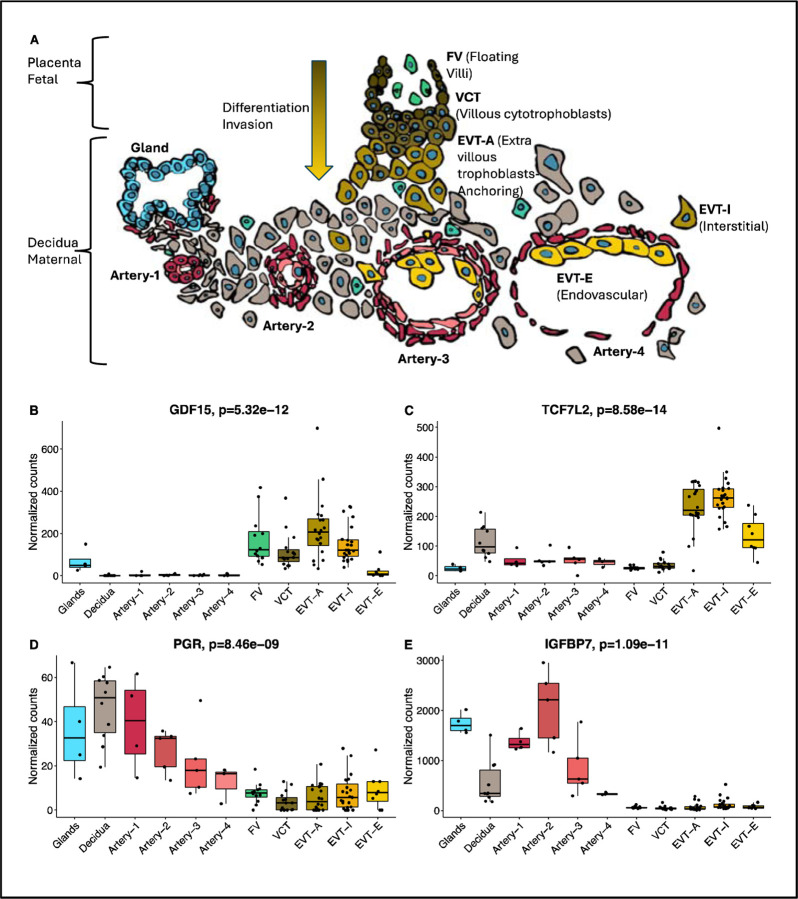
While most pregnancies are affected by nausea and vomiting, hyperemesis gravidarum (HG) is at the severe end of the clinical spectrum and is associated with dehydration, undernutrition, and adverse maternal, fetal, and child outcomes. Herein we performed a multi-ancestry genome-wide association study (GWAS) of severe nausea and vomiting of pregnancy of 10,974 cases and 461,461 controls across European, Asian, African, and Latino ancestries. We identified ten significantly associated loci, of which six were novel (SLITRK1, SYN3, IGSF11, FSHB, TCF7L2, and CDH9), and confirmed previous genome-wide significant associations with risk genes GDF15, IGFBP7, PGR, and GFRAL. In a spatiotemporal analysis of placental development, GDF15 and TCF7L2 were expressed primarily in extra villous trophoblast, and using a weighted linear model of maternal, paternal, and fetal effects, we confirmed opposing effects for GDF15 between maternal and fetal genotype. Conversely, IGFBP7 and PGR were primarily expressed in developing maternal spiral arteries during placentation, with effects limited to the maternal genome. Risk loci were found to be under significant evolutionary selection, with the strongest effects on nausea and vomiting mid-pregnancy. Selected loci were associated with abnormal pregnancy weight gain, pregnancy duration, birth weight, head circumference, and pre-eclampsia. Potential roles for candidate genes in appetite, insulin signaling, and brain plasticity provide new pathways to explore etiological mechanisms and novel therapeutic avenues.
Conflict of interest statement
Competing interests The authors declare the existence of financial/non-financial competing interests. MF: Hyperemesis Education and Research (HER) Foundation (voluntary, unpaid Board member and Research Director); Harmonia Healthcare (CSO, stock, paid consultant); NGM Biosciences (stock, paid consultant); Foundation for Women’s Health (Board member, voluntary, unpaid).
Figures



References
Publication types
Grants and funding
- U01 HG008676/HG/NHGRI NIH HHS/United States
- U01 HG011167/HG/NHGRI NIH HHS/United States
- U01 HG011172/HG/NHGRI NIH HHS/United States
- U01 HG008657/HG/NHGRI NIH HHS/United States
- U54 HG013243/HG/NHGRI NIH HHS/United States
- U01 HG008679/HG/NHGRI NIH HHS/United States
- U01 HG008666/HG/NHGRI NIH HHS/United States
- U54 MD007593/MD/NIMHD NIH HHS/United States
- U01 HG008685/HG/NHGRI NIH HHS/United States
- N01 ES075558/ES/NIEHS NIH HHS/United States
- U01 HG008701/HG/NHGRI NIH HHS/United States
- K12 AR084232/AR/NIAMS NIH HHS/United States
- R01 GM140287/GM/NIGMS NIH HHS/United States
- R01 CA258808/CA/NCI NIH HHS/United States
- U01 NS047537/NS/NINDS NIH HHS/United States
- U01 HG011175/HG/NHGRI NIH HHS/United States
- U01 HG008672/HG/NHGRI NIH HHS/United States
- R01 HG012133/HG/NHGRI NIH HHS/United States
- U01 HG008684/HG/NHGRI NIH HHS/United States
- U01 HG011169/HG/NHGRI NIH HHS/United States
- U01 HG008680/HG/NHGRI NIH HHS/United States
- U01 HG011176/HG/NHGRI NIH HHS/United States
- WT_/Wellcome Trust/United Kingdom
- U01 HG008673/HG/NHGRI NIH HHS/United States
- U01 HG006379/HG/NHGRI NIH HHS/United States
- U01 HG011166/HG/NHGRI NIH HHS/United States
- U01 HG008664/HG/NHGRI NIH HHS/United States
- U01 HG011181/HG/NHGRI NIH HHS/United States
LinkOut - more resources
Full Text Sources
Research Materials
Miscellaneous