This is a preprint.
Trends in hyperinsulinemia and insulin resistance among nondiabetic US adults, NHANES, 1999-2018
- PMID: 39606490
- PMCID: PMC11601873
- DOI: 10.21203/rs.3.rs-5279795/v1
Trends in hyperinsulinemia and insulin resistance among nondiabetic US adults, NHANES, 1999-2018
Update in
-
Trends in Hyperinsulinemia and Insulin Resistance Among Nondiabetic US Adults, NHANES, 1999-2018.J Clin Med. 2025 May 6;14(9):3215. doi: 10.3390/jcm14093215. J Clin Med. 2025. PMID: 40364246 Free PMC article.
Abstract
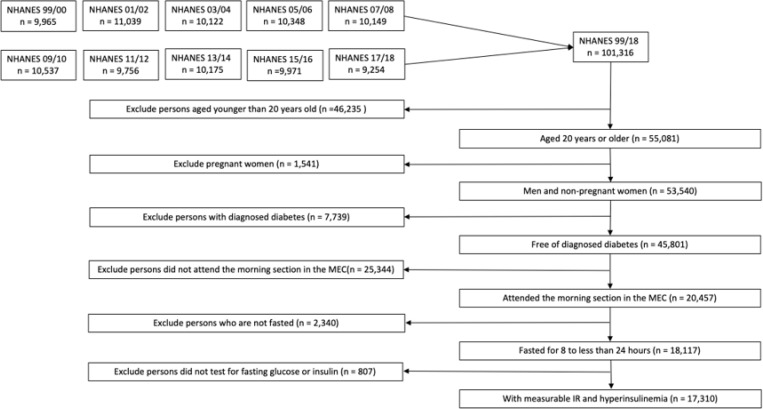
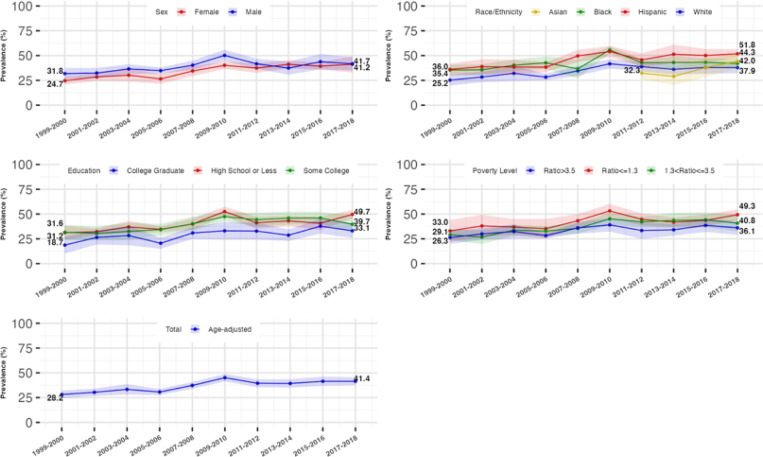
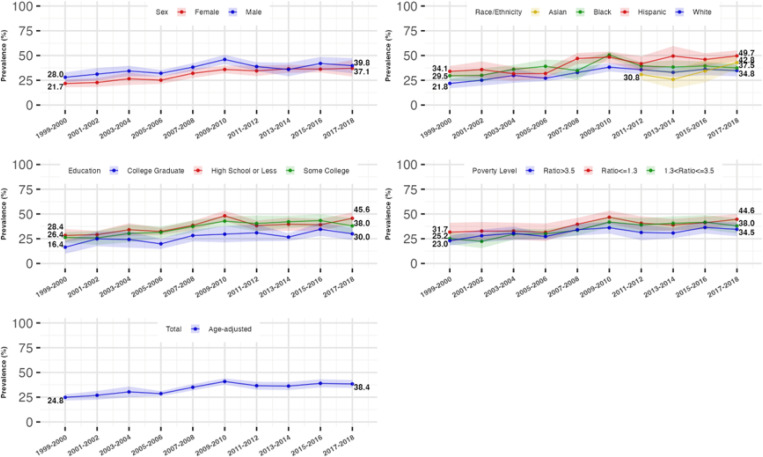
Hyperinsulinemia and insulin resistance (IR) are critical predictors of cardiometabolic diseases, disproportionately affecting various sociodemographic groups in the United States. This study aimed to estimate and analyze trends in the prevalence of hyperinsulinemia and IR among nondiabetic adults from 1999 to 2018, using data from the National Health and Nutrition Examination Survey (NHANES). The study included 17,310 nondiabetic men and nonpregnant women aged 20 years or older. Hyperinsulinemia was defined as fasting serum insulin levels ≥10 U/ml, while IR was measured using the HOMA-IR index (≥2.6, 66.7th percentile). The age-standardized prevalence of hyperinsulinemia increased from 28.2% in 1999-2000 to 41.4% in 2017-2018, while IR prevalence rose from 24.8% to 38.4% during the same period. Higher prevalence rates were consistently observed among males, non-Hispanic Blacks, Hispanics, and individuals with lower education or income levels. Trends indicated increases across all sociodemographic groups during at least some time periods. The findings suggest a growing prevalence of hyperinsulinemia and IR in the U.S., particularly among vulnerable populations, underscoring the importance of targeted public health interventions to address these disparities and reduce the risk of cardiometabolic diseases.
Keywords: Hyperinsulinemia; Insulin resistance; Metabolic disorders; NHANES; Sociodemographic disparities; Temporal trend.
Conflict of interest statement
Declarations Conflict of interest The authors declare no conflicts of interest. Additional Declarations: No competing interests reported.
Figures
References
Publication types
Grants and funding
LinkOut - more resources
Full Text Sources