


Drugs to affect the smooth musculature of the human ureter - an update with integrated information from basic science to the use in medical expulsion therapy (MET)
- PMID: 39609287
- PMCID: PMC11604773
- DOI: 10.1007/s00345-024-05368-5
Drugs to affect the smooth musculature of the human ureter - an update with integrated information from basic science to the use in medical expulsion therapy (MET)
Abstract
Purpose: Urolithiasis and symptomatic ureterolithiasis represent diseases known to be on the increase in most westernized countries. The present article aims to give an overview on some drug principles assumed to target signalling systems involved in modulating ureter smooth muscle contractility and to present background to their potential use or prospects in ureter stone disease.
Methods: The article reviews drugs that have been evaluated over the last decades in vitro, in vivo and/or in clinical settings with regard to their properties to achieve spontaneous passage of (distal) ureteral stones and relieve colic pain. Among these drugs are alpha- and beta-adrenoceptor antagonists, calcium channel blocking agents, Rho kinase inhibitors, nitric oxide (NO) donor drugs, selective inhibitors of cyclic nucleotide phosphodiesterase enzymes (PDEs), as well as potassium channel openers.
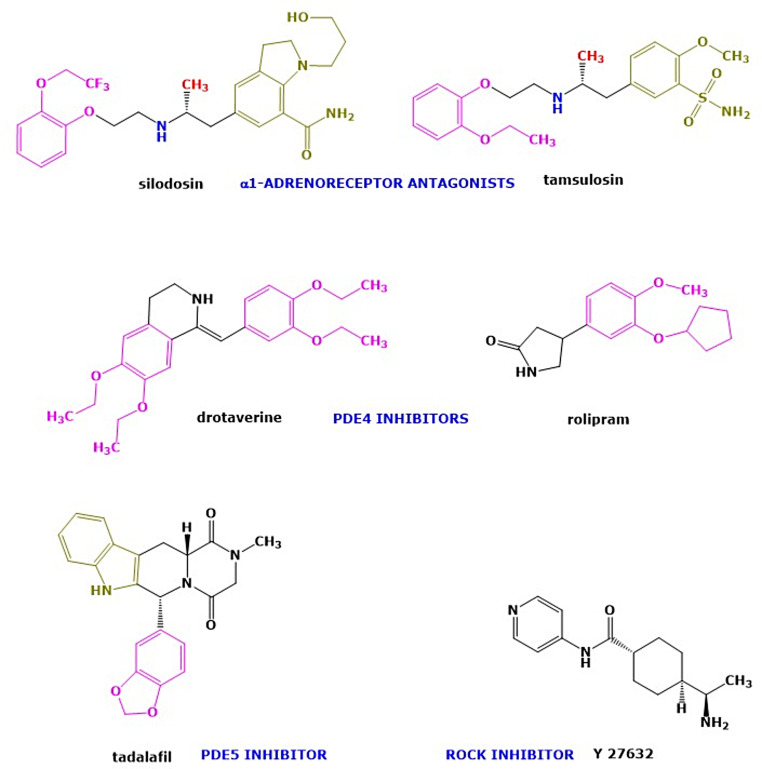
Results: Based on the recent scientific information on agents targeting different pathways, antagonists of alpha 1-adrenoceptors, inhibitors of the PDE isoenzymes PDE4 and PDE5 (affecting cyclic AMP- or NO/cyclic GMP-mediated signals that facilitate relaxation of ureter smooth muscle), as well as the combination of certain drugs (for example, PDE5/PDE4 inhibitor plus alpha 1-AR antagonist) seem to be intriguing pharmacological approaches to medical expulsion therapy (MET) in the overall population of patients.
Conclusion: While NO donors, calcium channel antagonists and potassium channel openers may be limited for further development for medical expulsion therapy (MET) due to their systemic effects and a lack of effect on stone clearance, Rho kinase inhibitors should be explored further as a future pharmacological principle in ureteral stone disease.
Keywords: Pharmacology; Treatment options; Upper urinary tract stone disease; Ureter.
© 2024. The Author(s).
Conflict of interest statement
Declarations. Competing interests: The authors declare no competing interests.
Figures
References
-
- Lang RJ, Hashitani H (2019) Pacemaker mechanisms driving pyelo-ureteric peristalsis: modulatory role of interstitial cells. Adv Exp Med Biol 1124:77–101 - PubMed
-
- Reicherz A, Eltit F, Almutairi K, Mojtahedzadeh B, Herout R, Chew B, Cox M, Lange D (2023) Ureteral obstruction promotes ureteral inflammation and fibrosis. Eur Urol Focus 9:371–380 - PubMed
Publication types
MeSH terms
Substances
LinkOut - more resources
Full Text Sources
Research Materials
Miscellaneous
