


Lifestyle factors and incident multimorbidity related to chronic disease: a population-based cohort study
- PMID: 39609306
- PMCID: PMC11604909
- DOI: 10.1007/s10433-024-00833-x
Lifestyle factors and incident multimorbidity related to chronic disease: a population-based cohort study
Abstract
Background: Multimorbidity is linked to poor quality of life, and increased healthcare costs, and multimorbidity risk is potentially mitigated by a healthy lifestyle. This study evaluated the individual and joint contributions of an extensive set of lifestyle factors to the development of multimorbidity.
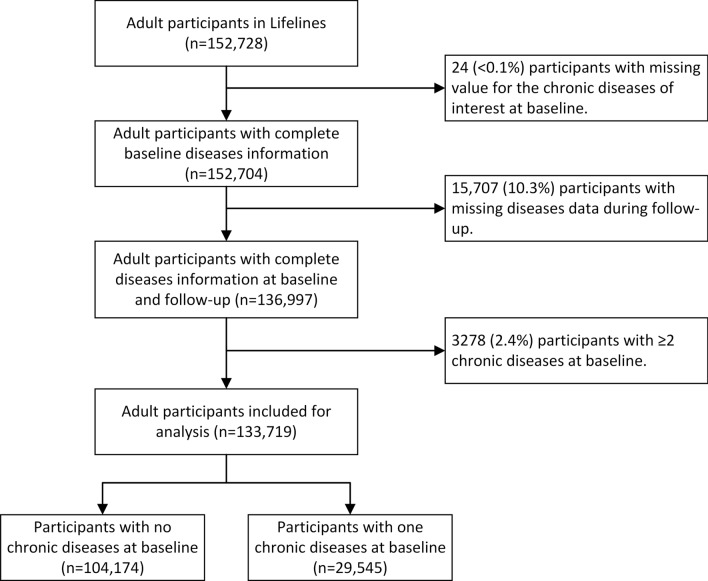
Methods: A prospective study of 133,719 adults (age 45.2 ± 12.9, range 18-93 years) from the Dutch Lifelines cohort assessed the influence of lifestyle factors on multimorbidity, defined as having at least two of four major chronic diseases, using Cox regression models and population attributable fractions (PAFs). Lifestyle-related factors included diet quality, physical activity, TV watching, substance use (alcohol, smoking), sleep (duration, medication), stress (acute, chronic) and social connectedness (social contacts, marital status).
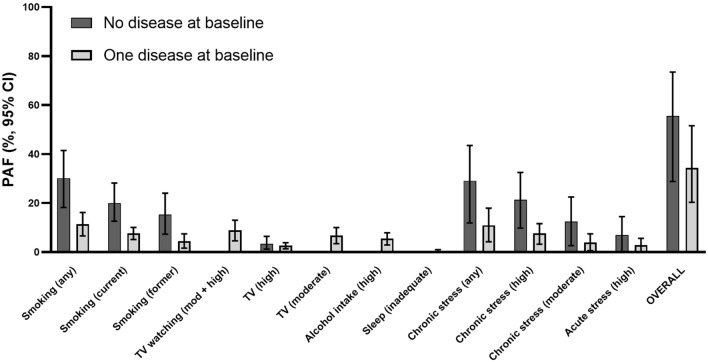
Results: Over a median follow-up of 3.4 years, 3687 (12.5%) of the 29,545 participants with a chronic disease at baseline developed multimorbidity, compared to 434 (0.4%) of the 104,174 without a chronic disease. Key lifestyle factors linked to multimorbidity included smoking, prolonged TV watching, and stress, with hazard ratios indicating a higher risk in both groups. Additionally, high alcohol consumption and inadequate sleep duration were found to increase multimorbidity risk specifically in those with a chronic disease. Lifestyle factors jointly accounted for 34.4% (PAF, 95%CI 28.8%-73.5%) (with baseline morbidity) and 55.6% (95%CI 17.2%-48.5%) (without) of multimorbidity cases, with smoking as the primary contributor.
Conclusions: Lifestyle factors, particularly smoking, alcohol consumption, TV watching, stress, and sleep, significantly contribute to the development of multimorbidity. The study underscores the importance of targeted prevention in public health and healthcare settings to manage and prevent multimorbidity.
Keywords: Chronic disease; Chronic stress; Cohort; Lifestyle factors; Multimorbidity; TV watching.
© 2024. The Author(s).
Conflict of interest statement
Declarations. Ethics approval and consent to participate: The Lifelines Cohort Study was approved by the medical ethics committee of the University Medical Center Groningen, the Netherlands. All participants signed the informed consent form. Competing interests: The authors declare no competing interests.
Figures


References
-
- American college of lifestyle medicine | American college of lifestyle medicine. Accessed 22 Oct 2022. https://lifestylemedicine.org/
Grants and funding
LinkOut - more resources
Full Text Sources
