


Evaluation of low-and middle-income countries according to cardiovascular disease risk factors by using pythagorean fuzzy AHP and TOPSIS methods
- PMID: 39609774
- PMCID: PMC11605925
- DOI: 10.1186/s12911-024-02769-9
Evaluation of low-and middle-income countries according to cardiovascular disease risk factors by using pythagorean fuzzy AHP and TOPSIS methods
Abstract
Background: Cardiovascular disease risk factors play a crucial role in determining individuals' future health status and significantly affect health. This paper aimed to address cardiovascular disease risk factors in low- and middle-income countries using multi-criteria decision-making methods.
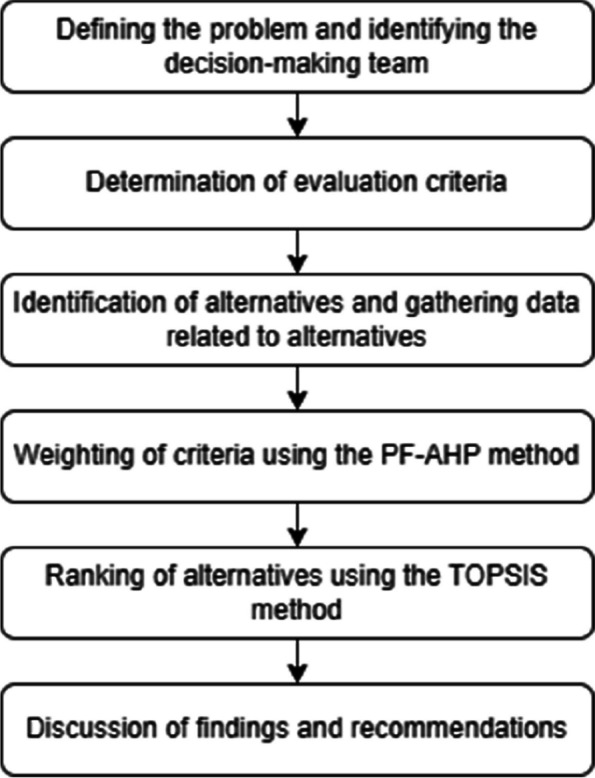
Methods: In line with this objective, 22 evaluation criteria were identified. Due to the unequal importance levels of the criteria, the interval-valued Pythagorean Fuzzy AHP (PF-AHP) method was employed for weighting. The TOPSIS method was utilized to rank the countries.
Results: The application of interval-valued PF-AHP revealed that metabolic, behavioral, and economic factors are more important in contributing to disease risk. Among adults, tobacco use prevalence was identified as the most significant risk factor. According to the TOPSIS method, Lebanon, Jordan, Solomon Islands, Serbia, and Bulgaria ranked highest, while Timor Leste, Benin, Ghana, Niger, and Ethiopia ranked lowest.
Conclusions: Identifying disease risk factors and preventing or reducing risks are crucial in combating cardiovascular diseases. Therefore, it is recommended that countries ranking higher take remedial actions to reduce disease risk.
Keywords: AHP; Cardiovascular disease; Multiple criteria decision making; Pythagorean fuzzy sets; TOPSIS.
© 2024. The Author(s).
Conflict of interest statement
Declarations. Ethics approval and consent to participate: On December 30, 2022, Ethical Permission was obtained from the Social and Human Sciences Research Ethics Committee of Ondokuz Mayıs University with decision number 2022 − 1182. The principles of the Declaration of Helsinki were followed in the collection of research data and in all processes associated with this research. Consent for publication: Not applicable. Competing interests: The authors declare no competing interests.
References
-
- Tulchinsky TH, Varavikova EA. Non-Communicable Diseases and Conditions. The New Public Health. Academic Press. 2014; 207–309. ISBN: 9780124157668.
-
- WHO. Noncommunicable Diseases. https://www.who.int/health-topics/noncommunicable-diseases#tab=tab_1 Accessed 11 Jan 2023.
-
- WHO. Global report on urban health: equitable healthier cities for sustainable development. 2016. https://www.who.int/publications/i/item/9789241565271 Accessed 23 Jan 2023.
MeSH terms
LinkOut - more resources
Full Text Sources
