


Uncovering hidden prosocial behaviors underlying aggression motivation in mice and young children
- PMID: 39609920
- PMCID: PMC11605964
- DOI: 10.1186/s12993-024-00260-z
Uncovering hidden prosocial behaviors underlying aggression motivation in mice and young children
Abstract
Background: Animals exhibit a wide range of social behaviors, including positive actions that promote social cohesion and negative behaviors associated with asserting dominance. While these behaviors are often viewed as opposites, they can also exist independently or coexist in complex ways, necessitating further investigation into their interrelationships.
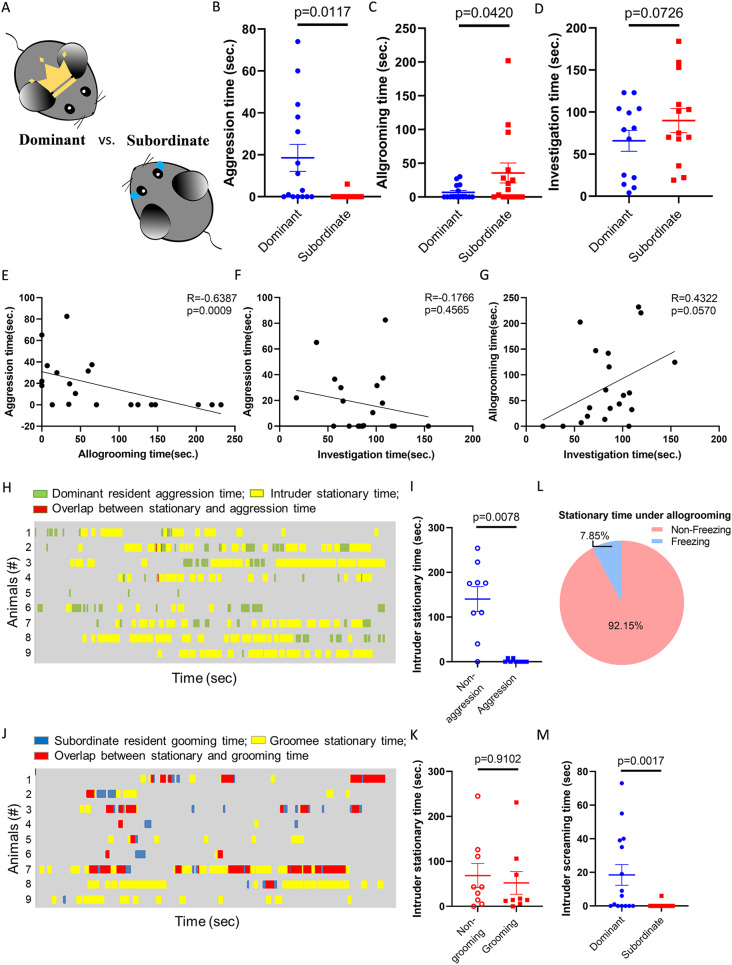
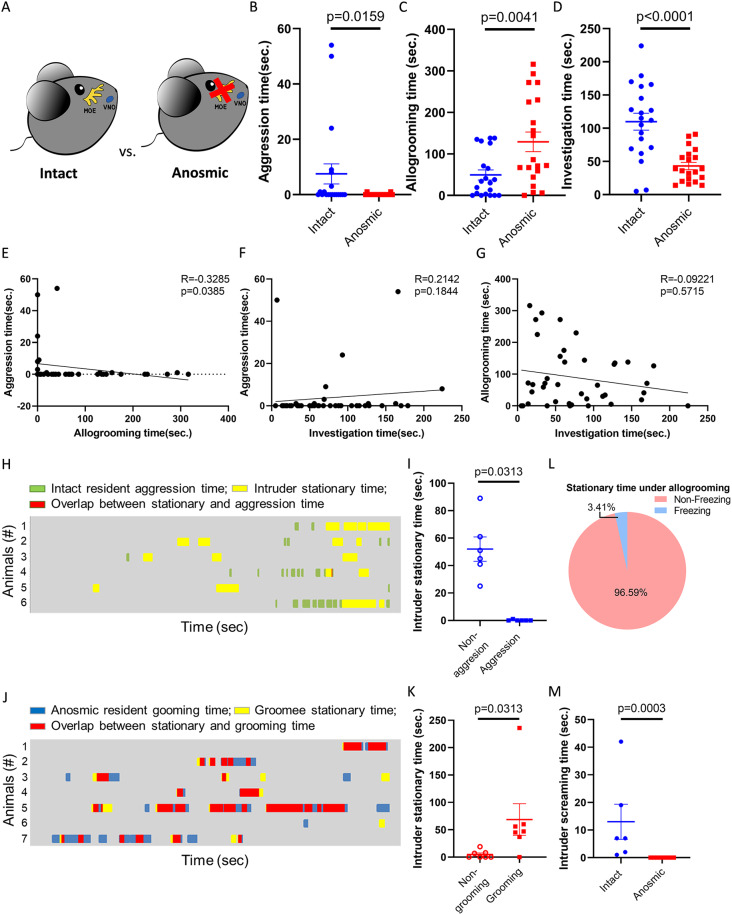
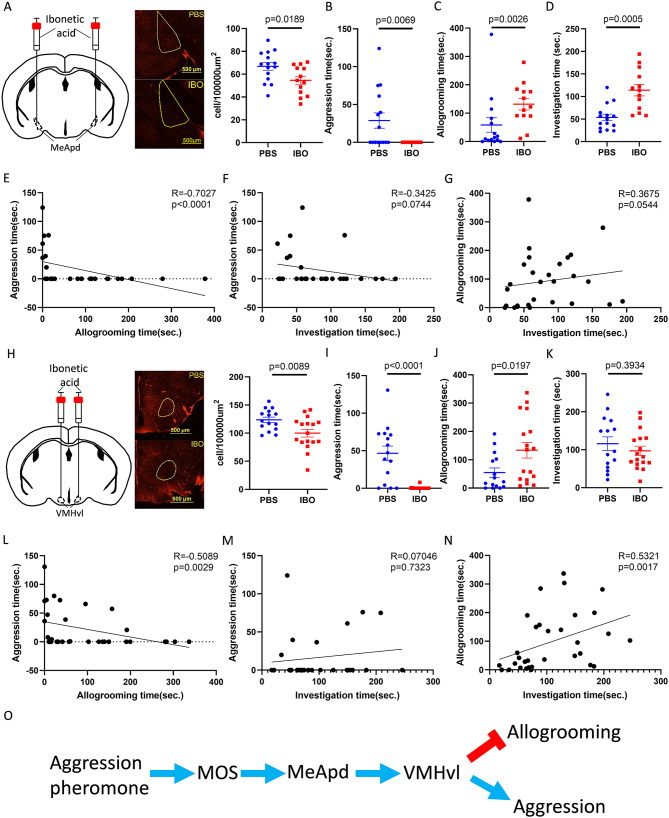
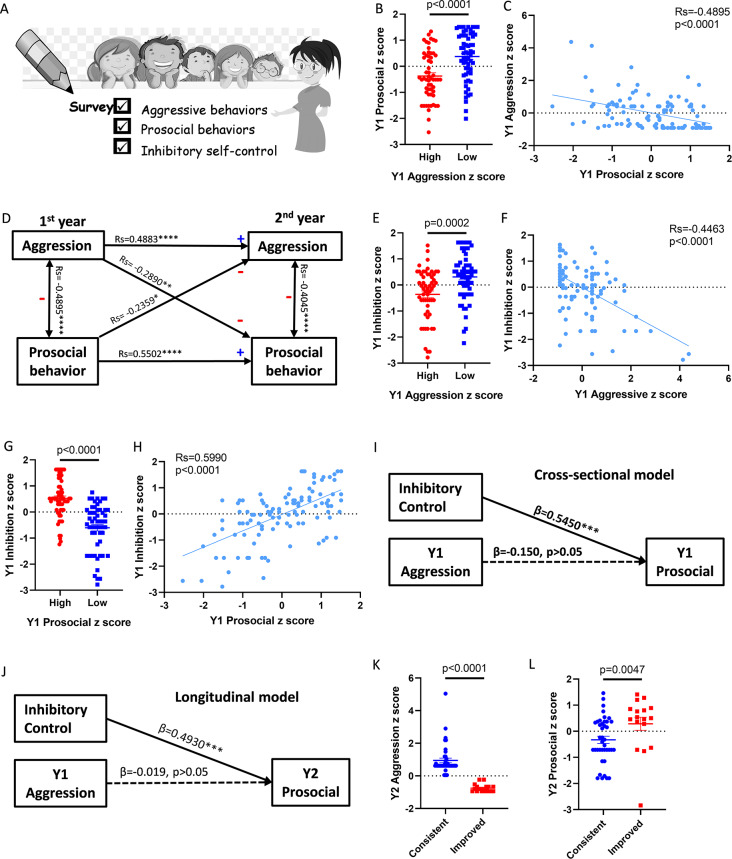
Results: To study the interplay between these two types of behaviors, we examined mouse social behaviors using resident-intruder assays and revealed a negative correlation between social aggression and prosocial allogrooming. Suppressing aggressive motivation through various manipulations, including social subordination, olfaction ablation, and inhibition of aggressive neural circuits, led to an increased display of allogrooming behavior. The mouse findings prompted us to further explore the relationship between aggression and prosocial behaviors in preschool children. Similarly, we observed a negative association between aggression and prosocial behaviors, which were potentially influenced by their inhibitory control abilities.
Conclusions: Through this cross-species study, we uncovered the inhibitory impact of aggressive neural circuits on mouse allogrooming and established a link between aggression and prosocial behaviors in children. These insights offer valuable implications for understanding and potentially influencing social interactions in both animal and human contexts, with potential applications in preschool education practices.
Keywords: Mouse allogrooming; Prosocial behaviors; Social aggression; Social behaviors.
© 2024. The Author(s).
Conflict of interest statement
Declarations. Ethics approval and consent to participate: All animal procedures were in compliance with institutional guidelines established and approved by the Institutional Animal Care and Use Committee of National Tsing Hua University 107043. Children studies were approved by the National Tsing Hua University Research Ethics committee 11206HT093). Consent for publication: Not applicable. Competing interests: The authors declare no competing interests.
Figures
References
-
- Eron LD, Huesmann LR. The relation of prosocial behavior to the development of aggression and psychopathology. Aggressive Behav. 1984;10:201–11.
-
- Dugatkin LA. Principles of animal behavior. Third ed. W. W. Norton & Company, Inc.; 2014.
-
- Eivers AR, Brendgen M, Vitaro F, Borge AI. Concurrent and longitudinal links between children’s and their friends’ antisocial and prosocial behavior in preschool. Early Child Res Q. 2012;27:137–46.
-
- Pulkkinen L, Tremblay RE. Patterns of boys’ social adjustment in two cultures and at different ages: a longitudinal perspective. Int J Behav Dev. 1992;15:527–53.
-
- Feshbach S, Feshbach ND. Aggression and altruism: a personality perspective. Altruism and aggression: Biological and social origins, 189–217 (1986).
MeSH terms
Grants and funding
LinkOut - more resources
Full Text Sources
